

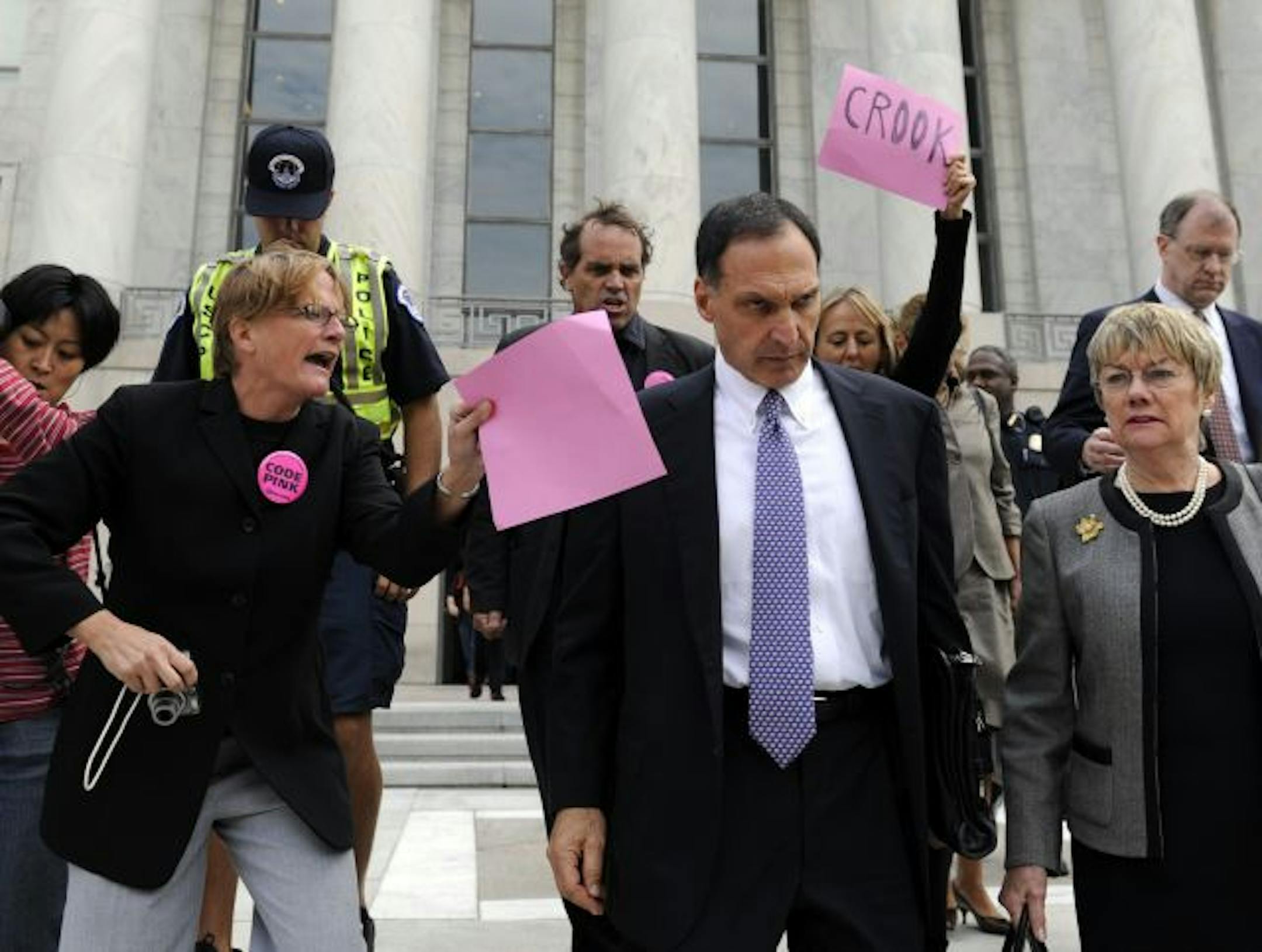
In his Monday speech on Wall Street -- one year after Lehman Brothers' spiral into bankruptcy -- President Obama pointed out how far from economic collapse we are today. But he also used the moment to remind the country not to ignore Lehman's lessons. "One year ago, we saw in stark relief how markets can err; how a lack of common-sense rules can lead to excess and abuse; how close we can come to the brink."
Local money managers had no problem remembering where they were on the day Lehman Brothers failed and the financial crisis went critical.
John Taft, head of wealth management for RBC Wealth Management, said that asking him that question is like asking him, "Do you know where you were the day [President] John F. Kennedy was shot? Do you know the day of the Cuban missile crisis? It's one of those historic days I will always remember." (He was in his office, by the way.) "The Western financial system came a lot closer to financial collapse than people realized in the days and weeks after the failure of Lehman. It was a very scary time," Taft said.
Worries last summer about the stability of Wall Street, the recession and the direction of the stock market already were on the minds of average Americans and financial professionals. But the Sept. 15 failure of the country's fifth-largest investment bank started a market spiral that forced the Dow Jones industrial average down 504 points in one day and led the Standard and Poor's 500 from 1,250 to 900 in four weeks. Panicked, investors pulled savings out of the stock market. Credit markets froze. Investors lost money in an as-good-as-cash money market fund. The word "depression" was uttered more than any of us would have liked.
Certified financial planner Greg Zandlo was watching television when he learned about Lehman. But he didn't hear from worried clients, because he'd sold their stock positions after Fannie Mae and Freddie Mac's big problems earlier that summer. Instead of talking clients off of window ledges in subsequent weeks, he spent his time taking advantage of "some absolutely screaming bargains to be bought in the fixed-income market," he said.
Over at RBC, "months and months and months were spent trying to help people get grounded," Taft said. Clients are only now talking about how much risk they are willing to take in order to make up for lost money and time.
James Paulsen, chief investment strategist for Wells Capital Management, admits that he rode the stock market down like a lot of us. But by mid-November, he was "feasting on others' fears" -- sopping up emerging markets, small-cap stocks, cyclical stocks such as retailers and junk bonds.
He says that he can't tell you how many times he heard a pundit say: "It's time to focus on the return of capital, not the return on capital."



