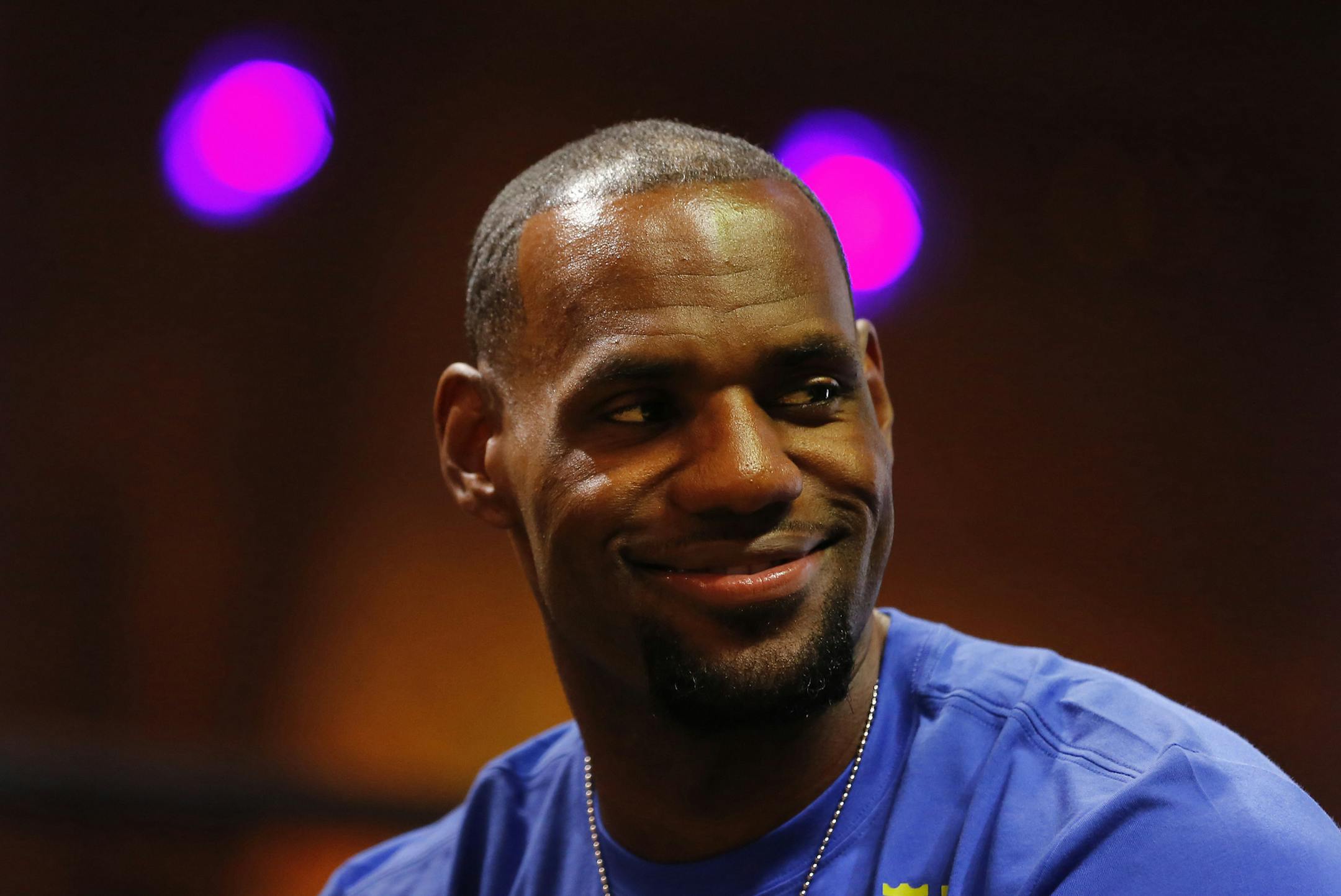
The King is back.
LeBron James' shocking announcement that he would return to Cleveland has turned into a story that transcends sports.
Civil-rights leader Jesse Jackson identified James as a rare example of an athlete who embraced social responsibility. "I have joy in my heart today because LeBron returned to Cleveland," explained Jackson. "He wants to lift up Northeast Ohio — what a noble ambition. That's a level of leadership that's rare."
Indeed it is.
In an age where high-profile black athletes have been criticized for abandoning the kind of activism once embraced by Bill Russell, Jim Brown and, most notably, Muhammad Ali, James' decision to return to a Midwestern city reeling from postindustrial decline is more that just admirable. In a way it's astonishing.
James elegantly analyzes the larger meaning behind his decision in his letter. "I want kids in Northeast Ohio, like the hundreds of Akron third graders I sponsor through my foundation, to realize that there's no better place to grow up," writes James. "Our community, which has struggled so much, needs all the talent it can get."
LeBron James doesn't exactly spell out the community he's referring to in this instance, but it's obvious. Having grown up in a predominantly poor and black part of Akron, Ohio, James couches his return as an effort at nothing less than urban renewal of America's forgotten city.
James' grace and compassion are on full display in this letter. As is his love and commitment to uplifting the kind of young black kids who lack the exceptional athletic talents which have made him an icon. LeBron's ability to forgive Cavaliers owner Dan Gilbert's ugly letter in the aftermath of his departure, as well as the ugly and racially driven displays of hate (including white fans burning his jersey) is an enormous, although largely unspoken and unrecognized, example of racial rapprochement.