

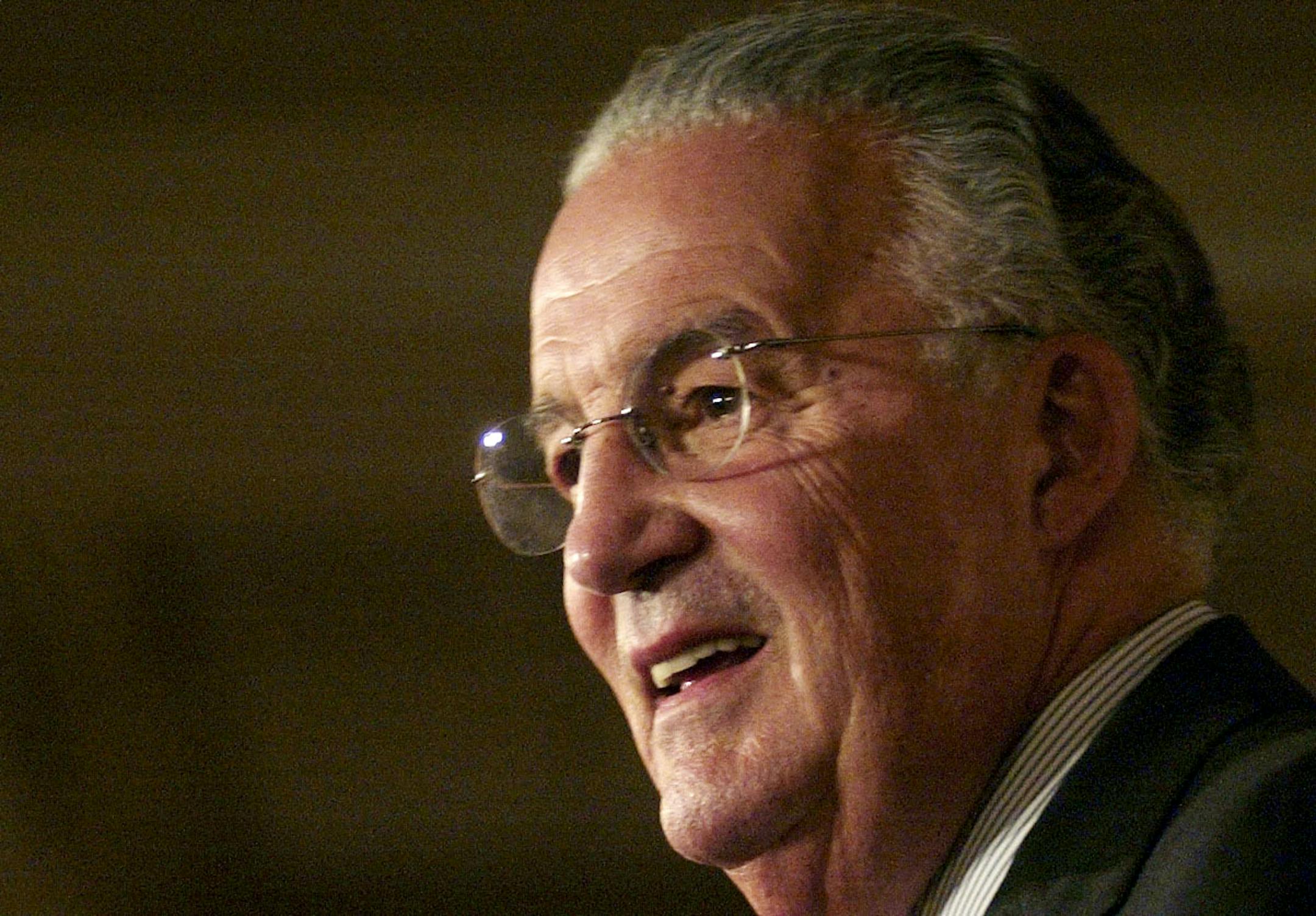
Paul Sarbanes, who died Sunday at the age of 87, served Maryland in Congress with unfailing integrity, quiet diligence and stubborn modesty. Those traits suited him perfectly in his role as a questioner and guardian of standards, whether examining the conduct of bankers or the qualifications of nominees for the federal bench.
The nation first saw him when he was about 40, during the end stages of the Watergate scandal in the summer of 1974. Sarbanes, a Democrat from Baltimore, was a freshman representative with a seat on the House Judiciary Committee at a historic moment. He introduced the first article of impeachment against President Richard Nixon. Nixon resigned soon after that.
Two years later, Maryland voters sent Sarbanes to the Senate, and over the next 30 years he became associated with the most unglamorous but important issues — banking policy, the practices of the Federal Reserve, corporate accountability. He served for a time as chairman of the Senate Committee on Banking, Housing and Urban Affairs; he became an expert in complex financial laws and the way banks and investors operated.
I used to hear Les Kinsolving, an eccentric conservative on Baltimore talk radio, slam Sarbanes for being too liberal and for being Maryland's "stealth senator," seldom heard or seen on television. I was never sure what Les wanted in a senator (besides staunch conservatism). It always seemed to me that Sarbanes was thoughtful, deliberative and serious about his work. His intellect was intimidating, especially when it came to … almost everything.
His modesty — that is, his unwillingness to blow his own horn and avoid the media floodlights — seemed innate. But Sarbanes used to say that letting someone else take credit for the passage of a bill or the reaching of compromise was a good strategy for getting things done.
Sarbanes understood better than anyone the "advice and consent" role of the Senate, the need to have 100 men and women capable of objective deliberation on international treaties and the nomination of federal officials, from members of the president's cabinet to the justices of the Supreme Court.
The latter duty — the review of the president's judicial nominations — was one to which Sarbanes brought special care, and his actions in that realm came frequently to mind during these last four Trump years.
With his appointments, President Donald Trump has managed to place more than 200 relatively young judges on federal courts, as well as three justices on the Supreme Court. The vast majority of appointments have been considered qualified by the American Bar Association, though clearly most of these judges are stridently conservative, a condition that many Americans to the left and center consider disqualifying (because stridency, from the left or right, subverts the ideal of judicial integrity.) At least 10 of Trump's nominees were considered unqualified by the standards of the ABA. (One of them had never tried a case.)


