

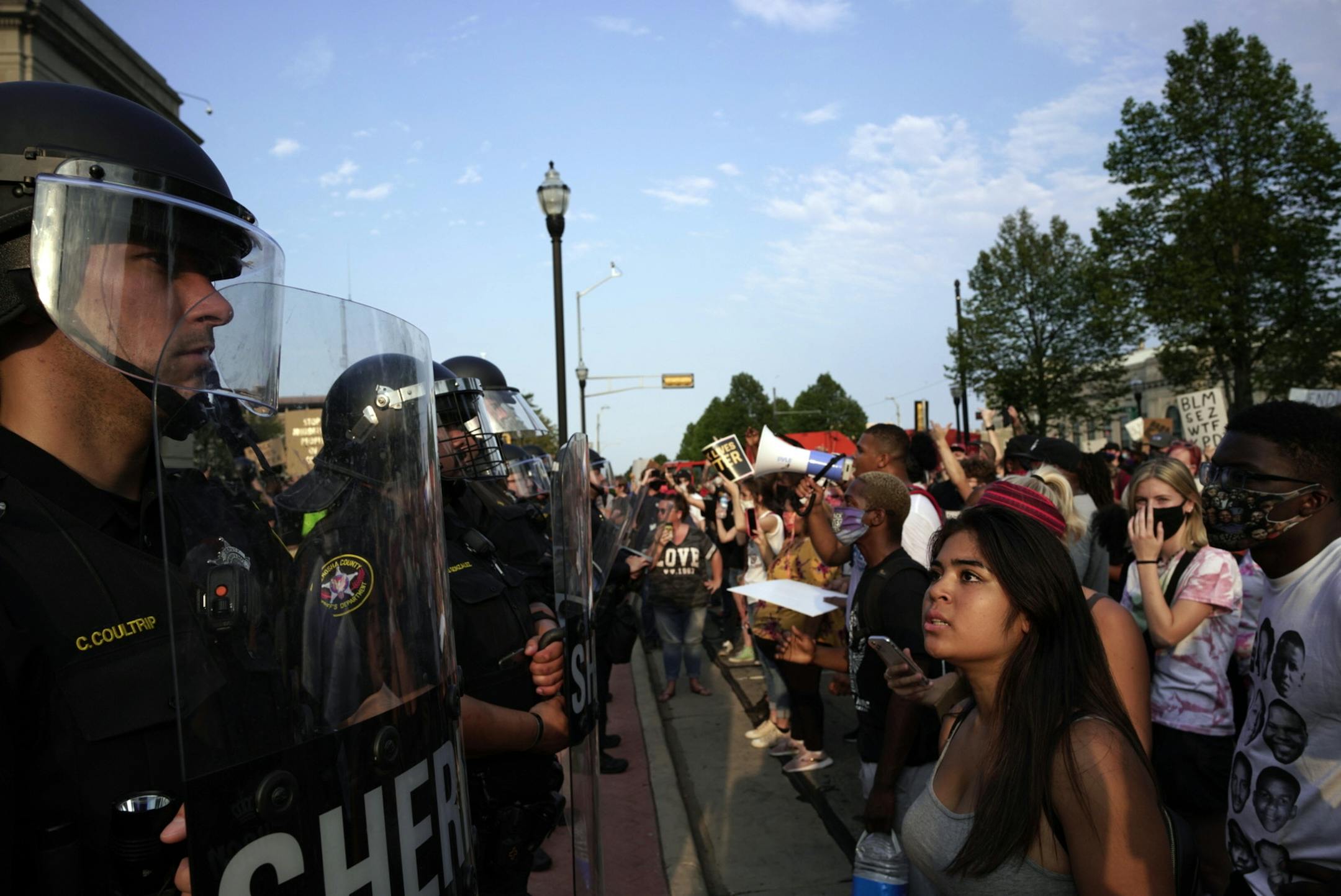
The multiple shots fired into Jacob Blake's back by police in Kenosha, Wis., on Sunday, after the fatal police shooting Friday of Trayford Pellerin in Lafayatte, La., should quash any lingering notion that brutal and excessive police force directed against Black men is an overstated problem or that the nation's reckoning with racism and police violence will be brief.
Lafayette police hit Pellerin with an electric stun weapon, and when he kept walking away, officers opened fire 11 times. It wasn't immediately clear how many shots hit the 31-year-old Black man, who died as he walked toward a convenience store. Police said he was carrying a knife.
Video of Blake's shooting showed the 29-year-old Black man also walking away from police as officers followed him with weapons drawn and aimed at him. His children watched from inside the car as Blake opened the door and leaned inside. An officer grabbed the back of his shirt. Seven shots are clearly heard.
Blake is in stable condition and is expected to survive, but the trauma remains for him, for his children, for Black Americans and for the entire nation. A police shooting that doesn't prove fatal is neither a success story nor a mark of progress. It is yet one more injury inflicted on the disintegrating notion that our policing system serves all Americans equally.
Pellerin may well have had a knife, and officers might have seen something in Blake's car that put them in fear, but it's hard to accept that the best response to either situation was deadly police force.
Lafayette police began rolling out body cameras in late 2016. It wasn't immediately clear whether video was available from the officers who followed Pellerin. Kenosha police in the Blake shooting weren't wearing body cameras, leaving only the bystander video. That recording quickly went viral, turning Kenosha into the latest in a dismaying line of U.S. cities roiled by violent protests.
Having body cameras on the officers in Kenosha would have supplied important additional context to help understand the shooting, and the accountability they provide might have changed the way the officers handled the incident. Such cameras would be required under the federal George Floyd Justice in Policing Act of 2020, which would impose modest but essential mandates on the nation's 18,000 police agencies to curb officer violence.
Granted, many of the activists who protested the police killing of Floyd on May 25 argue that bodycams and other reforms have had their chance to make a difference but have failed. They argue instead for either drastically rolling back or even abolishing police.


