

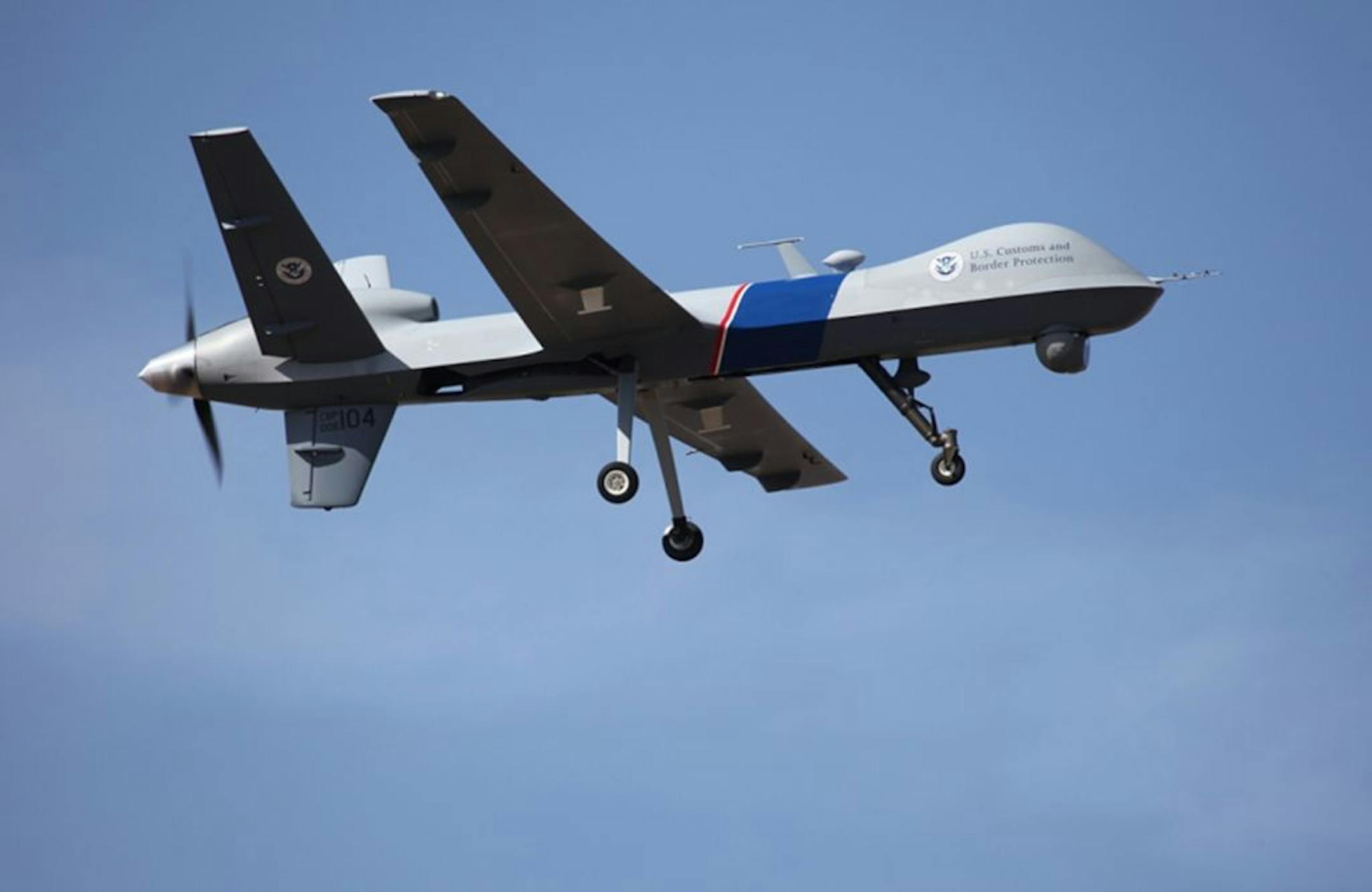
An unmanned U.S. aerial vehicle -- or drone -- reportedly killed eight people in rural Pakistan last week, bringing the estimated death toll from drone strikes in Pakistan this year to 35. As the frequency of drone strikes spikes again, some questions must be asked: How many of those targeted were terrorists? Were any children harmed? And what is the standard of evidence to carry out these attacks?
The United States has to provide answers, and Congress has a critical role to play.
The heart of the problem is that our technological capability has far surpassed our policy. As things stand, the executive branch exercises unilateral authority over drone strikes against terrorists abroad. In some cases, President Obama approves each strike himself through "kill lists." While the president should be commended for creating explicit rules for the use of drones, unilateral kill lists are unseemly and fraught with hazards.
When asked about the drone program in October during an interview on the "The Daily Show," the president said, "One of the things we've got to do is put a legal architecture in place, and we need congressional help in order to do that, to make sure that not only am I reined in, but any president's reined in terms of some of the decisions that we're making."
It's time to put words into action.
Weaponized drones have produced results. They have eliminated 22 of Al-Qaida's top 30 leaders and just last week took out a Taliban leader. Critically, they lessen the need to send our troops into harm's way, reducing the number of U.S. casualties.
Yet the costs of drone strikes have been ignored or inadequately acknowledged. The number of innocent civilian casualties may be greater than people realize. A recent study by human rights experts at Stanford Law School and the New York University School of Law found that the number of innocent civilians killed by U.S. drone strikes is much higher than what the U.S. government has reported: approximately 700 since 2004, including almost 200 children. This is unacceptable.
Another cost is how drone strikes are shaping views of the United States around the world. You might develop a negative attitude toward the United States if your only perception of it is a foreign aircraft buzzing over your house that occasionally fires missiles into your neighborhood. In Pakistan, where 95 percent of U.S. drone strikes have occurred, people familiar with them overwhelmingly express disapproval (97 percent, according to Pew polling from June) and believe they kill too many innocent people (94 percent). Drone strikes may well contribute to the extremism and terrorism the United States seeks to deter.


