

Opinion editor's note: Editorials represent the opinions of the Star Tribune Editorial Board, which operates independently from the newsroom.
•••
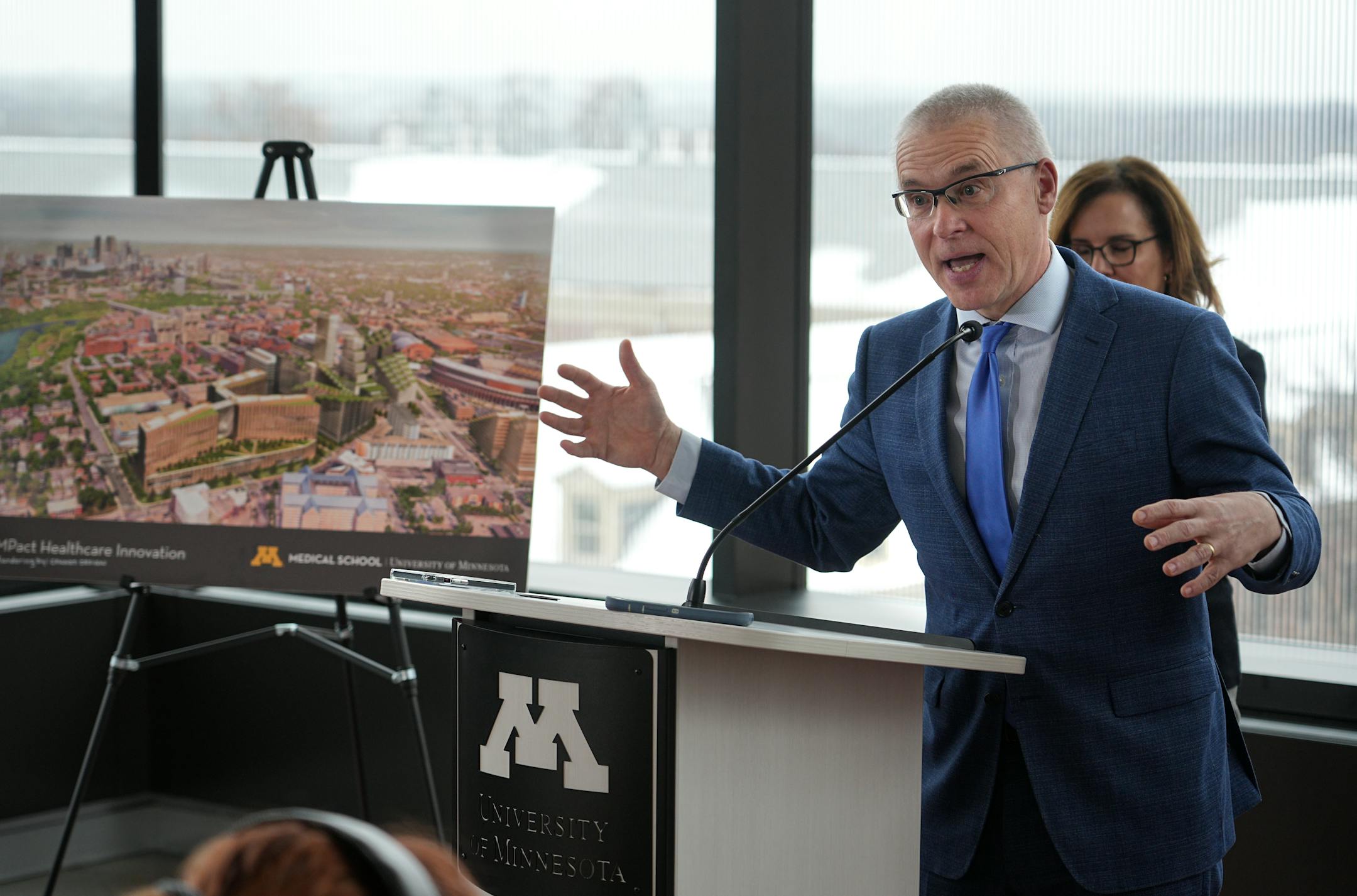
State coffers were stuffed with a $17.5 billion surplus when the University of Minnesota rolled out aspirations last January to build a $1 billion state-of-the-art Medical Center, one at least partially funded by tax dollars, on its Twin Cities campus.
Almost a year later, the U is still pursuing this ambitious vision — and should be. Hospital systems across the nation, particularly those based at universities, are retooling for next-generation medicine, one that will be shaped by artificial intelligence and other technological leaps. The U's Medical Center is also at a crossroads after an unsuccessful merger pursued by its clinical partner, Fairview Health, with an out-of-state health system spotlighted Fairview's finances and tense relations with the U.
U officials are now back with a more detailed plan, revealed earlier this month, that calls for $60 million to $80 million in yearly state funding beginning in fiscal 2025 as part of its long-term plans to improve care and training and modernize facilities. But the state no longer has that historic surplus. Instead, it's facing a more modest $2.4 billion surplus requiring careful management.
Some lawmakers may be tempted to use these tighter purse strings as a reason to punt once again in 2024 on the U Medical Center's future. That is not acceptable, a point that needs to be driven home as the 2024 legislative session approaches in February.
This is a state powered by medical care and technology. A thriving academic health center at the U — one that brings in millions in research grants, fuels medical technology entrepreneurship and is responsible for training 70% of physicians here — is integral to Minnesota's future. This is the time to invest to ensure prosperity and good health for generations to come.
The state's fresh financial challenges will require innovation on the part of lawmakers and the Walz administration to make this a reality. Fortunately, a gubernatorial task force led by Jan Malcolm, one that is aiming to ensure "nation-leading health professions education,'' has been weighing the state's options.


