

For the first time in 30 years — a legal generation — the Supreme Court is poised to revisit the law of abortion rights in a fundamental way.
The last time, in 1992, amid expectations that Roe v. Wade might be reversed, the right to choose was saved by an unlikely coalition: Justices Anthony Kennedy and Sandra Day O'Connor, both President Ronald Reagan's nominees, and David Souter, nominated by President George H.W. Bush, wrote a joint opinion in Planned Parenthood v. Casey that preserved the essential holding of Roe, which had made abortion a constitutional right in 1973.
In the decades that followed, Souter became part of the court's liberal wing. O'Connor and Kennedy became swing justices, by turns controlling the court's jurisprudence on hot-button topics like affirmative action, detainee rights and religious liberty. The Casey opinion itself became the building block of Kennedy's unfolding gay rights jurisprudence.
This time, if the Casey case is not to be overturned, the key swing justice will almost certainly be Brett Kavanaugh. Chief Justice John Roberts has already signaled that he is likely to join the court's three remaining liberals in voting to sustain the Casey precedent. Justices Clarence Thomas, Samuel Alito and Neil Gorsuch have indicated they would vote to overturn Roe.
Justice Amy Coney Barrett might conceivably be open to an argument based on precedent. But her jurisprudence, her background and the influence of the late Justice Antonin Scalia on her judicial outlook all suggest she is willing to reverse Casey and Roe. And it is almost impossible to imagine her casting the deciding vote to uphold Casey by 5 to 4.
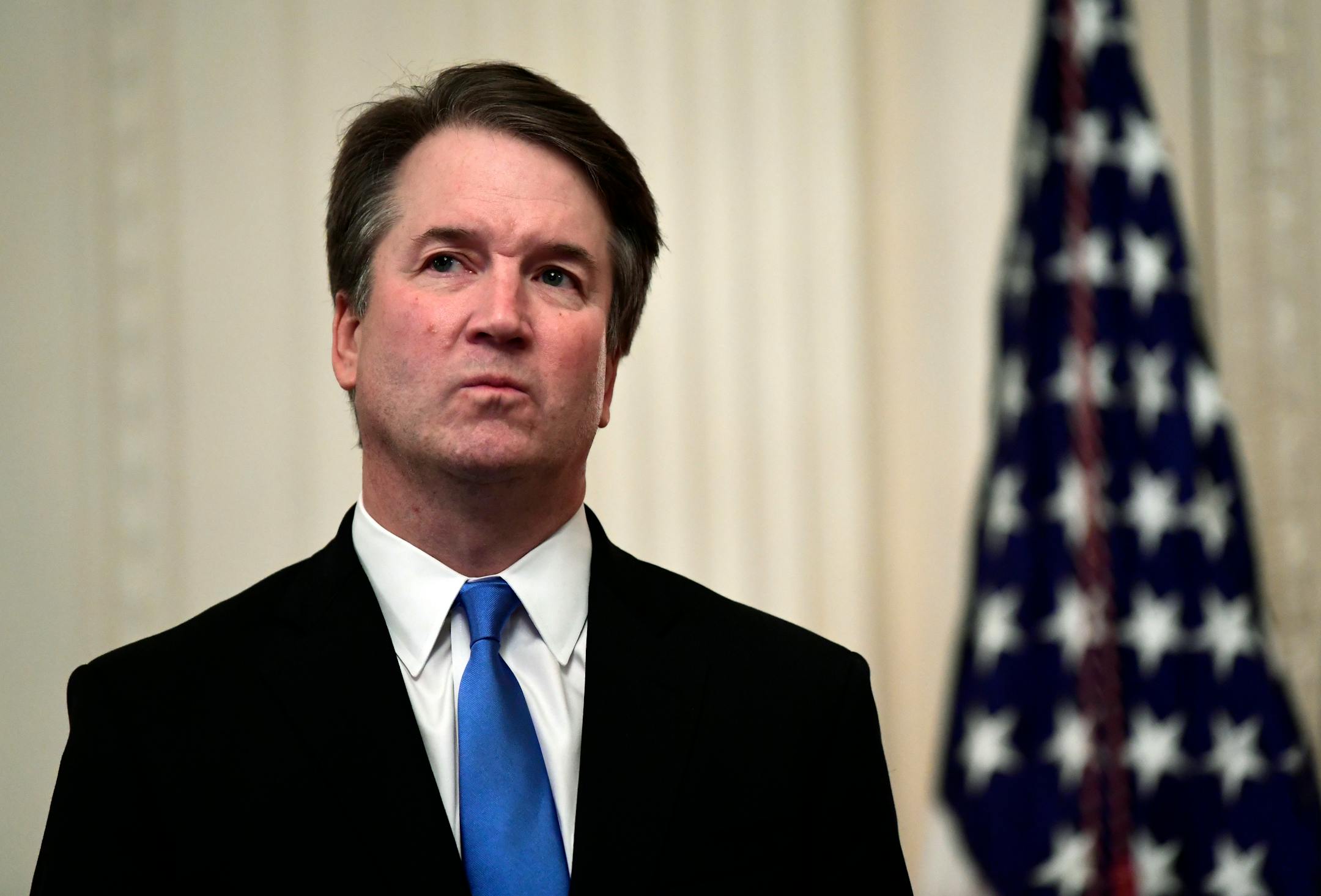
That leaves Kavanaugh, who clerked for Kennedy, remained personally close to him, and observed the path (and power) of the swing justice from a front-row seat.
So far, Kavanaugh has weighed in on the abortion issue mostly indirectly.
He wrote a long solo concurrence in a non-abortion case on the question of when it is appropriate to overturn precedent — and left his options open. He tried unsuccessfully to persuade the Supreme Court to avoid another important abortion case — a move that similarly left him free to maneuver in the term ahead.


