

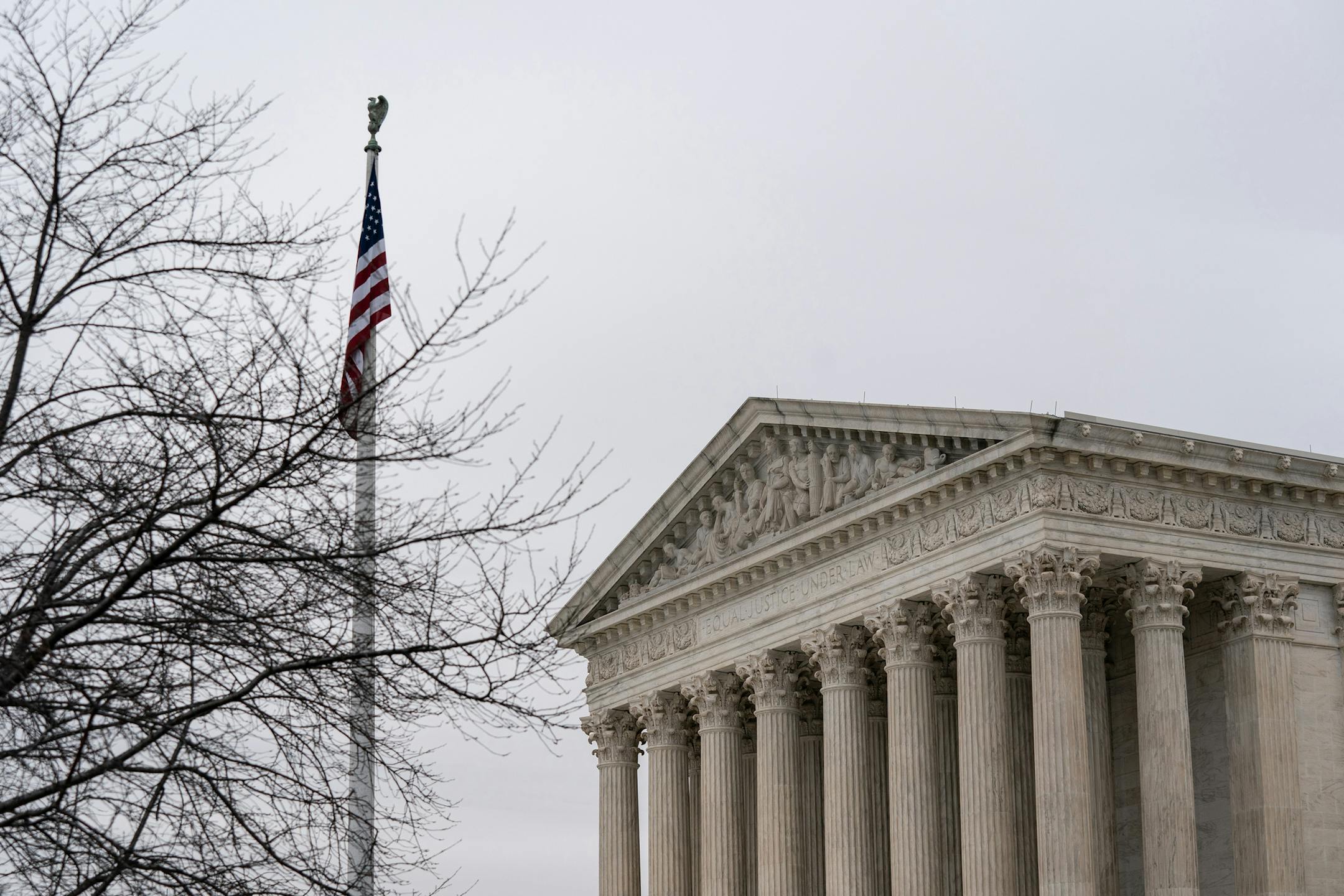
Tuesday's Supreme Court arguments in a major voting rights case portend what appears to be the future of election law: The continuing withdrawal of the court from the role of policing elections for racial fairness. Call this the Roberts Doctrine.
Chief Justice John Roberts has been pushing the agenda of judicial disengagement from voting rights issues since 2012, when he wrote a landmark decision in the case Shelby County v. Holder, striking down section 5 of the Voting Rights Act of 1965. The new case, out of Arizona, addresses Section 2 of the same act. The court may well be poised to weaken that part of the law to make it harder to challenge a state's voting practices as racially discriminatory.
If it does, this will continue the judicial pullback from a role the courts have played since 1964, when the Supreme Court established the principle of one person, one vote.
The Roberts Doctrine reflects the chief justice's particular jurisprudence, profoundly influenced by the thinking of the late Justice Felix Frankfurter, who retired from the court in 1962. Frankfurter was the father of the modern doctrine of judicial restraint.
When Roberts follows Frankfurter in declining to strike down legislation, as he partly did in the Affordable Care Act case, liberals like it.
When he follows Frankfurter in restraint around election law challenges, as he did in rejecting former President Donald Trump's judicial challenges to the 2020 election results in Pennsylvania, liberals applaud that, too.
But Frankfurter's judicial restraint also included a deep skepticism around the courts' capacity to intervene in voting rights issues. In his own mind, Roberts followed that approach in the Shelby County case. He may do so in the Arizona case. And here, liberals will reject his approach — as indeed liberals rejected Frankfurter's approach in his era.
The basic idea of voting rights restraint is that elections are inherently competitive political battles — and that there is no neutral way for courts to intervene that doesn't favor one side or the other. If courts rule on election matters, runs the theory, they will end up undercutting their own legitimacy by seeming to side with one political party.


