

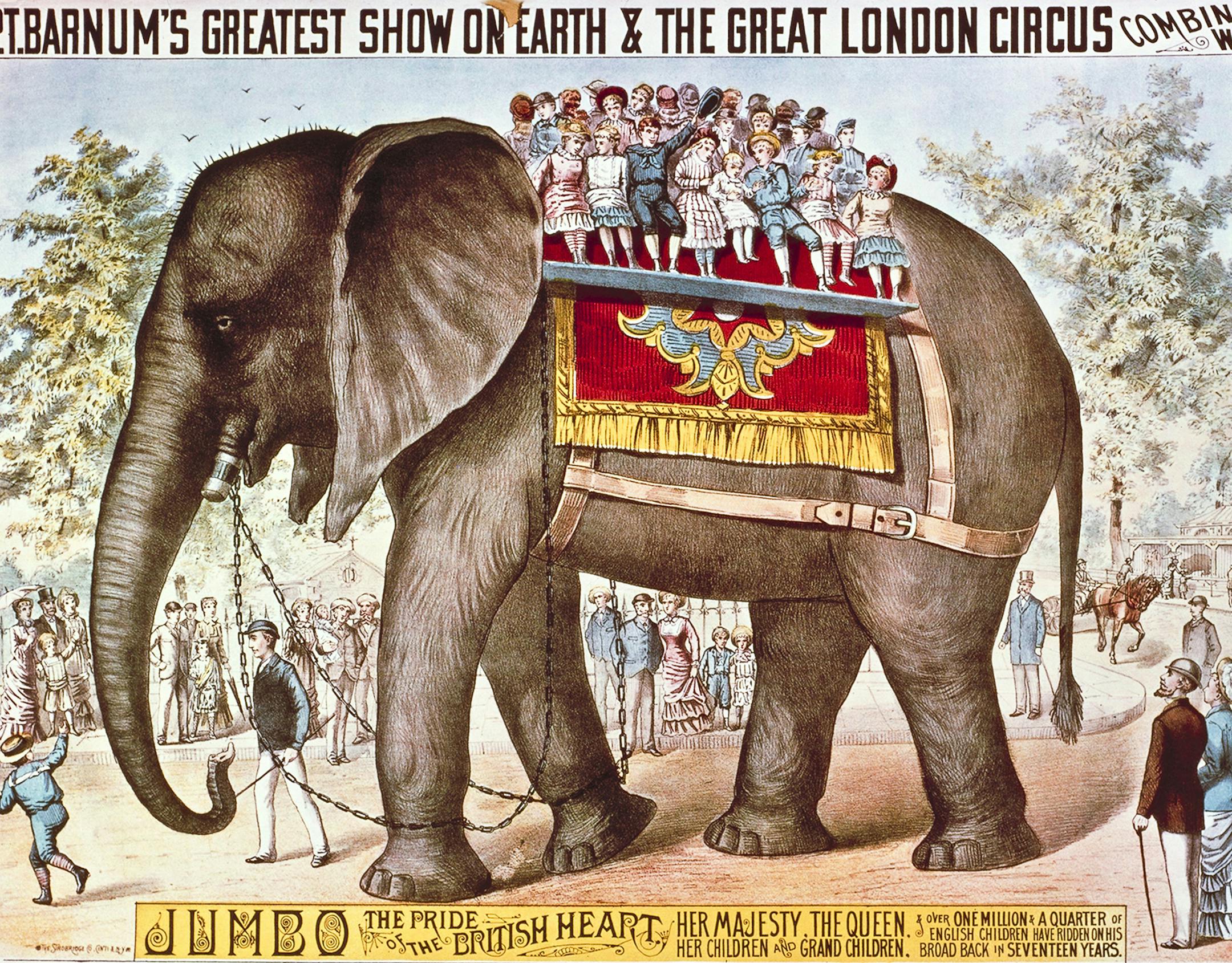
The costumes are coming off, the shackles are being unlocked and the boxcars are opening. After more than 130 years, the Ringling Bros. and Barnum & Bailey circus will retire its elephants, sending them to a conservation center in Florida.
As a child, my favorite movie was Disney's "Dumbo." There is a heart-wrenching scene where Dumbo is being cradled by his mother, who is chained inside a boxcar. That indelible scene stuck with me, and now, as an animal-rights advocate, I am overjoyed by this recent news.
There is a deep history of use and exploitation of elephants in circuses. In 1882, P.T. Barnum, a showman and businessman, purchased Jumbo, a 12-foot-tall African elephant, from a London zoo and shipped him across the Atlantic to New York to be featured in the Barnum & Bailey Circus, which later merged with the Ringling Bros. Circus.
Over the years, Ringling amassed a menagerie of elephants — it now owns 53 — and forced them to perform tricks such as balancing on their hind legs with their front legs perched on top of one another, forming a sort of elephant conga line, all for paying customers.
When they are not performing, the elephants are chained and shipped around the country in boxcars.
Elephants are some of the most cognitively complex and social nonhuman animals that we know of. They are adept tool users, self-aware and cooperative problem-solvers. In the wild, elephants walk as many as 40 miles each day. They form deep social bonds and live in cohesive family groups of sometimes upward of 100 members.
Elephants frequently display empathy; for instance, they have been observed feeding others who are unable to use their own trunks to eat. They can communicate over long distances by producing vibrations that are inaudible to humans.
Elephants possess an understanding of death and have been observed engaging in mourning behavior.


