

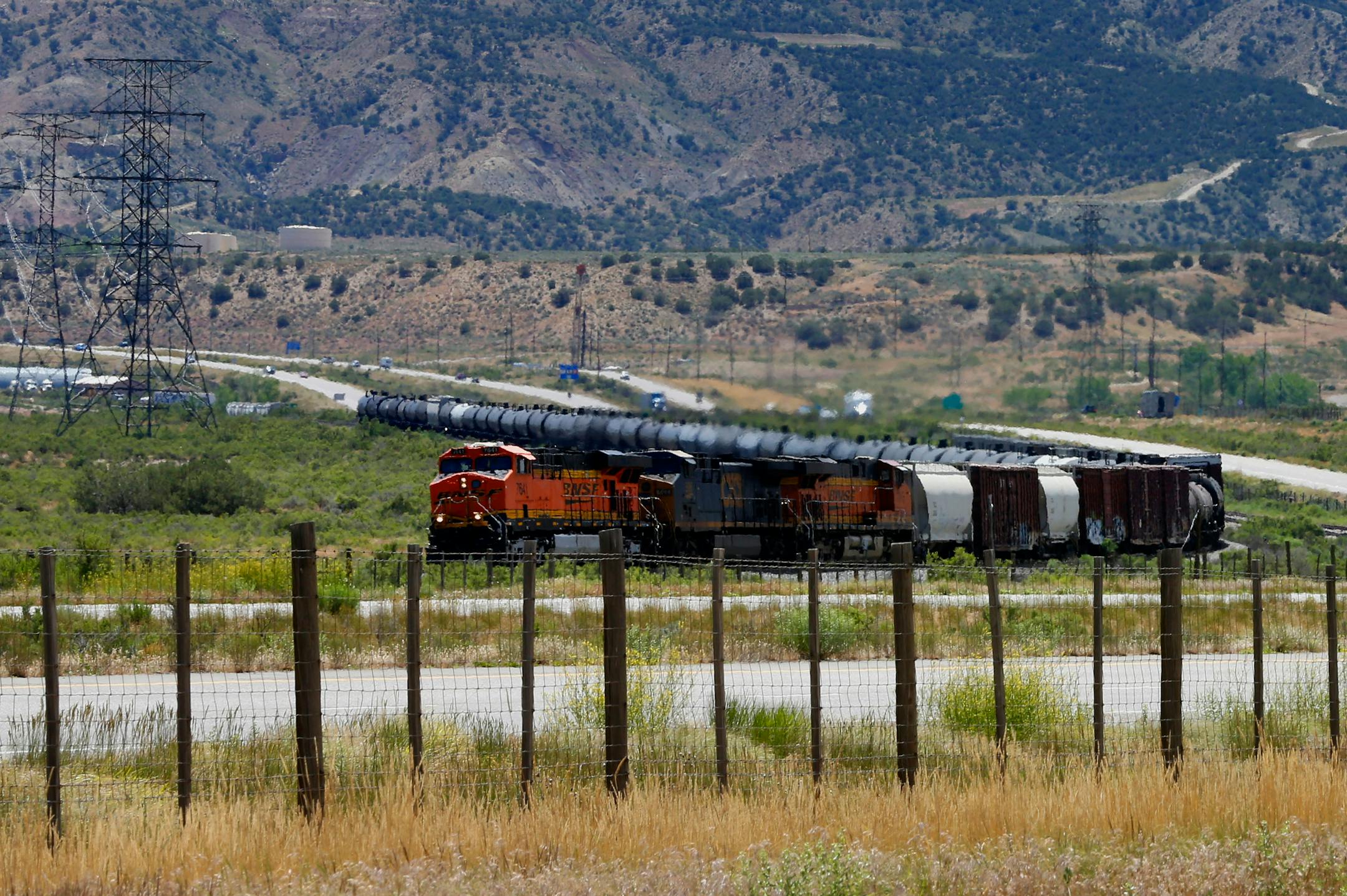
Thousands of older railroad tank cars that carry North Dakota crude oil will be phased out or retrofitted in two years under a federal plan announced Wednesday to reduce the risk of oil train disasters.
"I would like to see this happen yesterday," said U.S. Transportation Secretary Anthony Foxx as he announced draft safety rules that he said would be rapidly finalized after a 60-day comment period.
The proposed rules are important for Minnesota because officials say seven North Dakota oil trains pass through the state daily. The state also has 21 ethanol plants that rely on truck and rail to deliver fuel because ethanol pipelines don't exist.
The draft rules also would extend an existing 40 mph speed limit for such hazard-laden trains, enhance train braking systems, direct railroads to review routing of hazardous materials through urban areas and set new standards for testing crude oil.
Foxx also said the Transportation Department has been testing light sweet crude oil from the Bakken formation for months and concluded that it is on the "high end of volatility" — a claim the North Dakota oil industry immediately disputed. Despite the harsh words about the oil testing, the overall reaction to the draft tank car rules from the oil and rail industries was more favorable.
Gov. Mark Dayton, who signed a 2014 Minnesota law to improve rail safety, on Wednesday urged the federal government to quickly act on the proposed rules. But Rep. Frank Hornstein, a Minneapolis state legislator who sponsored the state rail safety measure, questioned the two-year wait to retire or retrofit old tank cars.
"If there is a jumbo jet that has a defective engine, we ground the plane immediately," Hornstein said in an interview. "We shouldn't take a couple of years to do this."
He also said the proposed rules don't adequately address a National Transportation Safety Board recommendation to reroute oil trains around major cities.


