
Josh Charles has a heart in ‘Best Medicine’

After years of playing smarmy characters, the actor is a grumpy but charming doctor in the comedy.

The New York Times
January 3, 2026 at 2:30PM
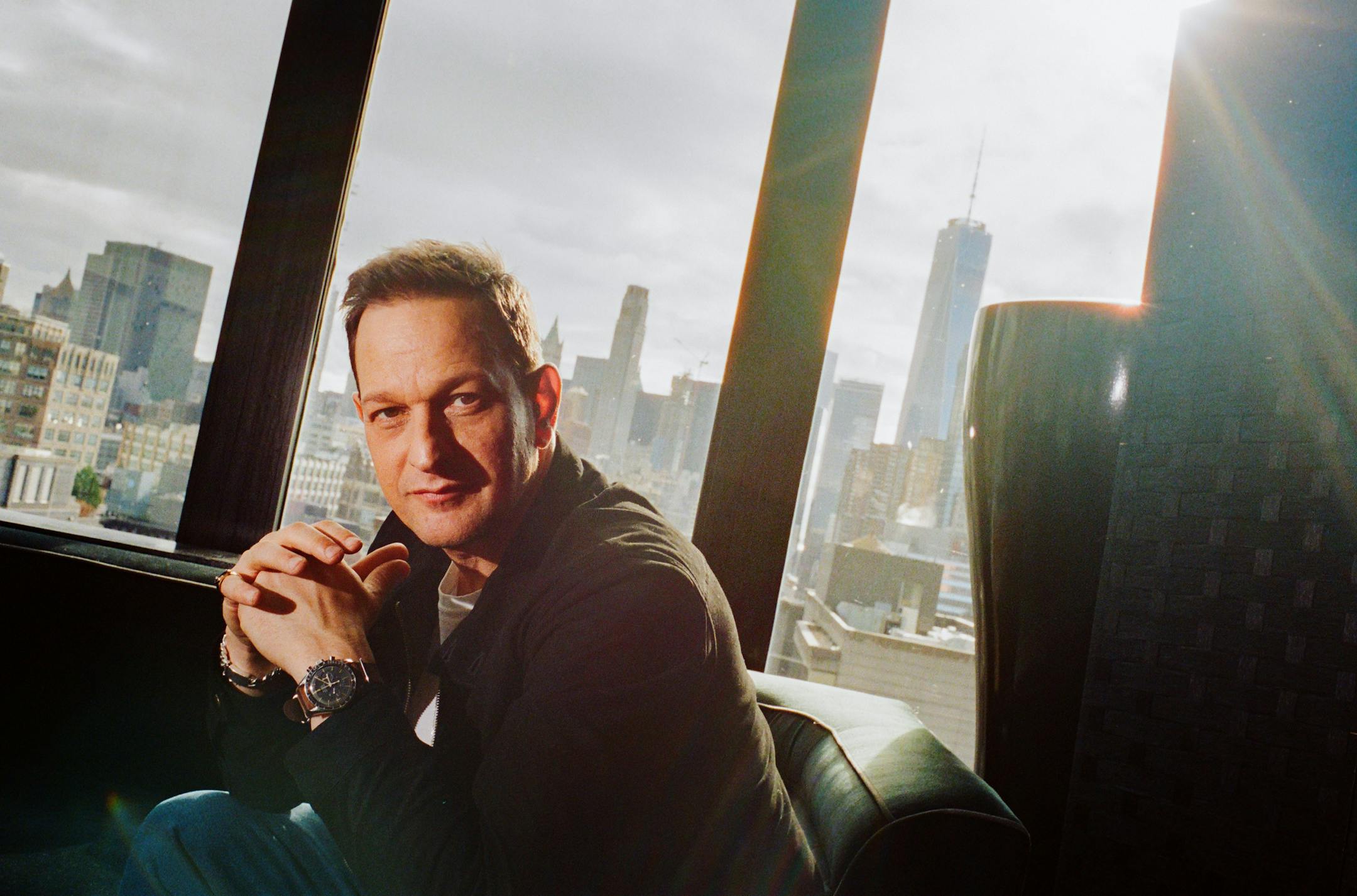
“It’s been feast or famine,” said Josh Charles of his career in movies, TV and theater. “I just want to do good work.” Charles plays the lead in the new Fox comedy "Best Medicine." (PETER FISHER/The New York Times)

Josh Charles used to worry. He had played jerks, schmucks, mean preppies with popped collars. Was that how people thought of him?

On the set of the 2015 movie “Wet Hot American Summer: First Day of Camp,” in which Charles sported not one but three popped collars, he remembers turning to co-writer Michael Showalter and saying, “I want people to know I’m not an [expletive]. I’m not saying I’m perfect or anything, but I pride myself on being a good human being.”

In the new Fox comedy, “Best Medicine,” Charles, 54, plays another jerk, but he seems determined to widen the gap between actor and role.

“Josh is kind of a perfect man,” writer and producer Robert King said. Charles’ current co-star, Annie Potts, used similar words: “He’s sort of the ideal guy.” Showalter, who had little memory of their on-set conversation, called him “a wonderful guy, a lovely human.”

Still, a tension between decency and arrogance enlivens Charles’ best characters, like Dan, the anchor he played on “Sports Night,” or Will, the brash lawyer of “The Good Wife.” Those same qualities reappear, in comic form, on “Best Medicine,” which premieres Jan. 4.

An adaptation of the British series “Doc Martin,” it stars Charles as Martin Best, a go-getter heart surgeon with a ruinous bedside manner who relocates to rural Maine. Will the quirky locals teach him to open up to friendship and love? Seems likely.

Charles grew up in Baltimore, the younger son of an advertising executive and a gossip columnist. Taken to open mic nights in elementary school, he was drawn to comedy. Then he spent a life-changing summer at a theater camp. He made his professional debut at 15, as a sneering teen in the John Waters film “Hairspray.”

Two years later, having dropped out of high school, he was playing a prep school kid in the 1989 movie “Dead Poets Society,” a box office hit that won the Oscar for best screenplay. Ethan Hawke, a co-star, remembered Charles as a funny teenager who loved acting and would talk about Baltimore sports until your ears bled.

“He had a toughness about him,” said Hawke, who counts Charles as a close friend. “He wasn’t silly or superficial. He was smart, and he understood before I did the game of the business.”

Charles wouldn’t necessarily agree with that last part. In the years after “Dead Poets,” he did movies (“Don’t Tell Mom the Babysitter’s Dead,” “Threesome”) without ever becoming a movie star, guided less by career savvy than by a desire to avoid repeating himself.

“I knew I wanted to be a real actor,” he said. “Because that other stuff, it didn’t feel enduring. It didn’t feel real.”

He doesn’t regret particular choices, though he seemed to struggle to understand why he had said no so often. “It’s not holding out because I think I’m better,” he ruminated. “I want to do work that pushes me.”

Often he found that onstage. Anna D. Shapiro, a theater director who has worked with Charles often, said he brings surprising depth to his roles. “He’s got so much more going on inside of him than people can see,” she said. “But they can feel it.”

Still, theater doesn’t pay much, and Charles had to support first himself, and then a family. (He and his wife and former ballerina Sophie Flack, have two children.) Sometimes that meant taking what was available or doing his best in difficult situations. In 1998, he signed on to the Aaron Sorkin comedy “Sports Night,” his first major television project. The show was critically acclaimed, but he had friction with Sorkin.

“I like working with people that collaborate, that care about other people’s opinions,” he said. That wasn’t his relationship with Sorkin. (Sorkin, reached through a representative, declined to comment.)

He acted sporadically over the next decade, returning to prominent roles with an arc on the HBO therapy series “In Treatment,” in which he played an unhappy husband, and on “The Good Wife,” in which he played the eventual love interest of the series’ star, Julianna Margulies.

Over the past few years, Charles has immersed himself in darker fare.

He took roles on “The Handmaid’s Tale” and on “The Veil,” and played a corrupt cop in the fact-based Baltimore limited series “We Own This City.” The chance to live in a lighter world felt welcome, which led him to “Best Medicine.”

Liz Tuccillo, the showrunner, had assembled a short list of actors to play Martin. Charles was at the top.

“They have to be very grumpy and very unlikable in one way, but of course deeply charming,” she said. Charles, colleagues told her, could do all that, and he also had a warmth that softened the character.

What he found difficult was the misanthropy. “You’re building a show around someone who doesn’t like people very much,” he said. “It’s been hard.” What he likes is showing the vulnerability underneath all the grouchiness, the desire to be a decent guy.

A guy a little more like Charles.

about the writer

about the writer

Alexis Soloski

More from TV and Media

See More
card image
PETER FISHER/The New York Times

After years of playing smarmy characters, the actor is a grumpy but charming doctor in the comedy.

card image