Roper: Public outcry might give new life to decaying, 136-year-old Minneapolis house

An 1889 home in northeast Minneapolis is in rough shape after years of vacancy. A proposal to demolish it incensed neighbors.

Columnist Icon
The Minnesota Star Tribune
November 23, 2025 at 12:00PM
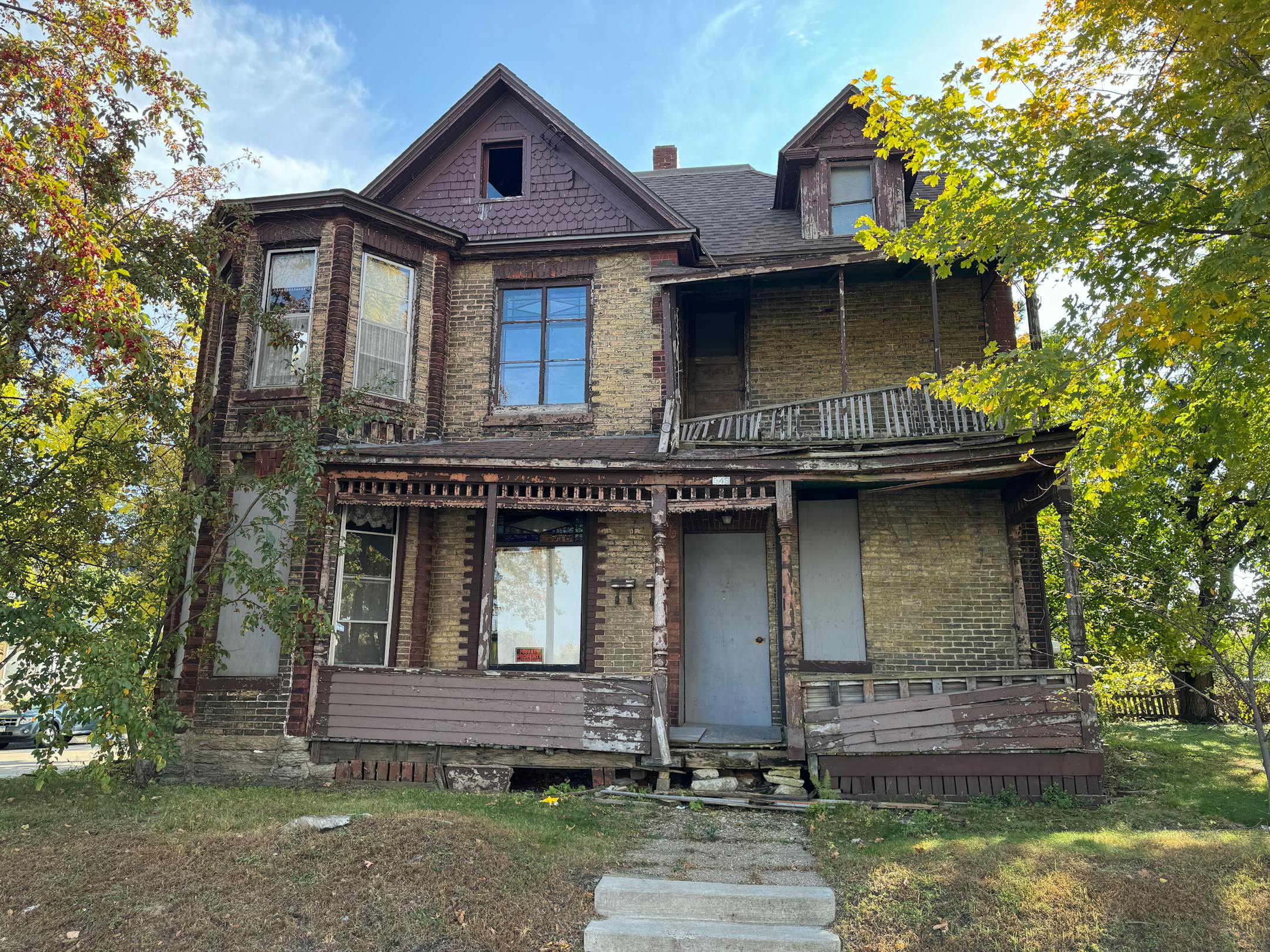
The John Cook House on 18th Avenue NE. in Minneapolis is in rough shape, but may still be preserved. (Eric Roper/The Minnesota Star Tribune)

Sign up here to follow this column by email.

Stories about people fighting to preserve decrepit old buildings often end with a pile of rubble. But not this one.

This is the tale of a 136-year-old house in northeast Minneapolis that was recently spared from the wrecking ball after a request to level it triggered a neighborhood uproar. It was a victory over “demolition by neglect,” as some viewed the situation, since the place had been allowed to rot nearly into extinction.

It really came to the brink, though.

Just when the City Council was about to vote Friday on whether the historic landmark could be torn down, city attorneys announced that the owner would try to sell it — maybe at a loss. Now, a bunch of neighbors are talking about joining forces to bring it back to life, which will require a mountain of cash.

The saga illustrates the need for more effective enforcement of preservation rules to protect historic buildings from ruin. In response to the debacle, the council tightened the rules for keeping historic properties safe from the elements and trespassers.

I first learned about the Cook House when a friend sent me a social media video from Recovery Bike Shop, located a couple of blocks north of the house on Central Avenue. The post was a rallying cry that this local landmark, which had been decaying for years, was now seriously in danger.
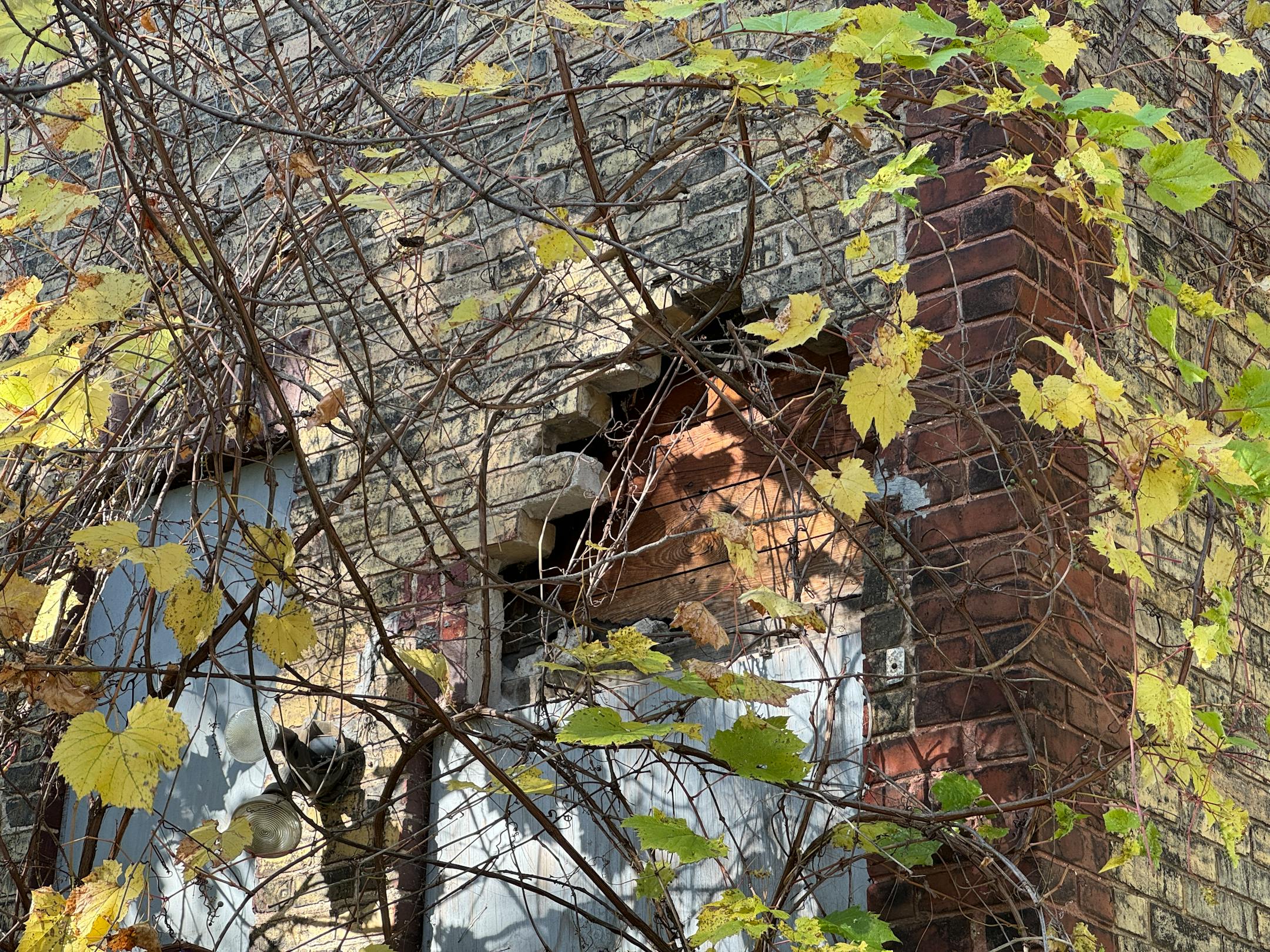
Missing brick siding at the John Cook House. (Eric Roper/The Minnesota Star Tribune)

“Then all these people came out of the woodwork and [said], ‘I’ve always wondered about that house,’ ” Seth Stattmiller, co-owner of the bike shop, said when I caught up with him at a neighborhood hotdish competition. “It just is that kind of house.”


The Cook House catches people’s eye partly because of its cream- and red-brick facade — a rarity in a city not known for brick homes. Built in the Victorian-era Queen Anne style, it is one of only several hundred homes in the city that date back to the 1880s. It was built by John Cook, a mason, who also erected two other similar homes on 18th Avenue.

“It’s the epitome of what Northeast stands for,” said Elizabeth Richardson, co-owner of the bike shop and Stattmiller’s wife. “This is a place that is built by artists and workers and makers.”

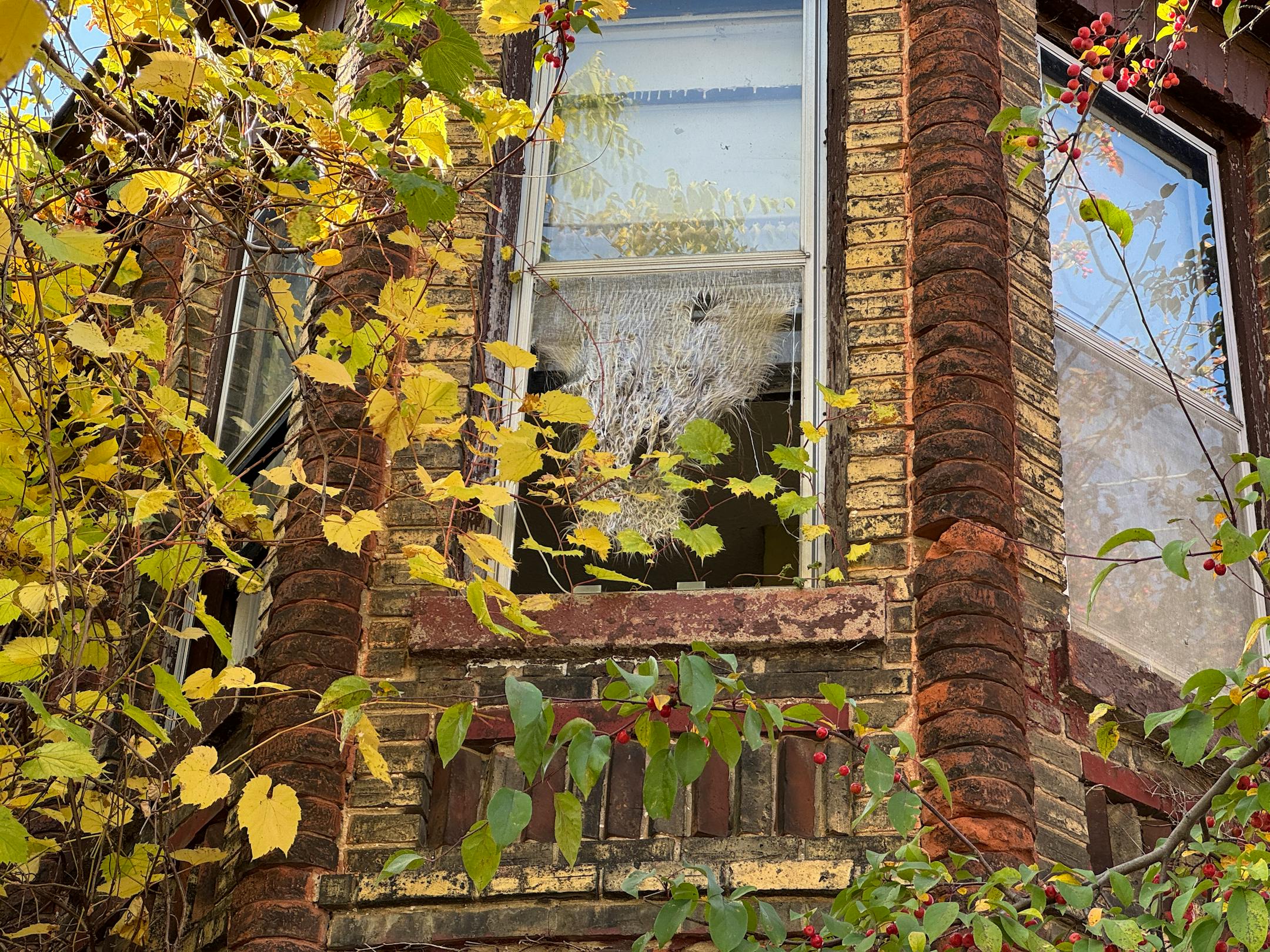
But the house is a mess. The porches are falling in on themselves, windows are broken, sections of brick are missing, paint is peeling. And that’s just the exterior.

“I’ve driven past it and thought, ‘How wonderful and how horrible,’ ” Northeast resident Catherine Kemp told me at a Sunday morning coffee gathering outside the house, organized by the bike shop. “Wonderful that it still exists, horrible that it’s falling apart.”

A Sunday morning gathering outside the John Cook House in late October. (Eric Roper/The Minnesota Star Tribune)

It wasn’t always this way.

The property’s beauty in the 1990s inspired Darrell Nutting to buy a house nearby. The Cook House was occupied then by two sisters.

“It was vine-covered and the yard was real nice. It was a very lovely house,“ Nutting said. The sisters struggled to keep up with the maintenance in their later years, Nutting said.

The last of the sisters died in 2014, and the building has been vacant ever since. It changed hands twice before it was purchased in 2019 by Abubakar Jibril, its current owner.

Jibril intended to demolish the house and make it a staging area for the construction of an adjacent apartment building on Central Avenue, according to a letter submitted to the city by developer Master Properties. Sensing the development pressure, then-Council Member Kevin Reich nominated the house — already flagged as a potential historic property — for landmark status.

It became a historic landmark in 2021, which obligated the owner to keep it maintained. The apartment development stalled, meanwhile, and the house deteriorated.

When Jibril sought to demolish the home this August, angry comments poured into City Hall.

A neighboring family, the Tempels, wrote that they had reported open windows on the upper floors, but were told the vacant building rules only require first-floor windows to be secured.

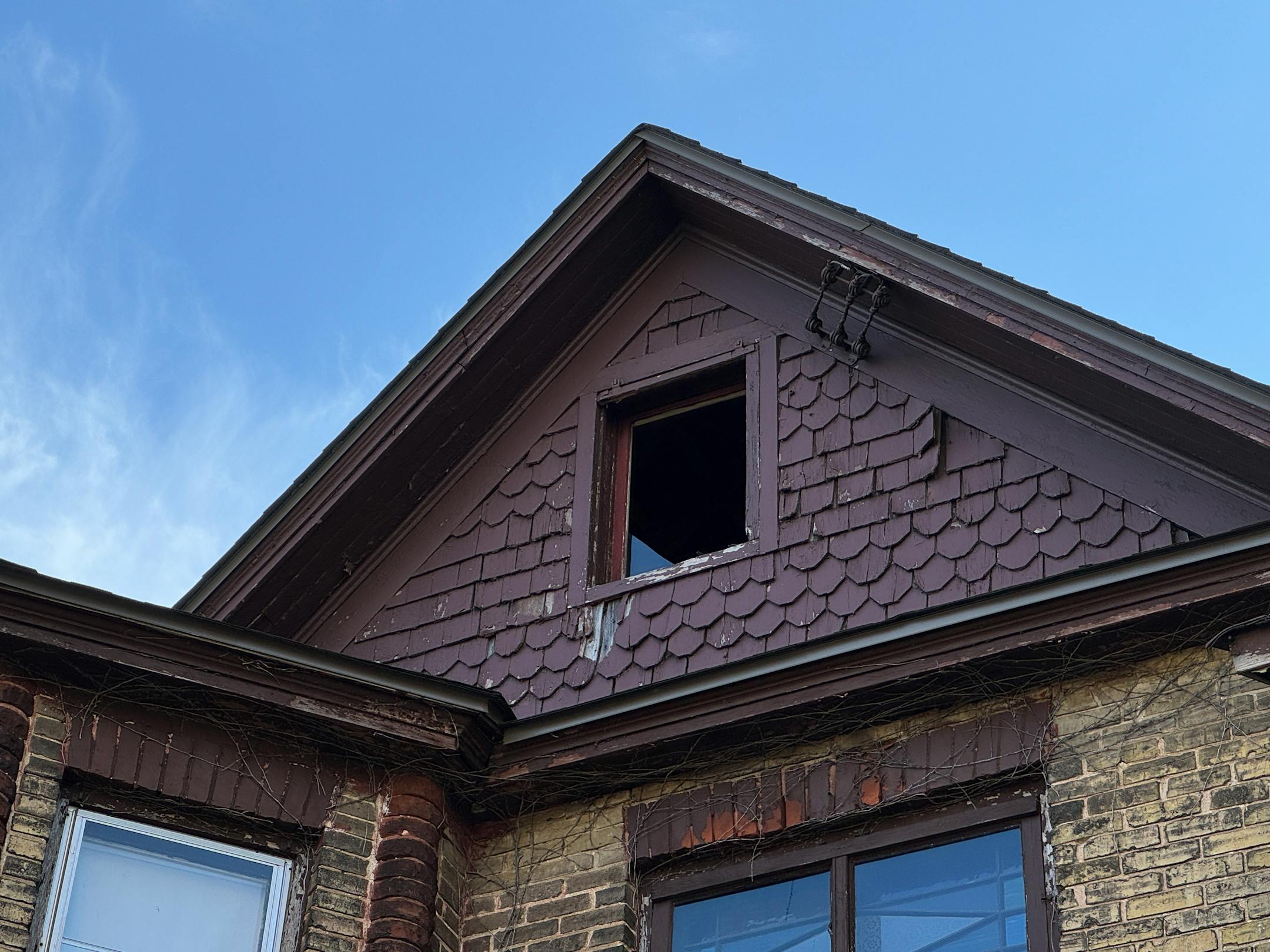
An open window on the second floor of the John Cook House, photographed in mid-October. (Eric Roper/The Minnesota Star Tribune)

“If anything, this situation shows that the existing ordinances related to historic properties do not provide the city enough tools to effectively incentivize a property owner who neglects a historic property,” wrote Mark and Amanda Tempel.

Jibril’s attorney, Jacob Steen, argued in public hearings that the city essentially created an untenable situation by condemning the building as unsafe and then designating it a historic landmark — which makes it more onerous to repair or demolish.

“This was not demolition by neglect. This was demolition by red tape,” Steen told a city committee.

Steen said Jibril has been trying to maintain the building. He evicted trespassers 15 times, Steen said, which required constantly resecuring the building. The city has meanwhile imposed nearly $74,000 in fines since 2014 — mostly for vacancy.

A broken window on an upper floor of the John Cook House, photographed in mid-October. (Eric Roper/The Minnesota Star Tribune)

“This building cannot be rehabilitated,” Steen said. “It is too far gone, and it is beyond repair.”

(I asked Steen if I could speak with Jibril. Steen said Jibril requested that all statements come through his attorney.)

Ultimately, a deal was reached to delay the demolition decision for six months while Jibril seeks to sell the house, even if it is at a loss, city attorneys told the City Council. At the same meeting, the council changed the historic preservation ordinance to require landmark buildings to be fully secured and weathertight.

Stattmiller, of the bike shop, said it will cost at least $500,000 to purchase and restore the place. About a dozen people at a recent meeting on the issue were willing to put money in, he said.

“I think the neighborhood is willing to put money into this,” Stattmiller said.

The Cook House’s future still isn’t guaranteed. But at least it’s been granted a temporary reprieve.

about the writer

about the writer

Eric Roper

Columnist

Eric Roper is a columnist for the Star Tribune focused on urban affairs in the Twin Cities. He previously oversaw Curious Minnesota, the Minnesota Star Tribune's reader-driven reporting project.

See Moreicon