
Roper: New ‘Ghost of a Chance’ podcast episode illustrates a community grappling with hard history

The six-part narrative podcast about the Robinsons, a Black couple who lived in Eric Roper’s south Minneapolis home, premiered earlier this year.

Columnist Icon
The Minnesota Star Tribune
November 13, 2025 at 12:00PM
People lay flowers on Clementine Robinson's grave at the October headstone unveiling event in north Minneapolis. (Anthony Souffle/The Minnesota Star Tribune)

They used to live only in my head, as far as I knew. Harry and Clementine Robinson were my private fixation. But because of what the Robinsons’ lives taught me, they occupy many people’s thoughts these days.

The Robinsons were a Black couple who owned my southwest Minneapolis home a century ago, and the protagonists of the Star Tribune’s first narrative podcast, “Ghost of a Chance.” Months after we launched the project, I know from extensive feedback that the Robinsons’ trailblazing story is sparking conversations about the history of race and discrimination in Minneapolis.

And it isn’t all talk.

Listeners donated money this year to install a headstone on Clementine’s unmarked grave, which was unveiled at a joyous ceremony in October. That event is at the heart of a bonus episode of the podcast we just released, produced by my colleague Melissa Townsend. You can listen to it on all podcast platforms, or click on the graphic below.

The episode covers a lot of what happened after the six-part podcast was released, such as the classroom of fourth-graders in southwest Minneapolis who brought spare change to school for Clementine’s headstone. (I’m still floored by that.) Or the listener who learned unpleasant information about her revered great-grandfather after hearing his name in the podcast.

Our objective with this project was to start a community conversation. I have spoken to nearly two dozen groups across the metro about the Robinsons’ story since it launched, including churches, breakfast clubs and neighborhood organizations.

And on Tuesday, the Minneapolis Foundation is hosting a “Ghost of a Chance” event at Hennepin County Library moderated by former public radio host Tom Weber, now with the foundation. Tickets are free.

It’s been encouraging to see the interest, because this isn’t easy history.
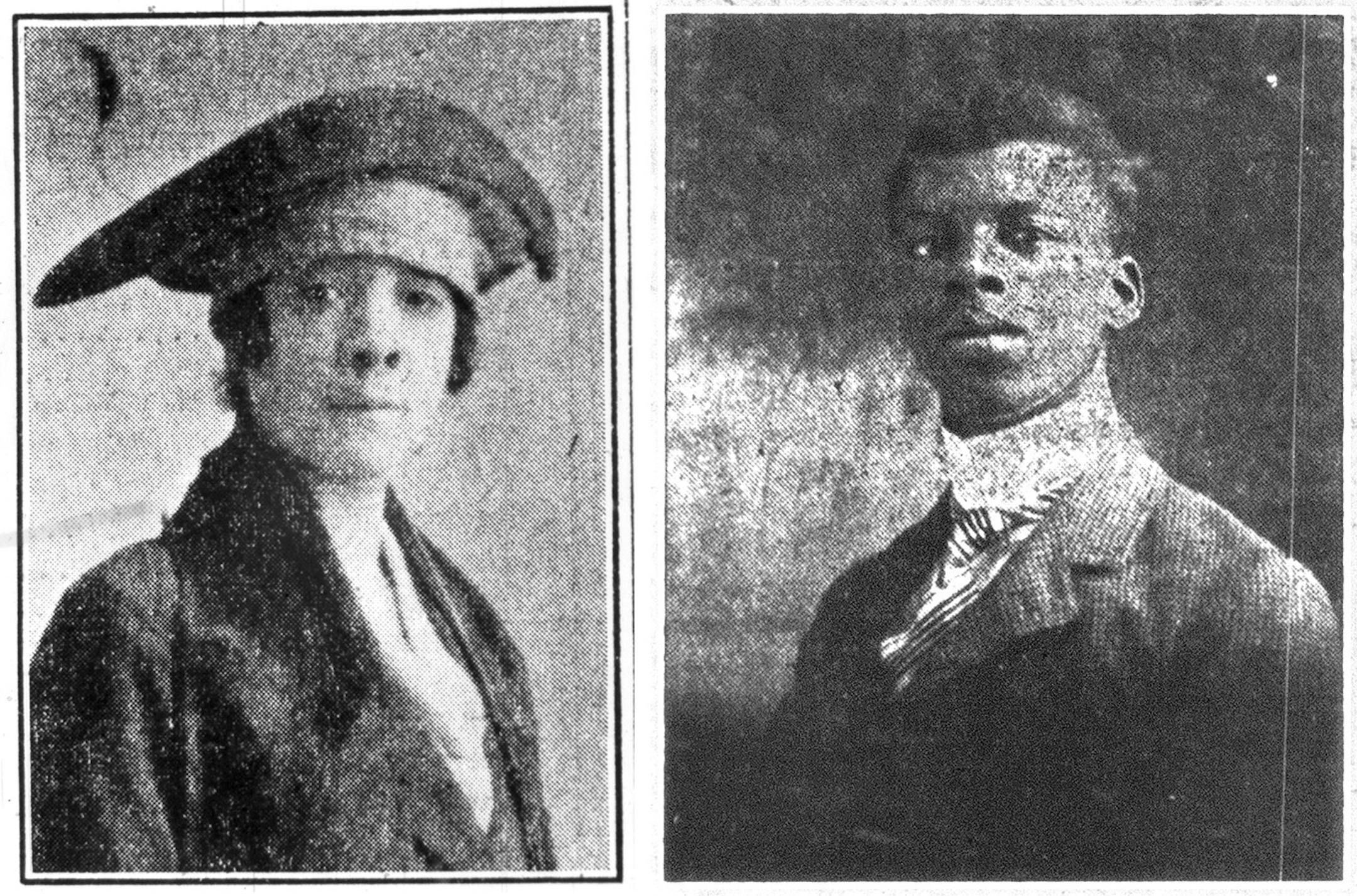
Clementine Robinson, left, photographed in 1920, and a photograph of Harry Robinson that appeared on the front page of his hometown newspaper in Mitchell, Ind., in 1900. (Images provided by National Advocate via Minnesota Historical Society and Mitchell Commercial via Indiana University)

It can be uncomfortable to hear, for example, that the southwest portion of Minneapolis is today the whitest part of the city because of events like the 1920 protest meeting to oust Black residents. It occurred five blocks from the Robinsons’ house.

But understanding these events is important table-setting for conversations about our region’s vast racial disparities. Grappling with “hard history” is a theme of the new episode, which discusses how even small actions like a headstone fundraiser can help us process the past.

On that balmy, clear-blue day in the cemetery when we unveiled Clementine’s headstone, the choir from St. Peter’s AME Church led the crowd in the hymn “We’ll Understand It Better By and By” as people placed flowers on the grave.

“By and by, when the morning comes / All the saints of God are gathered home / We will tell the story how we’ve overcome / And we’ll understand it better by and by.”

The lyrics of the hymn have stuck with me ever since the community historian of Clementine’s Missouri hometown, Bob Harris, gently sang the chorus from his bed in a nursing home in early 2024. He died three months later.

“You don’t understand a lot of things now,” Harris told me. “But later on you will.”

He was right.

about the writer

about the writer

Eric Roper

Columnist

Eric Roper is a columnist for the Star Tribune focused on urban affairs in the Twin Cities. He previously oversaw Curious Minnesota, the Minnesota Star Tribune's reader-driven reporting project.

See Moreicon

More from Minneapolis

See More
card image
card image