
Sixty years after her death, Clementine Robinson finally gets her grave marker

Robinson and her husband Harry, a Black couple who faced racism in Minneapolis a century ago, were featured in the Star Tribune podcast “Ghost of a Chance.”

The Minnesota Star Tribune
October 5, 2025 at 12:24AM
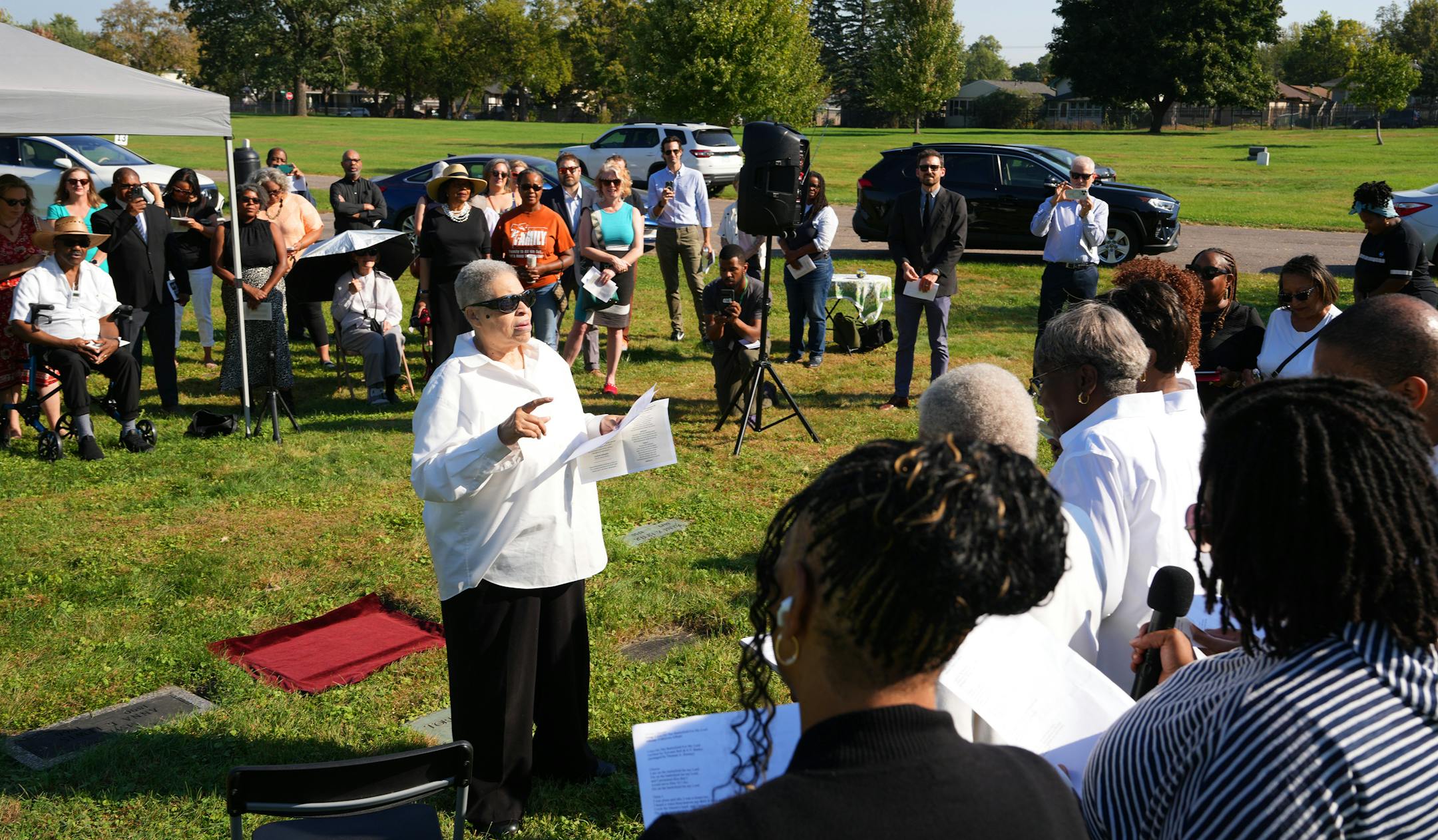
Members of St. Peter's AME Church choir sing during an event honoring Clementine and Harry Robinson, pioneering Black Minneapolis residents, and dedicating a grave marker for Clementine at Crystal Lake Cemetery in Minneapolis. (Anthony Soufflé/The Minnesota Star Tribune)

Brandon Marsh stepped out of his car and looked at the south Minneapolis house where his great-great-aunt lived long ago. He had never seen it before. “I had ancestors here,” he said.

Marsh and his family traveled from Washington, D.C., to help dedicate a grave marker Saturday for that aunt, Clementine Robinson, at Crystal Lake Cemetery in Minneapolis where her grave sat unmarked for decades.

Clementine and her husband, Harry Robinson, were a Black couple whose courage in the face of discrimination a century ago in Minneapolis is the focus of the Minnesota Star Tribune’s “Ghost of a Chance” podcast, produced by Melissa Townsend and reported by columnist Eric Roper.

Roper discovered the Robinsons’ history after he and his husband bought their former house five years ago. His reporting documented numerous episodes in which the Robinsons faced racism in Minneapolis.

Dozens of people attended Saturday’s ceremony in Crystal Lake Cemetery, accompanied by the St. Peter’s AME Church choir singing the gospel hymn, “We’ll Understand it Better By and By.”

Two of Clementine’s great-great-nieces — Bridgette Marsh, of Pasadena, Calif., and Natalie Lampley, of Des Moines — lifted a maroon cloth to uncover the gravestone, purchased with $3,400 in donations to cover the cost of the bronze and granite marker.
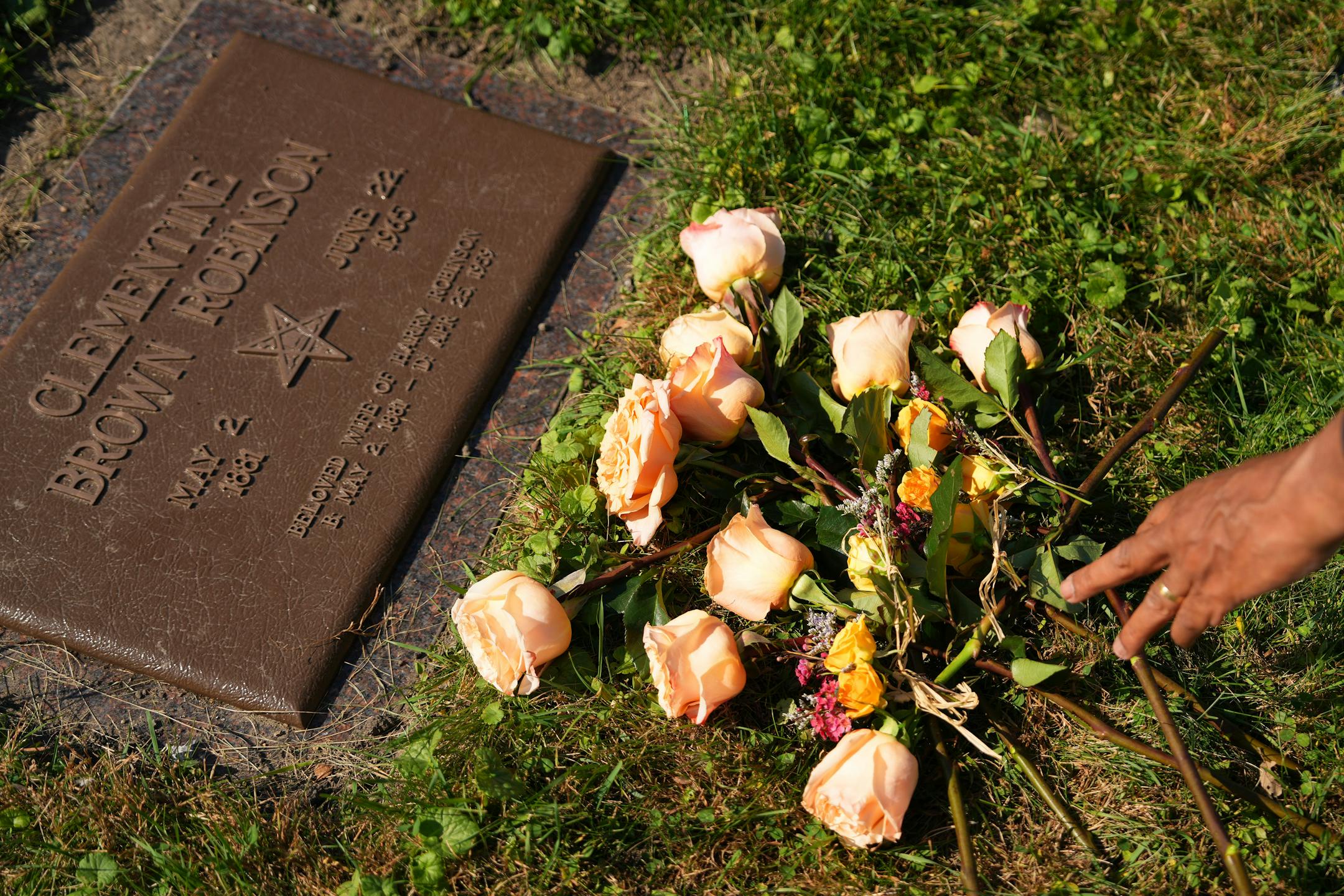
A family member leaves flowers Saturday at the newly marked grave of Clementine Robinson at Crystal Lake Cemetery in Minneapolis. (Anthony Soufflé/The Minnesota Star Tribune)

When Roper first visited Clementine’s grave, he told the assembled, he couldn’t have imagined the extent of the community’s support for Clementine, who died in 1965, and her final wishes for a grave marker.

“Her unmarked grave was surprising, because we know that Clementine made a mark on the world,” Roper told those assembled. “Despite the challenges that this city and this country threw at her, she became a prominent person in the community.”
“I will never meet the Robinsons, but a very special house has connected us across generations. ... I know [this] would’ve meant the world to Harry and Clementine as well.”

The marker includes Harry’s name and the years of his birth and death; he has no grave since he was cremated in 1959 and his ashes were spread over the Mississippi River.

The Rev. Tracey Gibson of St. Peter’s, which was Clementine’s church, said the grave is especially significant for Black families. The marker “reminds us of the shoulders that we’re standing on and the sacrifices that were made,” she said.

Bridgette Marsh said such reminders are vital as family members age.

“Our opportunity to get these stories is going away, and Eric has opened up a lot of information for us. It’s really incredible,” she said. “It’s no longer a concept of what happened [in our history] ... You hear it personally in Clementine’s story and Harry’s story.”

Family member Brandon Marsh takes flowers to lay at the newly marked grave of Clementine Robinson on Saturday at Crystal Lake Cemetery in Minneapolis. (Anthony Soufflé/The Minnesota Star Tribune)

Brandon Marsh grew up without knowing his family’s history. Going forward he wants to change that with his 2-year-old daughter, Nia, he said.

“It will be part of her home schooling curriculum,” Marsh said. Family members, he said, are discovering things about their history, “and it’s all going to be channeled through Nia.”

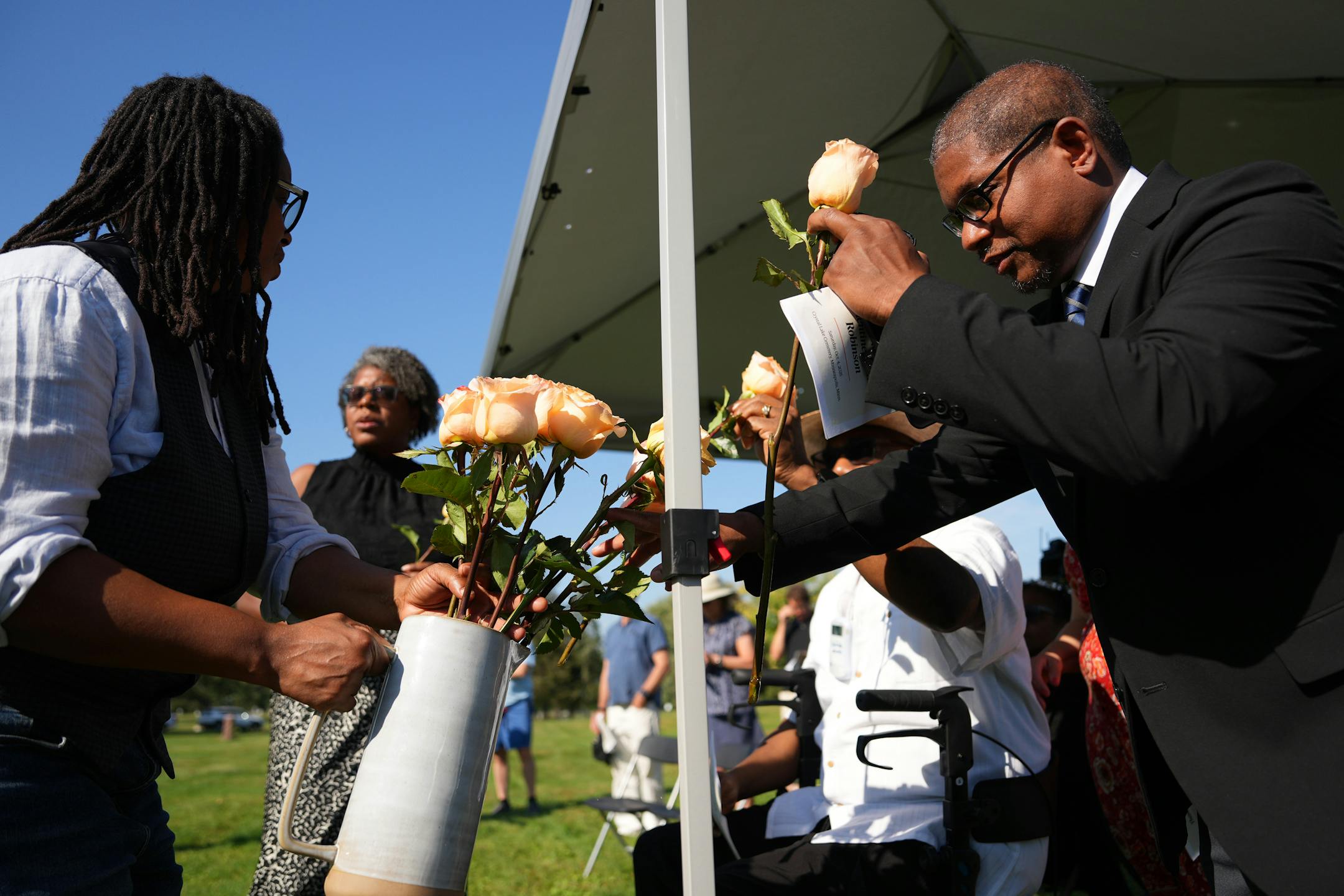
Before leaving, Marsh and others dropped peach-colored, red and white flowers alongside Clementine’s grave. Among the last was Nia, who pointed at the grave, said “flower” and dropped a yellow rose. It rolled onto a patch of clover by her ancestor’s grave, where no flower had fallen for 60 years.

about the writer

about the writer

Kyeland Jackson

General Assignment Reporter

Kyeland Jackson is a general assignment reporter for the Star Tribune.

See Moreicon

More from Minneapolis

See More
card image
card image