

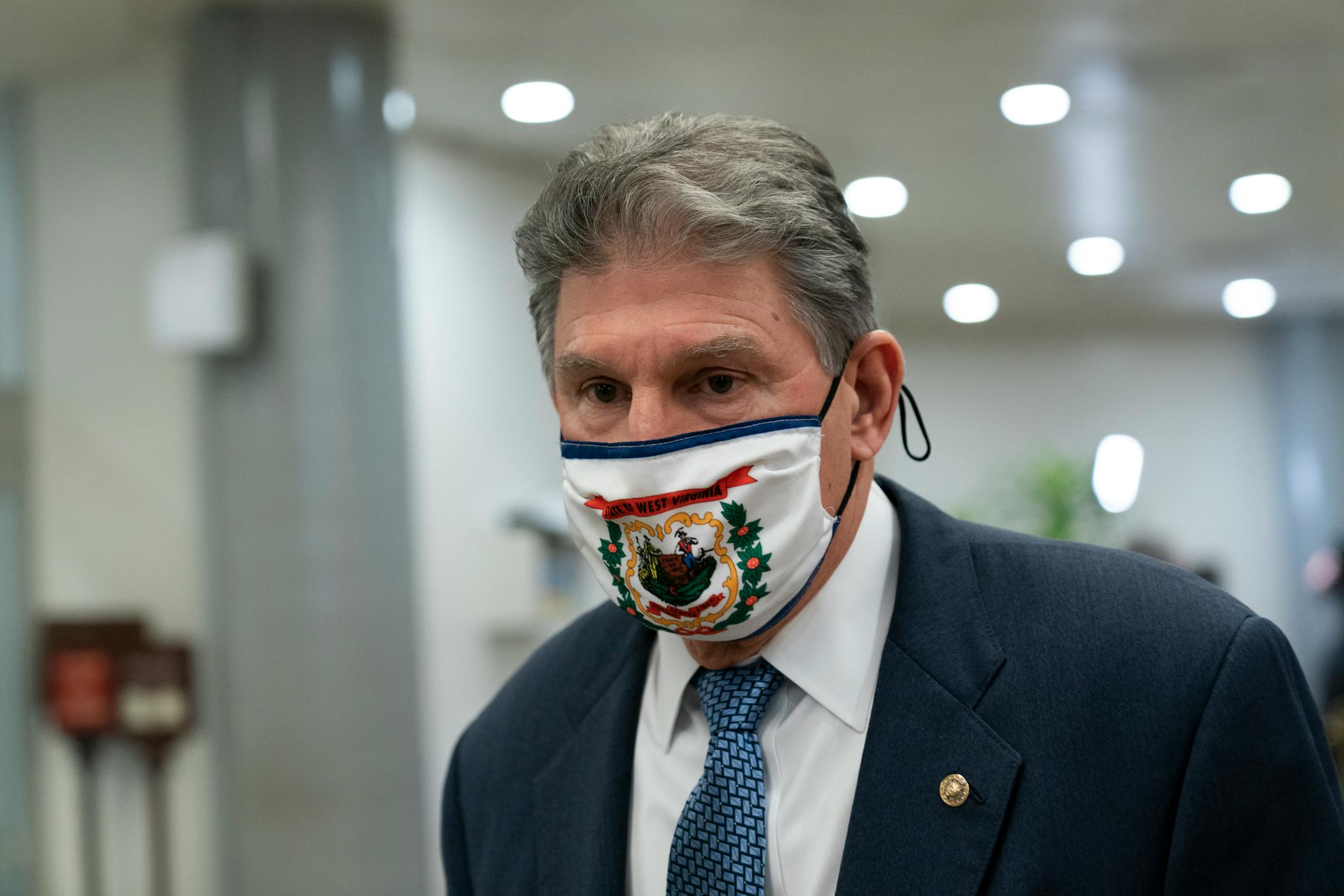
Sen. Joe Manchin, the self-styled conservative Democrat from West Virginia, is driving progressives crazy — and he doesn't seem to mind.
Manchin says President Joe Biden's $1.9-trillion COVID relief bill is too big, and he wants to cut it. He says he strongly opposes a $15 federal minimum wage, one of Biden's top campaign promises. He announced last week that he won't vote to confirm Biden's nominee to head the Office of Management and Budget, Neera Tanden, because her campaign-year tweets struck him as too partisan. He hasn't decided whether to support Biden's choice for Interior secretary, Deb Haaland, because she has advocated tough regulation of coal and natural gas, two important industries in West Virginia.
His refusal to back Tanden, an Indian American, and Haaland, a Native American, drew fury from progressives, who pointed out that both are women of color.
Rep. Alexandria Ocasio-Cortez, D-N.Y., complained on Twitter that Manchin voted to confirm many of then-President Donald Trump's controversial nominees, "yet the first Native woman to be Cabinet Sec is where [he] finds unease?"
But the Senate's Democratic leaders are staying out of the fray, giving Manchin a great deal of deference for a simple, practical reason: He's their 50th vote.
Without Manchin, they don't have a working majority. Even with Manchin on their side, they still need Vice President Kamala Harris to break tie votes.
Asked if his party has a Joe Manchin problem, Senate Democratic Whip Richard J. Durbin of Illinois told a television interviewer: "We have a 50-50 problem."
Manchin is an unusual character in the increasingly polarized Senate: a Democrat who voted in favor of Trump's position on legislation more than half the time, and who seeks to split almost every issue down the middle.


