

"The Court talks about a constitutional 'right of privacy' as though there is some constitutional provision or provisions forbidding any law ever to be passed which might abridge the 'privacy' of individuals. But there is not."
-- FORMER SUPREME COURT JUSTICE HUGO BLACK
When most people think of the debates over privacy rights, abortion and same-sex marriage eventually come to mind. Both have been upheld by federal and state courts on the basis of 'privacy,' but the flimsy legal precedents established on those contentious issues are proving just as problematic for a variety of others.
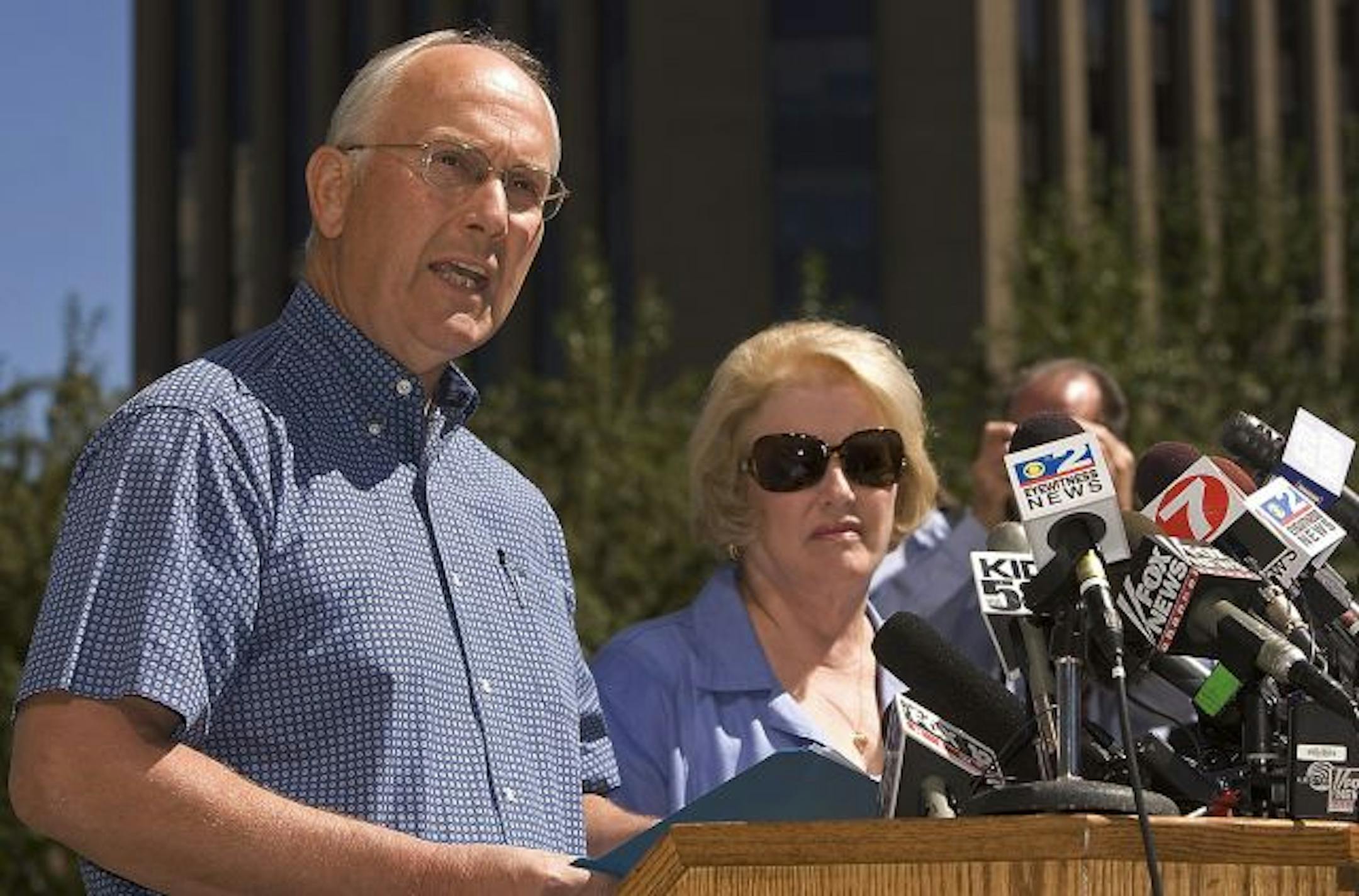
Two recent cases illustrate the point. When U.S. Sen. Larry Craig of Idaho was caught in flagrante delicto at the Minneapolis-St. Paul airport, the ACLU jumped to his defense, claiming an "expectation of privacy" in a public restroom stall. And just this week, a federal judge voicing similar concerns blocked a Florida law requiring drug tests as a condition of welfare benefits.
Though not originally mentioned in the Constitution, the "rights to privacy" would be discovered much later amid the "penumbras" of the document. And ever since, federal jurisprudence has been on a collision course with the inherent power of the states to police the criminal law. Remember, the Constitution was written to protect the people and the states from consolidated power, while various state governments were to protect us from one another.
Unfortunately, most states, instead of defending their legitimate role in public safety, have jumped on the privacy bandwagon as well. For all the talk of bullying in school these days, just try to get any information on juvenile playground predators -- or worse -- and you will assuredly run up against a stonewall of privacy laws from school administrators.
In Arizona, Pima Community College officials suspended Jared Loughner after repeated outbursts -- at one point informing his parents that the Tucson shooter would not be readmitted without a mental evaluation -- but failed to inform the public for fear of running afoul of federal and state privacy laws. Even the county sheriff's department kept a lid on its run-ins with Loughner in the months prior to the shooting of U.S. Rep. Gabrielle Giffords and others, blaming talk radio for the tragedy instead.
The sad irony is that while authorities are loathe to release information that might actually help inform the public, prosecutors seem ready at the draw to prosecute any suspected violation of the ever-evolving expectation of privacy.


