

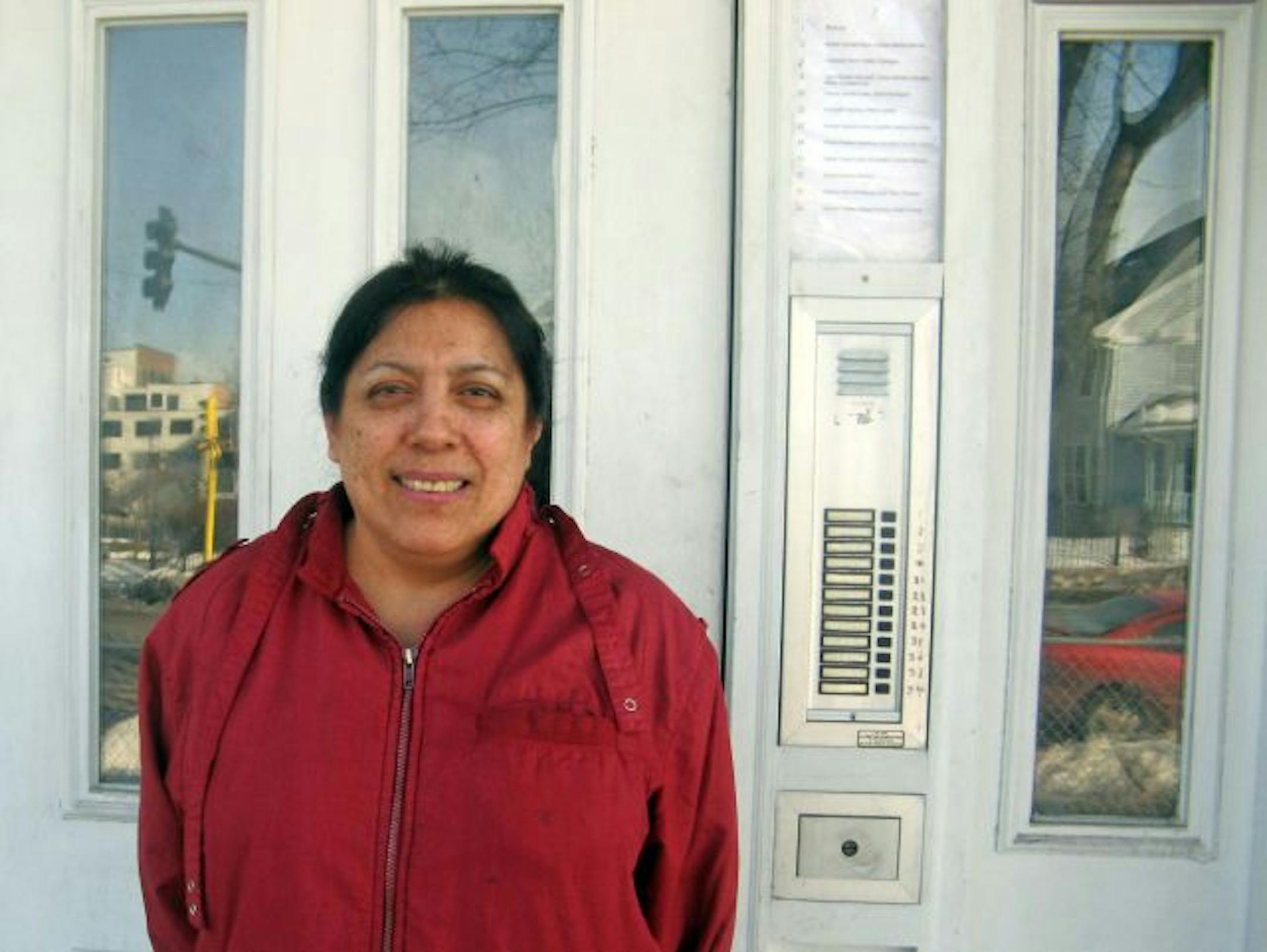
Rosalina Gomez is a $13-an-hour janitor who cleans the U.S. Bancorp executive offices every night.
Last week, Gomez tried to meet with Richard Davis, U.S. Bancorp's chief executive, to ask him to halt the foreclosure of her Minneapolis duplex and to give her family a mortgage that reflects its reduced valuation and their ability to pay.
Gomez, 49, was preparing to deliver a letter at a banquet honoring Davis. Bank officials persuaded her not to interrupt the luncheon and instead to meet with U.S. Bancorp's Twin Cities manager. She did.
After conferring with executives at J.P. Morgan Chase, which also has a role in the Gomez mortgage, U.S. Bancorp agreed to a two-month extension of the March 11 date by which Rosalina and Hector Gomez and their teenage son were to be evicted from their duplex.
"I want Richard to help my family keep our home," Rosalina said through an interpreter last week. "But we need a payment we can afford. The house was valued at more than $200,000 in 2006. And now it is valued at $65,000."
The Gomez situation offers a window into how the mortgage boom, fueled by cheap money, vulnerable borrowers, con artists, lax regulators and loose lenders, nearly flattened the U.S. economy. It also illustrates how difficult it is to untangle the mortgage web even after a borrower has gotten the attention of the CEO.
U.S. Bancorp officials told me they have little power to intercede. The Minneapolis bank is the trustee for investors who own the mortgage.
"We didn't originate the loan, we didn't service it and we didn't place that property in foreclosure," U.S. Bancorp spokesman Steve Dale said. "We did find out that Chase was the servicer of the loan. We helped Mrs. Gomez and her husband get an extension. And they get 60 extra days to make up their minds what to do."



