

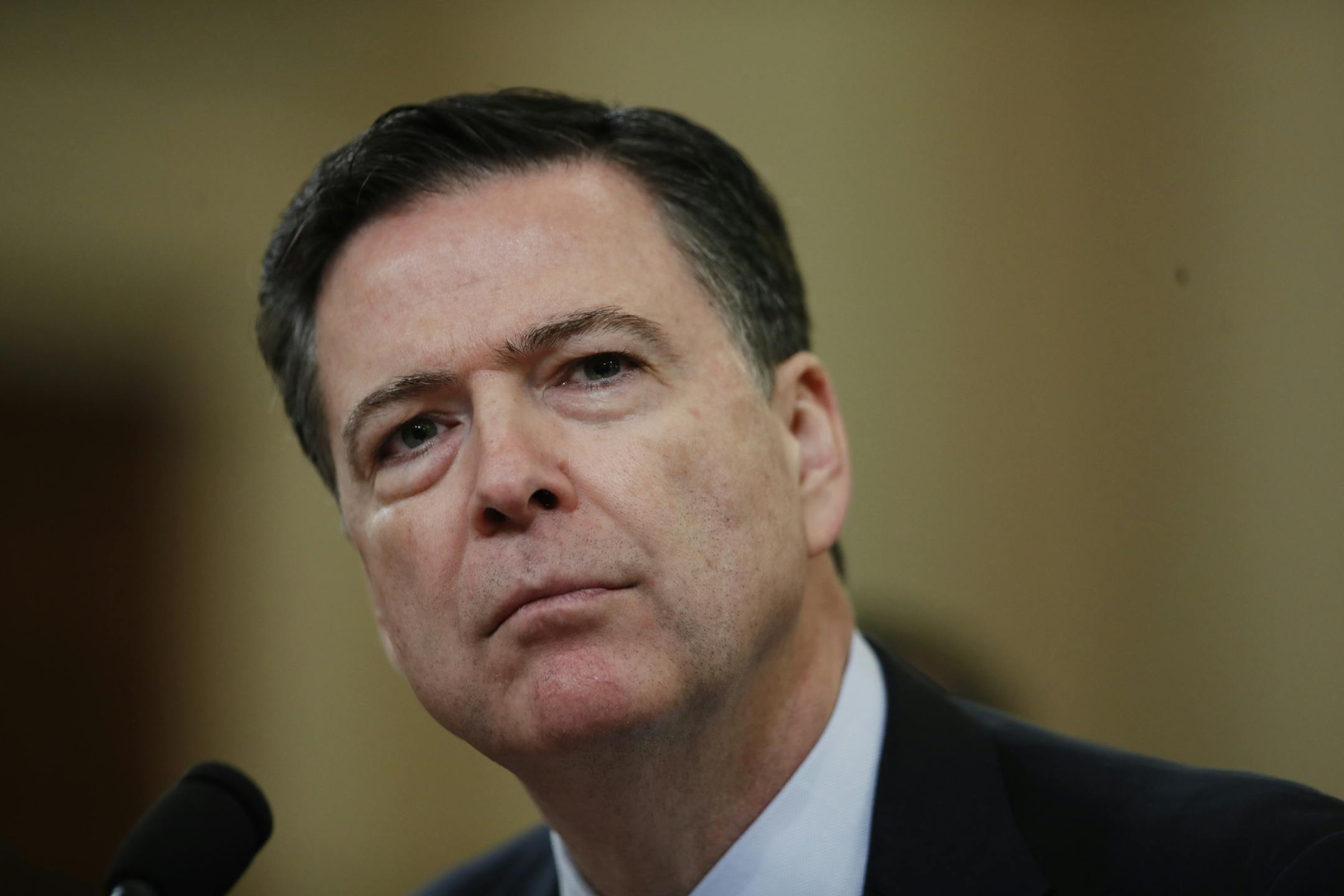
Late in Monday's marathon hearing of the House Intelligence Committee, FBI Director James Comey reminded the nation that he was something of a hostile witness, reluctantly summoned to talk about Russia, Donald Trump and the 2016 campaign.
"I'd rather not be talking about this at all," Comey said. "Now we are going to close our mouths and do our work."
Before Comey returned to his offstage role, he dropped enough bombshells to solidify his reputation as the most significant FBI director since J. Edgar Hoover. Joined by his crusty sidekick, Adm. Michael Rogers, who heads the National Security Agency, Comey gave an artful lesson in how to stick a shiv into a sitting president without ever raising his voice or making a specific accusation.
Early in the hearing, Comey shredded Trump's cockamamie Twitter claim that President Barack Obama had wiretapped him before the election. As Comey solemnly stated, "I have no information that supports those tweets and we have looked carefully inside the FBI."
Comey had arrived at the hearing with his own smoking gun that he brandished at the beginning of his opening statement — official confirmation that the FBI is investigating "any links between individuals associated with the Trump campaign and the Russian government and whether there was any coordination between the campaign and Russian efforts."
Comey's offensive against the White House even extended to refuting a presidential tweet about the ongoing hearing. Connecticut Democratic Rep. Jim Himes asked Comey to respond to a Trump tweet claiming, "The NSA and FBI tell Congress that Russia did not influence the electoral process." Comey dismissed Trump's fanciful version of the truth by saying, "It wasn't certainly our intention to say that today."
J. Edgar Hoover battled with many presidents — particularly John F. Kennedy and his brother Robert — but those struggles took place behind closed doors. Hoover always came armed with bulging FBI files and a willingness to use them for blackmail purposes.
In contrast, Comey's strength rests on his ability to portray himself as the last reasonable man in America animated by nothing more than a passion for justice and truth. That attitude of unshakable rectitude can lead Comey into dangerous places — such as his maladroit announcement before the election that he had reopened an investigation into Hillary Clinton's e-mails.


