
It's time to leave Saudi Arabia to the wolves

U.S. support for the kingdom has never paid off in a true partnership, as is exemplified by the Ukraine situation.

April 25, 2022 at 4:30PM
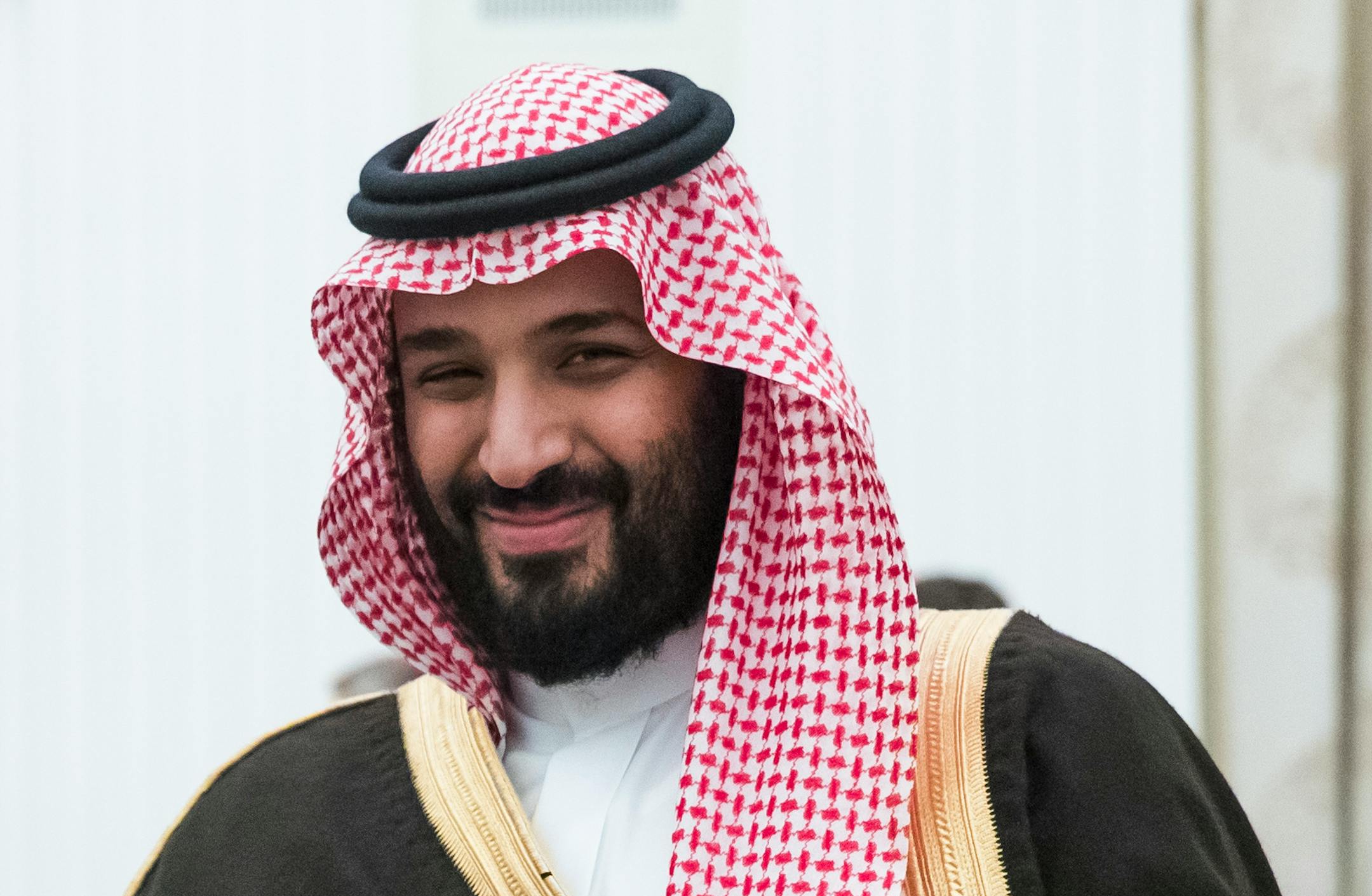
Saudi Crown Prince Mohammed bin Salman, known as MBS. (Pavel Golovkin, Associated Press/The Minnesota Star Tribune)

Opinion editor's note: Star Tribune Opinion publishes a mix of national and local commentaries online and in print each day. To contribute, click here.

•••

America's long-standing partnership with Saudi Arabia has become a deal with the devil. But the devil isn't holding up his end of the bargain. It's time we gave up on it, too.

It's never been a good look for the United States, a self-proclaimed champion of democracy and human rights, to be the security guarantor of an abusive monarchy that treats women like property and long placed policing in the hands of an extremist religious faction.

And yet we justify this close partnership largely in the name of security — our secure access to oil, to be more specific. The war in Ukraine has demonstrated that this access isn't there.

Saudi Arabia holds the second-largest oil reserves in the world and, more importantly, an unmatched capacity to increase supply at times of crisis. Saudi Arabia has also been key to maintaining the global trade of oil in U.S. dollars, which helps keeps our currency in high demand and stabilizes its value.

The partnership was also considered essential to counter anti-American sentiment in the region, specifically from Iran. This justification has always been a double-edged sword, however, since Saudi Arabia helped foment anti-American sentiment, too, to the tune of billions of dollars it spent to promote Wahhabism, the radical and intolerant strain of Islam that laid the foundation for terrorist organizations like al-Qaida and ISIS.

In return for these supposed benefits, the U.S. has been the kingdom's security guarantor, providing not only a military presence but also military technology, advice, and a flood of arms and hardware. From 2009 to 2020, U.S. military sales to Saudi Arabia amounted to more than $100 billion. We have delivered hundreds of aircraft, dozens of Patriot missile defense systems, thousands of armored vehicles, four frigate warships and tens of thousands of missiles. The U.S. also has thousands of troops in Saudi Arabia still.

Even if you thought the trade-off of supporting the repressive state was once worthwhile, it's hard to make the case today. Saudi Arabia has become an even worse actor than before, both at home and abroad.

Advocates of maintaining the relationship might point to modest reforms under Crown Prince Mohammed bin Salman, also known as MBS, who took the de facto leadership position in 2015 when his father acceded to the throne. Those reforms, however, were rapidly undermined by brutal crackdowns on dissent and opposition.

MBS was lauded for permitting women to drive, but then promptly jailed many female activists as if to remind them that he retained full control. In 2017, he purged competition within the royal family when he had hundreds of potential rivals and opponents detained for months, some reportedly tortured.

The murder and dismemberment of Washington Post journalist Jamal Khashoggi in the Saudi consulate in Istanbul in 2018 was a particularly grotesque display of MBS's brazen assault on critics.

MBS has also championed a more aggressive — and problematic — foreign policy. Rather than helping secure our interests in the region, our military support emboldened the Saudi state to act uncompromisingly in a dangerous neighborhood. If it was ever a stabilizing presence there, that no longer appears to be the case.

Saudi Arabia's role in Yemen's civil war since 2015 has exacerbated the conflict. The kingdom often strikes civilian targets, including school buses and hospitals, and since the U.S. has been Saudi Arabia's primary weapons supplier, we are guilty as accomplices in these crimes. Saudi Arabia's continued blockade of the country has caused severe human suffering. Despite President Joe Biden's campaign commitments to end our support for the war, the U.S. has continued to provide weapons that help Saudi Arabia maintain its brutal fight.

Saudi Arabia has also been an ever-present spoiler of U.S. efforts to secure a nuclear deal with Iran, including recent attempts by the Biden administration to restore the defunct deal. While it might be in Saudi Arabia's interest to keep Iran under the yoke of a strict sanctions regime, the U.S. interest is clearly in a diplomatic solution.

Successive U.S. administrations have tolerated Saudi Arabia's foul play on the promise that, one day, the kingdom's capacity to deliver oil to the world market would insulate the United States from dire economic and security harm at just the time we would need it most.

That time has come.

Since Russia's invasion of Ukraine in February, gas prices have surged. Europe's dependence on Russian oil and gas remains the main obstacle to Europe joining the U.S. in banning Russian energy imports. This means Europe continues to provide Russia with resources to fight its war, to the tune of nearly $1 billion a day.

Saudi Arabia, however, has — quite literally — failed to answer America's call. When faced with a clear opportunity to assist its security guarantor on a matter of the gravest importance by pumping more oil to help supply Europe and take the pressure off world gas prices, Saudi Arabia has declined.

As recently as March, the U.S. answered Saudi Arabia's pleas for additional Patriot missiles to help it fend off attacks from rebels in Yemen. But that failed to persuade Saudi Arabia to grant America's request to pump more oil.

If Saudi Arabia can't side with the United States against Russia in the face of its indefensible aggression against Ukraine, it's high time the U.S. asked what this partnership is good for. Our support of Saudi Arabia has never paid off, and that's never been more clear than now.

Elizabeth Shackelford is a senior fellow on U.S. foreign policy with the Chicago Council on Global Affairs. She was previously a U.S. diplomat and is author of "The Dissent Channel: American Diplomacy in a Dishonest Age." This article was first published by the Chicago Tribune.

about the writer

about the writer

Elizabeth Shackelford, Chicago Tribune

More from Commentaries

See More
card image
Elizabeth Flores/The Minnesota Star Tribune

Some might say we’re extremists or agitators. I say we’re in community.

card image
card image