

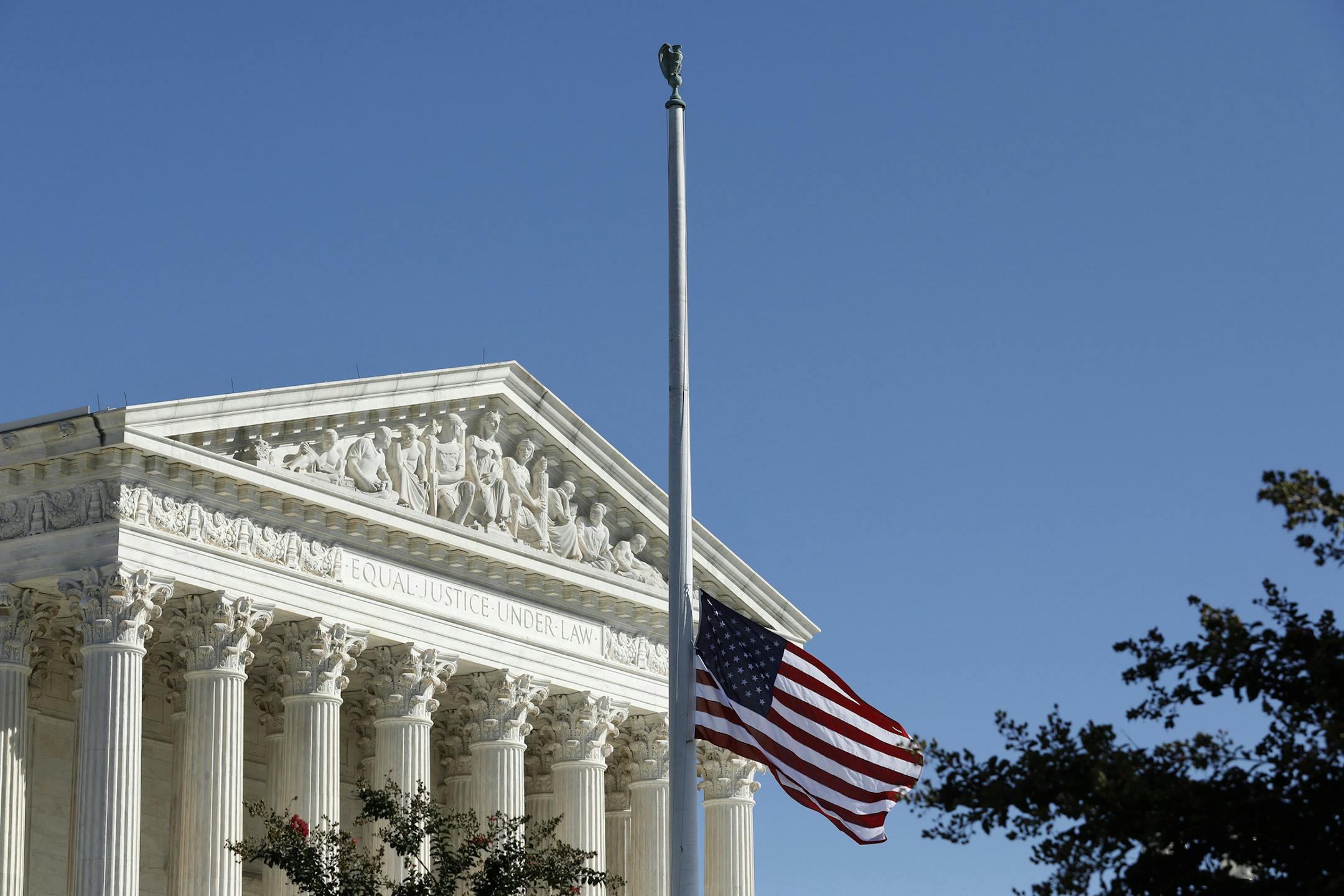
Barack Obama reminded his Republican congressional foils after his 2008 victory that elections have consequences. Yet today, Democrats are shocked — shocked! — that the 2016 election would still have any.
They carry on now as if the Constitution provides otherwise, but the simple fact is that in our system of self-governance, the president nominates Supreme Court justices and the Senate confirms or rejects them — all at their discretion and on their timetable.
I realize reason isn't in fashion these days, but reason is the bulwark of our system. So ask yourself these two simple questions: In voting to replace Justice Ruth Bader Ginsburg before the November election, would Republicans be doing anything that isn't provided for in the Constitution? And would they be doing anything Democrats wouldn't do if given the chance — likewise, legally and constitutionally?
Has well-earned political and numerical advantage suddenly been outlawed? If so, someone tell House Speaker Nancy Pelosi, stat.
In an age in which federal budgets are pure fiction and little else seems to be accomplished in Washington, seeing our national government actually function as designed and intended is admittedly something of a jolt. But there it is.
The people fill Supreme Court vacancies through their duly elected presidents and senators. Today's are the president and senators the people elected in 2016 and 2018. And as Ginsburg herself also reminded us in 2016, "There's nothing in the Constitution that says the president stops being president in his last year."
Many people voted for a Republican president and a GOP Senate majority specifically with the Supreme Court in mind, says U.S. Rep. Roger Marshall, the Kansas Republican nominee for Senate on the November ballot.
"I just think we have an obligation to fulfill our commitments to those people who made that decision," Marshall says.


