
It's not all fun and games at MindWare

Even before the recession, CEO Martin Smith faced challenges to help his Roseville catalog company grow.

May 13, 2009 at 4:21AM
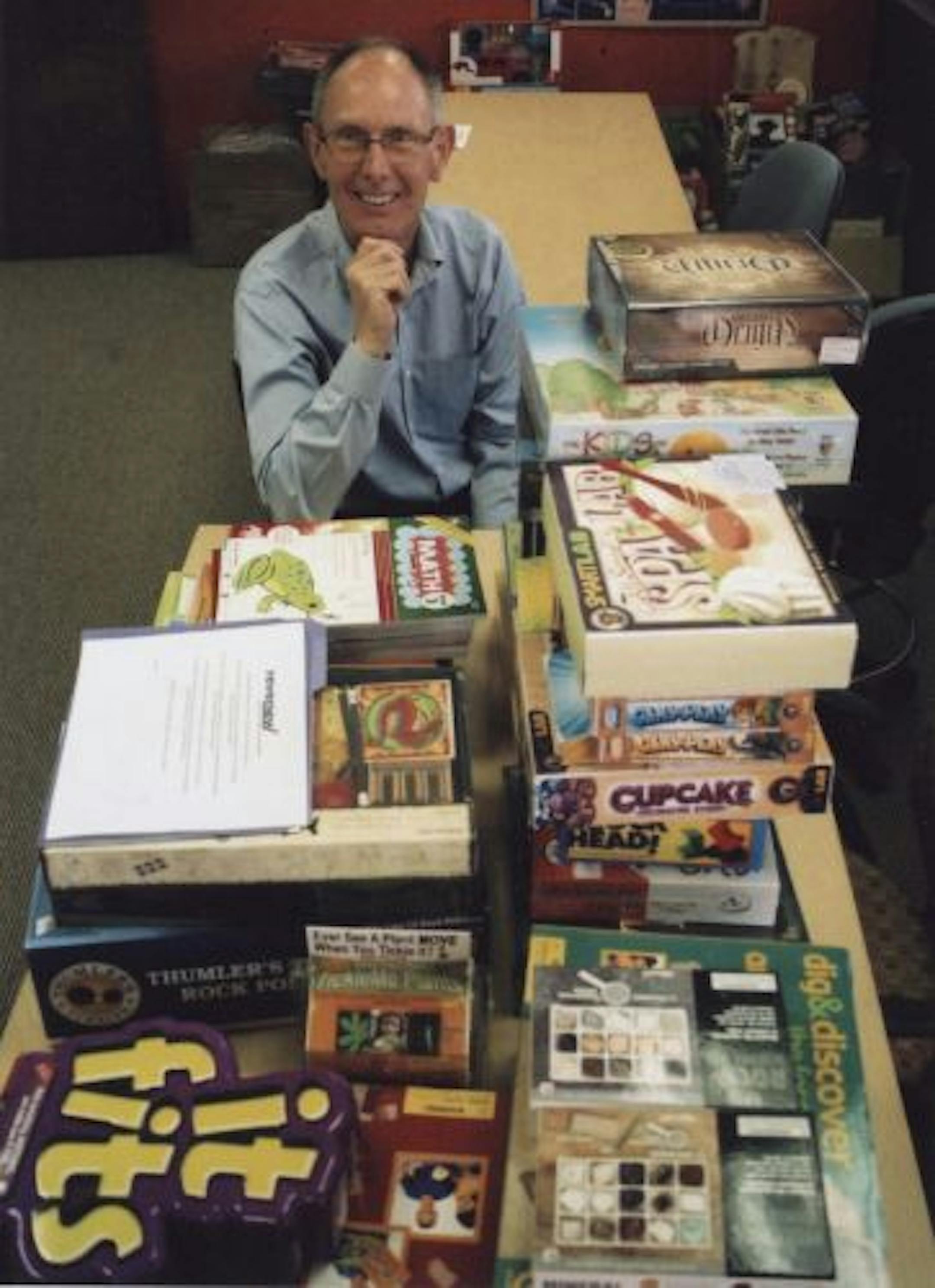
MindWare ceo Martin Smith is shown with some of the more than 280 "brainy" toys, games, puzzles and science experiments the roseville company offers.
MindWare’s Martin Smith is shown with some of the more than 280 “brainy” toys, games, puzzles and science experiments that the Roseville catalog company offers. (Star Tribune/The Minnesota Star Tribune)

When Martin Smith fulfilled his dream of owning his own business, he wound up with a hugely successful, truly imaginative company -- and a passel of emerging challenges.

In 2003, Smith acquired a 75 percent interest in MindWare, a Roseville catalog company that offers what founder Jeanne Voigt called "brainy toys for kids of all ages."

It's an enterprise that grossed $22.5 million in 2008 with an inventory of more than 280 products ranging from strategy and quiz games and brain-teaser books and puzzles to architectural building sets, physics experiments and a long list of science activities and math games. There are garden laboratories, ant farms that light up and even a LEGO kit that can be transformed into a programmable robot.

It makes a guy wish he'd stayed awake in more of those high school physics and chemistry classes.

But running the business has not been a playful experience, even before the economy collapsed, because of growing competition and impending saturation of the specialized market that accounts for 75 percent of sales: parents and grandparents of kids with a taste for cerebral diversions.

The result: A company that had been growing at a double-digit rate to reach $17 million in sales by the end of 2003 has slipped back to an annual rate of 5.8 percent since then.

Nonetheless, Smith "has done a very good job in a difficult, increasingly competitive environment," said Voigt, who founded the company in 1990 and retains a 25 percent share.

Indeed, several of the moves Smith has engineered in the past five years have kept the company from slowing down even more. A sampling:

• When he took over, MindWare had about 30 proprietary products generating less than $2 million in annual revenue. Today, he has 130 company-owned products that yielded $6.3 million in sales last year, and MindWare has a half-dozen employees and a dozen freelance inventors working on adding more.

In the past three years, 25 of MindWare's proprietary products have won one or more national awards, including the Mensa Select Award, Creative Child Magazine's Preferred Choice Award, BoardGameRatings.com's Best Family Game Award; Parents' Choice Gold Honor Award; Learning Magazine's Teachers Choice Award, and a place on the Best Toys For Kids list of the American Specialty Toy Retailing Association.

• The success of proprietary products has allowed Smith to grow the company's wholesale business significantly. With the help of nine sales groups in the United States and 16 overseas, MindWare's wholesale revenue has grown from $580,000 in 2003 to $3 million last year.

Related Coverage

"There's considerable potential there," Smith said, noting that the number of wholesale clients grew 22 percent last year, to a total of 1,200 accounts across the United States and in 16 foreign countries.

• The education market, which now accounts for 25 percent of sales, offers "a massive opportunity" in the long run, Smith said. But there are significant short-term challenges in addition to the immediate limitations imposed on school budgets by the flagging economy.

"Teachers move often and mailing lists get out of date very quickly," Smith said. To help nudge the process, he recently organized an educator advisory council to help sharpen the focus on products for classrooms and improve communication with educators. The company also is reworking its website to be more education oriented.

12 million get catalog

The company's principal sales tool is its 56-page catalog, which is sent to 12 million existing customers and prospective buyers.

In addition, MindWare appears at a dozen or more toy and education trade shows from New York to Dallas to Nuremberg, Germany. And Smith attended the Hong Kong Toy Show last year to scout for potential winners.

Indeed, the company's history as an "early adapter" of popular toys and games is a key to its success. Example: MindWare was one of the first customers for the strategy game Blokus, a global hit developed in France and recently acquired by Mattel. Ditto for Bananagrams, a Scrabble-like game with pieces sold in a cloth container shaped like a banana.

Voigt was head of U.S. Bancorp's discount brokerage business when she decided that, "after years of being confined to using my left brain, I wanted to add some creativity to my life." Her answer was MindWare, a business that exercised her right brain considerably.

But the more the business grew, she said recently, the more the administrative chores forced her back into right-brain activities, leaving less time "for what I loved: product development."

She remained with the company for three years after the sale to Smith. Since then, she started a foundation to promote women's economic development, serves on the boards of three companies and a nonprofit and takes on occasional consulting chores.

Smith, a native of Great Britain, was a long-time marketing executive with a New York women's apparel catalog company when he learned of Voigt's decision to sell the company.

Dick Youngblood • 612-673-4439 • yblood@startribune.com

about the writer

about the writer

DICK YOUNGBLOOD, Star Tribune

More from Business

See More
card image
Renée Jones Schneider/The Minnesota Star Tribune, Leila Navidi/The Minnesota Star Tribune

The holidays aren’t the time to question Minnesotans’ generosity. Neither is an election year.

card image
card image
