

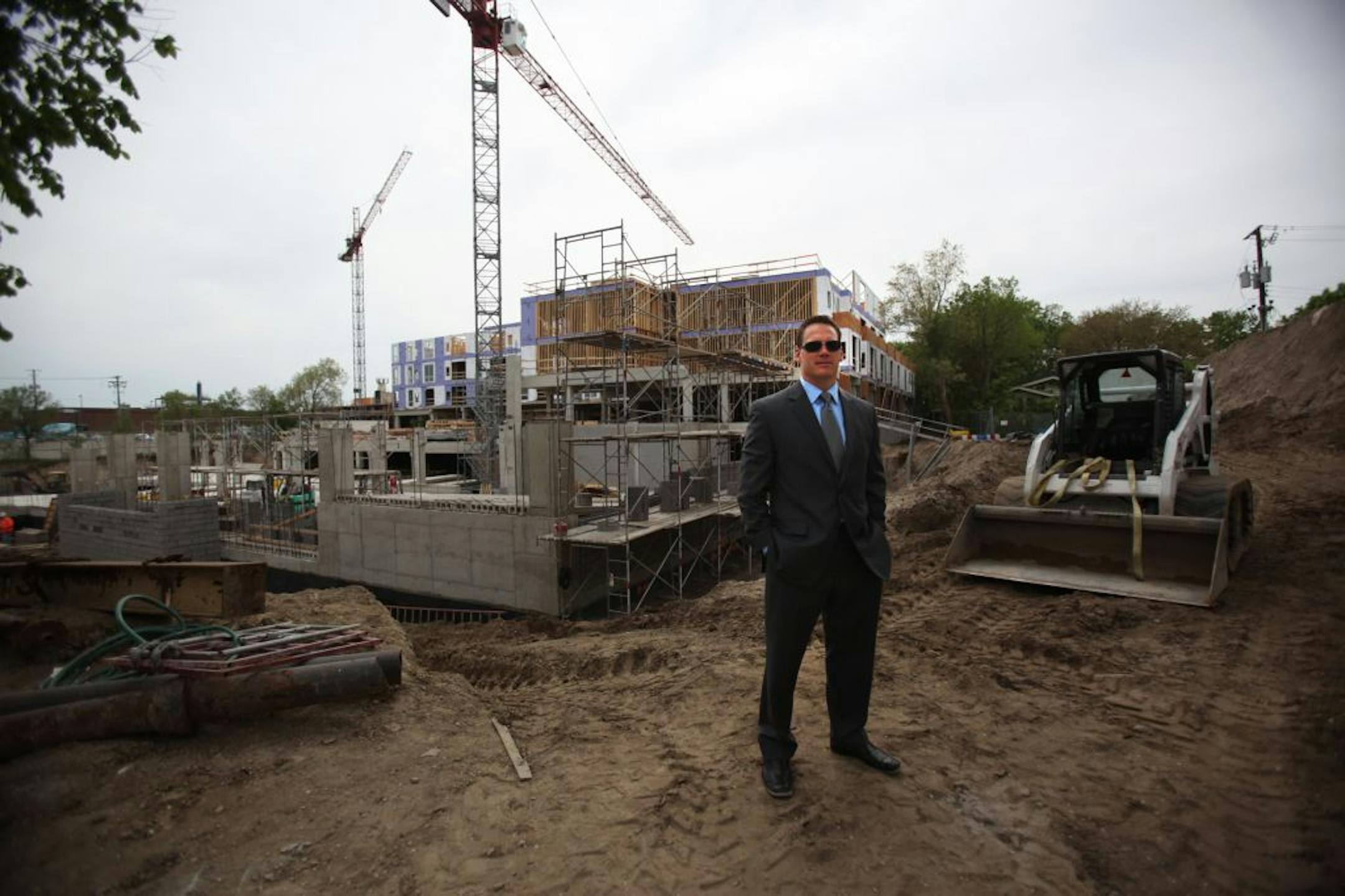
On a crystal clear January night, in the wake of the worst housing downturn since the Great Depression, Minneapolis officials gathered in the swank lobby of a new apartment building a block from the Mississippi River to toast the project. Most of the apartments were vacant, the indoor-outdoor pool still dry and a living "green" wall had just been planted, but city officials were already hailing the project as a success.
It has been. Just six months after the celebration, Village Green says they've rented the last of the 175 units at the Mill District City Apartments. "Despite building this apartment building in a very bad economy, we leased up faster than we have ever before in any economy," said Jonathan Holtzman, Village Green's chairman.
Holtzman is already fast at work planning his next two projects. Dozens of Twin Cities-area developers have unveiled plans to build upward of 6,000 rental apartments, most of them in Minneapolis, in what some are calling the biggest boom in rental housing construction in several decades.
Many of the projects are on sites once slated for condos, which dominated construction activity in the Twin Cities for a decade before the recession killed demand. Some are slated for former office buildings, a sector of the real estate market still hurting from the recession, with vacancy rates that still hover near the 20 percent mark.
The deluge of proposals for apartment buildings is more than just the latest real estate trend. Developers see it as a fundamental shift in how we live, as a growing number of families give up the American Dream of homeownership for the freedom of renting. For decades, families rented because they couldn't afford to buy or didn't have the credit to get a mortgage. That's no longer the case, as the new breed of renter often does it by choice: empty nesters ready for a simpler life; younger couples who have lived through the sinking values of homes the past few years and want to avoid it altogether.
There are also financial considerations, according to Toby Madden, regional economist for the Federal Reserve Bank of Minneapolis.
"Fewer people are considering homeownership as an investment," he said. "They're thinking 'Why don't I just rent?'"
The proportion of U.S. households that own homes is at its lowest point since 1998, and many of them are baby boomers who might otherwise have bought a condo. For Mill District City Apartments, the target market was young urban professionals, but the marketing staff was surprised to discover that a much higher percentage of renters were older empty nesters drawn by amenities more commonly found in condos: the units' rolling islands, wine racks and a lush green space where residents gather on warm summer nights.



