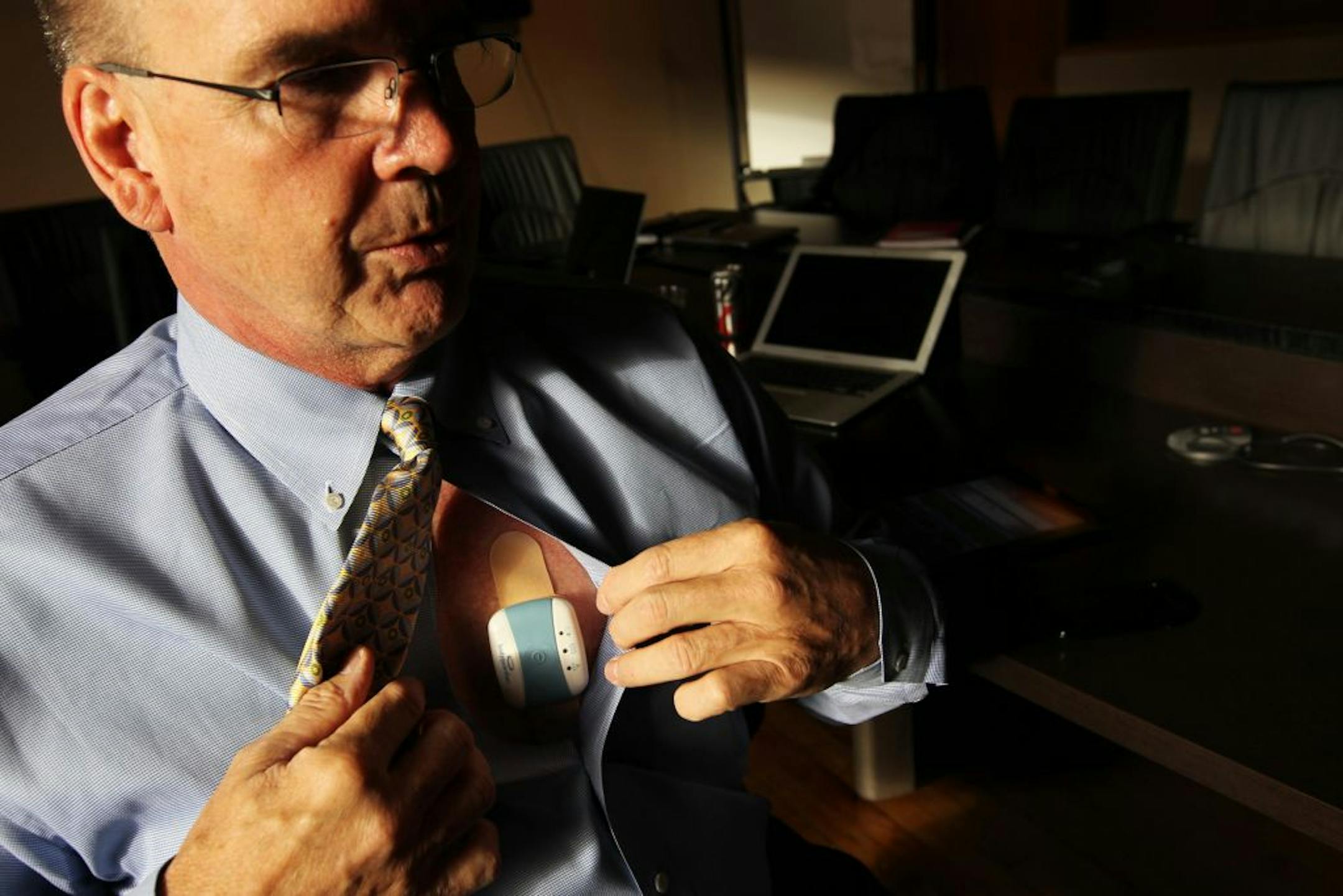
The BodyGuardian's technology is almost elegant in its apparent simplicity. A sensor taped to the chest securely transmits a patient's ECG, heart rate, respiration and activity rate over a cellphone, to the Cloud to a doctor's iPad or laptop for real-time monitoring.
But this early warning system of sorts, recently approved by the U.S. Food and Drug Administration for use with people who have non-life-threatening irregular heartbeats, is part of a trend blending information technology and health care data that is expected to be the next big thing in medical technology. And the folks at Preventice, the Minneapolis-based company that developed BodyGuardian with the Mayo Clinic, have high hopes for potential for their technology in the future -- including possibly monitoring and helping treat people with diabetes, or asthma, high blood pressure and heart disease.
Not bad for a firm that started in 2007 with an idea to use technology to better connect the world's 7 billion people with its 60 million health care workers. "We founded the company with a vision to use mobile technology in the health-care space," said Jon Otterstatter, Preventice co-founder, president and CEO.
It just so happened that when Otterstatter took his idea to the Mayo Clinic, the health care icon based in Rochester, Minn., he also was looking at ways to take its services mobile. Specifically, a Mayo team led by Dr. Charles Bruce had been working on ways to provide an early warning system for people at high risk for atrial fibrillation.
"It was a good idea at a good time," Otterstatter said.
Mayo now is an equity owner of Preventice, which also has operations in Fargo, N.D., and in Rochester. Arthur Ventures of Fargo provided seed money. Other partners -- a major life science company and a major computer chip manufacturer that Otterstatter would not name -- have joined the effort. In all, the company has received less than $5 million in capital investment, yet will have earned $10 million in revenue by the end of this calendar year.
"Everyone sees the potential," Otterstatter said.
Since 2007, Preventice has developed 60 applications for smartphones, including an app to help people navigate their allergies and another that allows doctors and patients to share information and better manage care plans. It's all meant to better connect health care to the people who need it, said Dr. Drew Palin, Preventice's medical innovation officer.