

Shortly after the sirens went off in Tel Aviv on Tuesday night, I sat in an improvised home shelter listening to the boom of rockets fired from Gaza and the response of Israel's vaunted Iron Dome anti-missile system. The windows of the house rattled. The voices of the Israeli radio reporters, usually exuding certainty, sounded confused. This was not supposed to be happening.
My first thought went to Ramadan, 1973, when Egypt and Syria launched a sneak attack on Israel. Israel had regarded itself as an impregnable fortress. Defense Minister Moshe Dayan, the legendary Sabra war hero, inspected the battlefield and reported to a befuddled Prime Minister Golda Meir. "The third temple [i.e., Israel] is in danger of falling." The country was shaken. "Never again," Israelis promised themselves after military disaster was narrowly averted. Tuesday night in Tel Aviv sure felt like a "never again" moment.
Hamas has been bombing Israeli towns along its border, off and on, for more than 15 years. From time to time, Israel responded with a limited retaliatory operation that calmed things down until the next round. Each time, Israeli leaders assured the public that their army, equipped with infallible military intelligence, and defended by high-tech anti-missile defense and a multibillion-dollar state of the art border wall, would keep them safe. Israel would simply apply more force until Hamas and Islamic Jihad once again backed down.
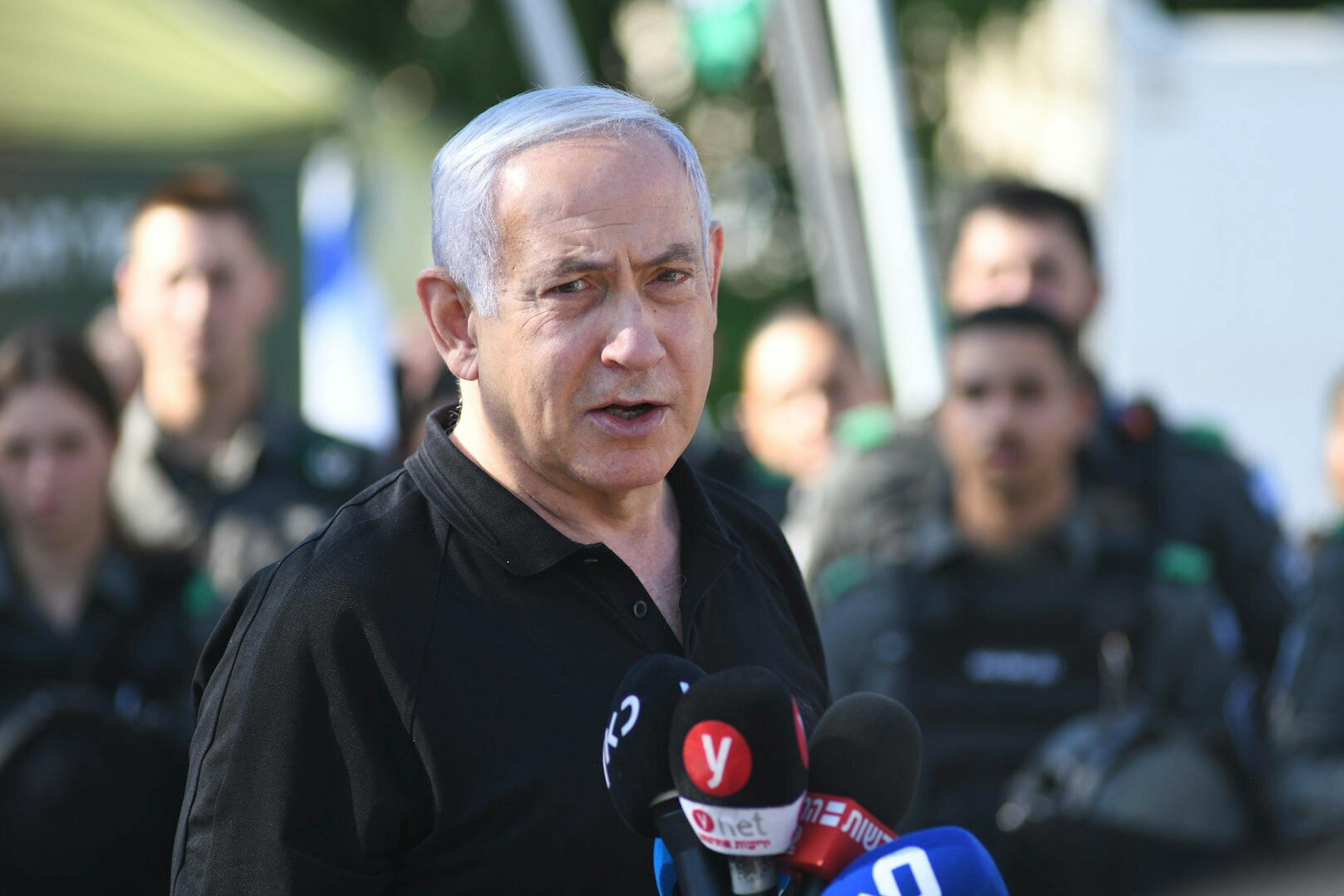
On Tuesday around midnight, Benjamin Netanyahu, the architect of this passive-aggressive strategy and Defense Minister Benny Gantz, the general who implemented it during his tenure as military chief of staff, promised the same old solutions. The Israeli military would destroy their bases. "Their blood is on their own heads," said Netanyahu menacingly. Gantz echoed the threats and implored the public to follow civil defense measures, such as gathering in shelters.
No reporters were present to ask the obvious questions. Why, for example, just two days earlier, did the IDF general staff reportedly assess that Hamas did not intend to attack? How did the world's best intelligence miss that? How, after years of blockade, did Hamas acquire thousands of accurate, long range missiles and the command-and-control to use them effectively? And why, after investing billions in a border wall built to prevent, among other things, maritime incursion, were Israeli soldiers armed with rifles stationed on the beaches near Gaza?
A bigger question is: What is Israel's strategy? Netanyahu, the brains behind the current doctrine, has repeatedly said that Israel's army, "the strongest in the Middle East," must not use that army to defeat and disarm Hamas with a ground attack. The price would be too high.
I don't disagree with that. But in this neighborhood such messages are read as cowardice. That was the signal the region got on Tuesday night when rocket fire shut down Israel's only international airport. The same message was sent a day earlier when Hamas missiles fired at Jerusalem forced the Knesset into emergency adjournment. Cameras caught frightened legislators scurrying for cover.
Netanyahu has built alliances with Arab countries partly on the premise that he could help defend them against the Iranian enemy. If he can't even protect the Israeli parliament against a mere Iranian proxy, that premise has to be re-evaluated.


