

Opinion editor's note: Star Tribune Opinion publishes a mix of national and local commentaries online and in print each day. To contribute, click here.
•••
I teach a course on the intersection of sports and religion in North America, and I ask students whether there is something about American society that draws us to the violence of football. Why, for instance, despite the NFL's best efforts, has American football not caught on elsewhere in the world, whereas by most metrics it is America's most popular game?
Sure, violence erupts from time to time in other sports — the consequence of a beanball pitch or an inadvertent collision in the heat of competition. Hockey certainly has its share of violence, but unlike that sport, violence is scripted into the game of football itself, as we were reminded seeing Damar Hamlin collapse during Monday night's game between the Buffalo Bills and the Cincinnati Bengals.
[Star Tribune opinion editor's note: There has been no formal public identification of the cause of Hamlin's cardiac arrest following a tackle. Observers have speculated about commotio cordis, in which a blow to the chest disrupts the heart's rhythm. In such cases, the timing and precise location of the impact matter as much as the severity. On Friday, the Bills reported that doctors had removed Hamlin's breathing tube and that he was able to talk to family members and teammates.]
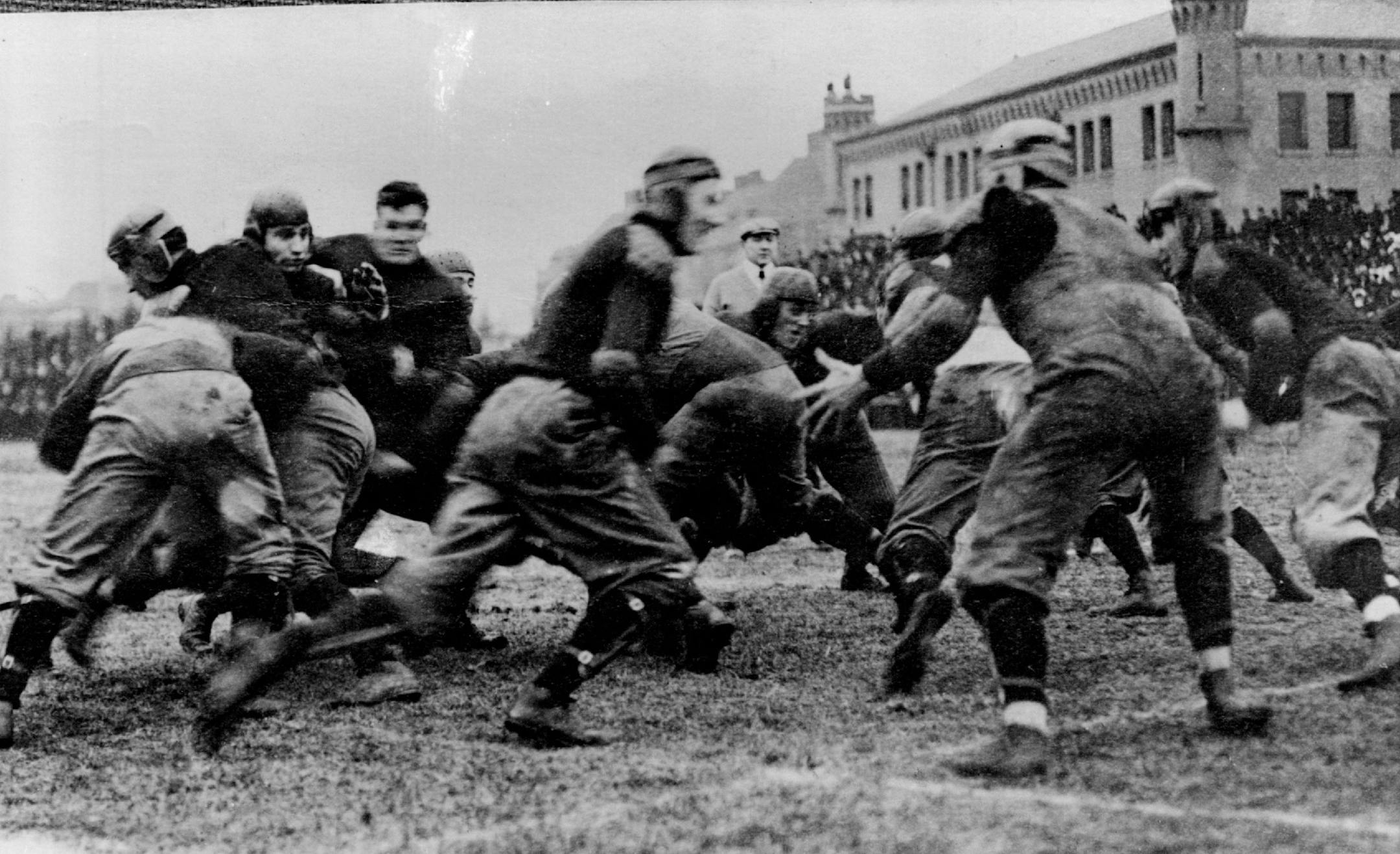
Violence has always been part of the game. Nearly every account of a 19th-century football game I've read includes the words "brutal" or "brutality."
American football, a military game concerned with the conquest and the defense of territory, evolved from the English game of rugby in the years following the American Civil War. Walter Camp of Yale, generally considered the father of American football, disliked the chaos of the rugby scrum and sought to introduce more strategy into the game. He finally succeeded in persuading his Ivy League colleagues to trade the scrum for the line of scrimmage, thereby allowing for more strategic possibilities and, he argued, a reduction in the violence associated with the game.
Whether the latter worked is debatable. Separating the teams between downs may have diminished the anarchy of the scrum, but it also allowed players to generate momentum before crashing into opponents. Bloodied bodies, displaced dentition, broken and amputated limbs were commonplace. The Journal of the American Medical Association counted 12 deaths from football in 1902, and at the conclusion of the 1905 season the Chicago Tribune tallied the season's "death harvest": 159 serious injuries and 19 fatalities.


