

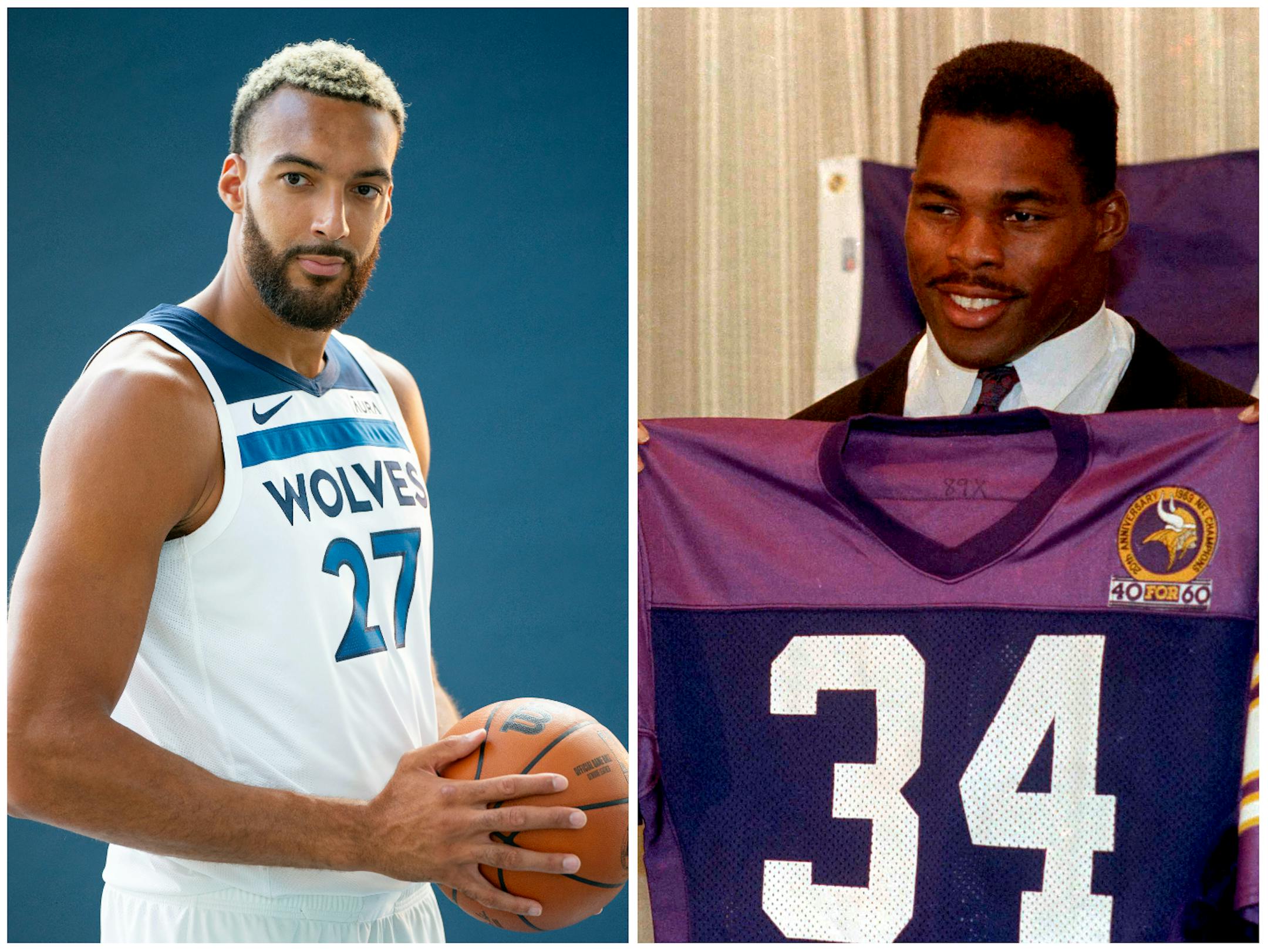
In early July the Timberwolves, ignoring Minnesota PTSD (Player Trades Spurring Depression), traded five players and four first-round draft picks to Utah for star center Rudy Gobert.
For those who remember the Vikings' trade for Herschel Walker, Gobert looks like a 7-foot-1 risk.
In 1989, Vikings General Manager Mike Lynn, looking for the one player who would elevate his team to a Super Bowl, traded five players and eight draft picks to Dallas for Walker and four future, low-level draft picks. That would become the most infamous and lamented trade in Minnesota history, a national punchline, and the ghost that would immediately haunt the Wolves' large gamble.
I covered the Walker trade in Dallas in 1989, and in Minnesota for the remainder of Walker's Minnesota stay. Here is why the Gobert and Walker deals are nothing alike:
1. The Wolves aren't getting fooled. Lynn was a successful, veteran GM. He was negotiating with Jimmy Johnson, a rookie NFL head coach who had a lousy roster and had yet to win a game in early October. Lynn assumed that if he constructed a deal that would give Johnson a choice between keeping veteran players or draft picks, Johnson would be so desperate to immediately improve that he would choose the players and give back the picks.
That was Lynn's intent: Trading good-not-great players for Walker, and keeping the picks. Johnson told me the day after the deal that he intended to keep the picks, and would offer Lynn some throwaway draft picks to keep the players, as well.
Johnson out-thought Lynn. The Wolves are not getting fooled in the Gobert deal. They expect to be good enough that the first-round picks they gave up will not be all that valuable.
2. The Wolves have a sound plan. The mistake that led to the mistake that was the Walker trade was Lynn never vetting with coach Jerry Burns whether Walker would fit into Burns' quick-pass, quick-cutting offense. Walker was a classic I-formation, run-to-daylight back. He didn't fit anything Burns wanted to do.


