

Major League Baseball, with a traditional pace of change that can be generously described as "glacial," shook things up with some new initiatives announced last week.
While some things implemented in MLB for 2019 — such as establishing just one trade deadline — are interesting, the more intriguing news was a set of experimental playing rules being tested this season in the independent Atlantic League. Many are aimed at improving pace of play. So what do we think of all this?
First take: Michael Rand
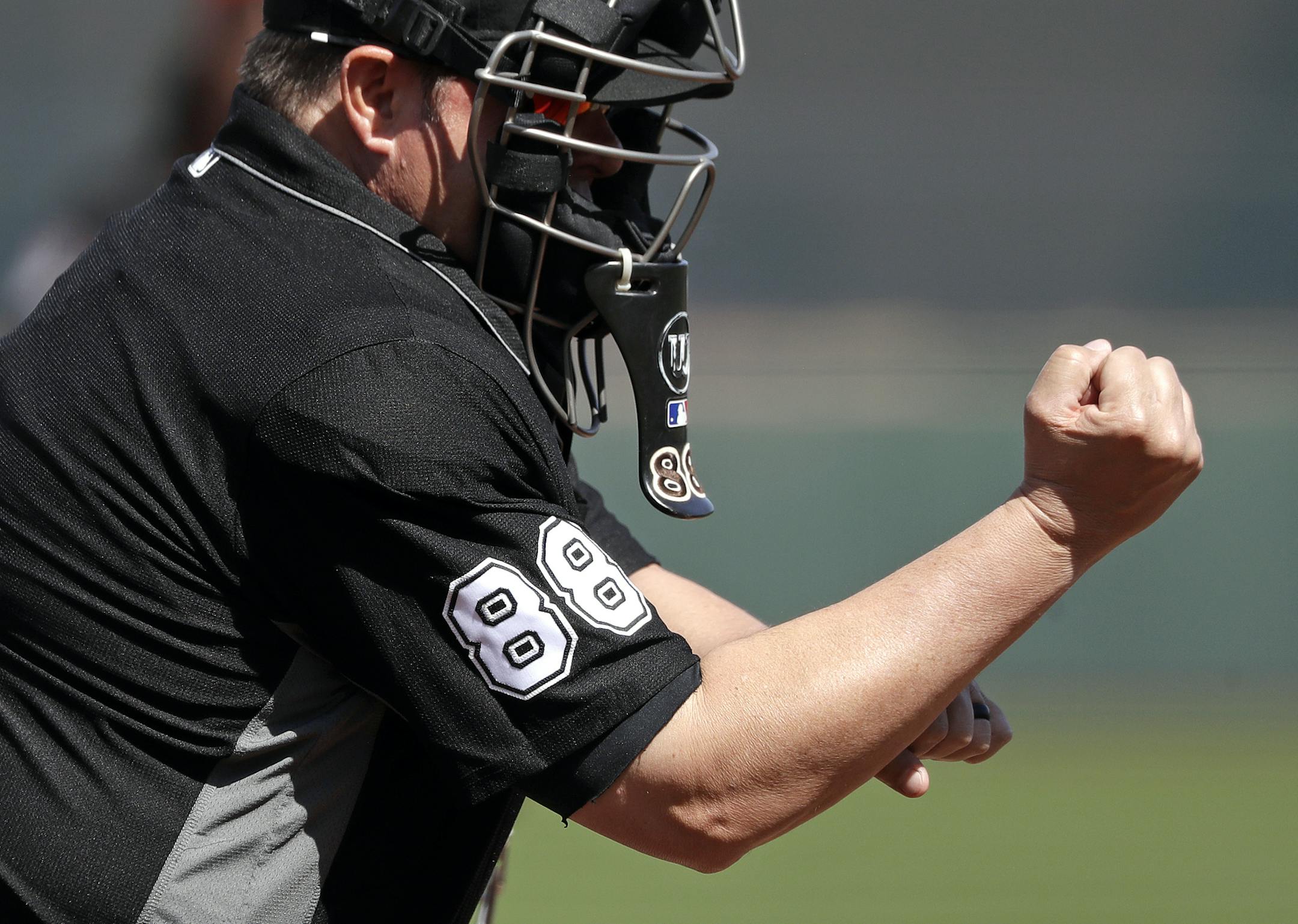
Let's give MLB at least a pat on the back for taking some active measures. I'm interested in several of the things they're trying in the Atlantic League — most notably giving home plate umpires assistance with balls and strikes using radar tracking as well as mandating that teams play two infielders on both sides of second base.
If either of those measures means more balls in play, it's a step in the right direction. Because for as much as baseball has a length-of-game problem, it also has a significant lack-of-action problem. In MLB last season, 30.7 percent of plate appearances ended with a walk or strikeout. Even just 15 years ago, that number was below 25 percent. Shifts take away the incentive to put the ball in play. Walks and strikeouts are boring.
Twins writer Phil Miller: Ever since pro tennis began using those remarkable radar-tracked replays to take close calls out of the hands of line judges, I've believed it inevitable that baseball would someday adopt the technology. For decisions as critical to the game as balls and strikes — MLB hitters last year batted .339 when the count was 2-1, and .160 when it was 1-2 — it's amazing that there hasn't been more urgency toward making those calls more standard.
In fact, the arbitrariness has been celebrated: Witness Tom Glavine's reputation for getting huge strike zones, and today's emphasis on "pitch framing," a skill that could be rebranded as "umpire fooling."
I doubt that calling balls and strikes will ever be totally objective — it can't be, given the various sizes of players and the three-dimensional plate — but it's time we got a look at what such a system would look like. Maybe it's worth implementing and maybe it isn't, but I'm glad baseball is interested in finding out.


