

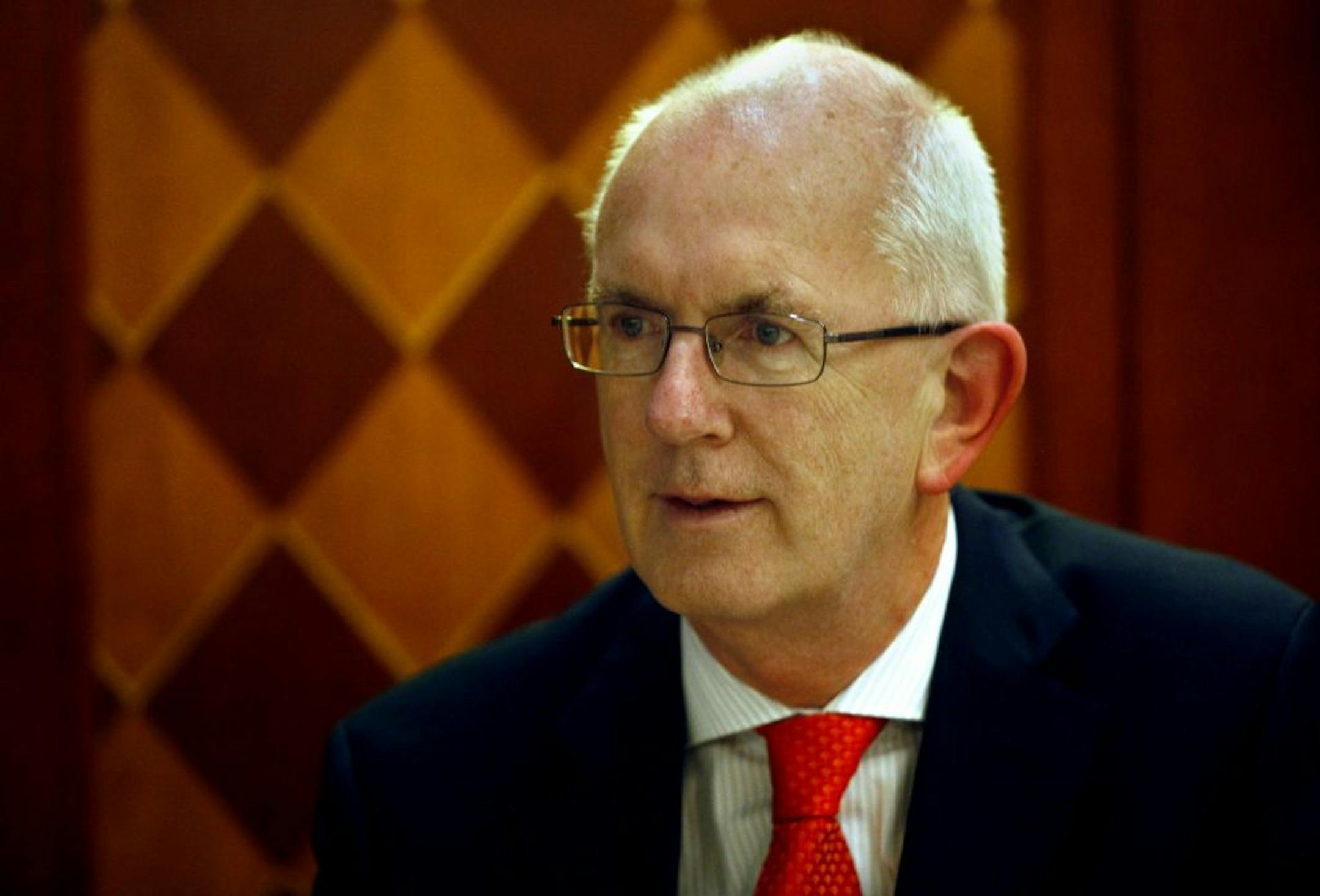
Barry O'Leary is determined to convince international companies that Ireland is a great place to do business, even though his country's domestic economy is in turmoil.
The nation's high unemployment rate means companies can pay workers lower wages, said O'Leary, CEO of investment promotion agency IDA Ireland. The country is also offering perks like corporate tax rates that are half or one-third the rate of other countries, he said.
That could open doors for companies in the Twin Cities that want to expand their operations globally. Already medical-technology firms have a huge presence in Ireland. Recently medical device-maker Boston Scientific, which employs thousands in the Twin Cities, announced that it will invest $37 million in its Clonmel facility in southern Ireland.
Like the United States, much of Ireland's troubles stem from a housing crisis, which came to a head in 2009. People who were employed in Ireland's construction industry lost their jobs and the banks suffered massive losses due to bad loans.
O'Leary visited the Twin Cities and spoke with the Star Tribune earlier this month. He talked about the nation's business strategy and its relationships with med-tech firms in the U.S.
Q Some of the medical device start-up companies have expressed concern about the current U.S. Food and Drug Administration regulatory process. Are more start-ups moving abroad as a result?
A Start-up companies are going abroad much earlier. If they get the CE mark [European approval], they can start generating revenues immediately, whereas if they have to wait for FDA approval, then there's all this sunken cost. I think that's why you are seeing more of them, even the small ones, internationalizing earlier.
Q What's the venture capital investment climate in Ireland?



