

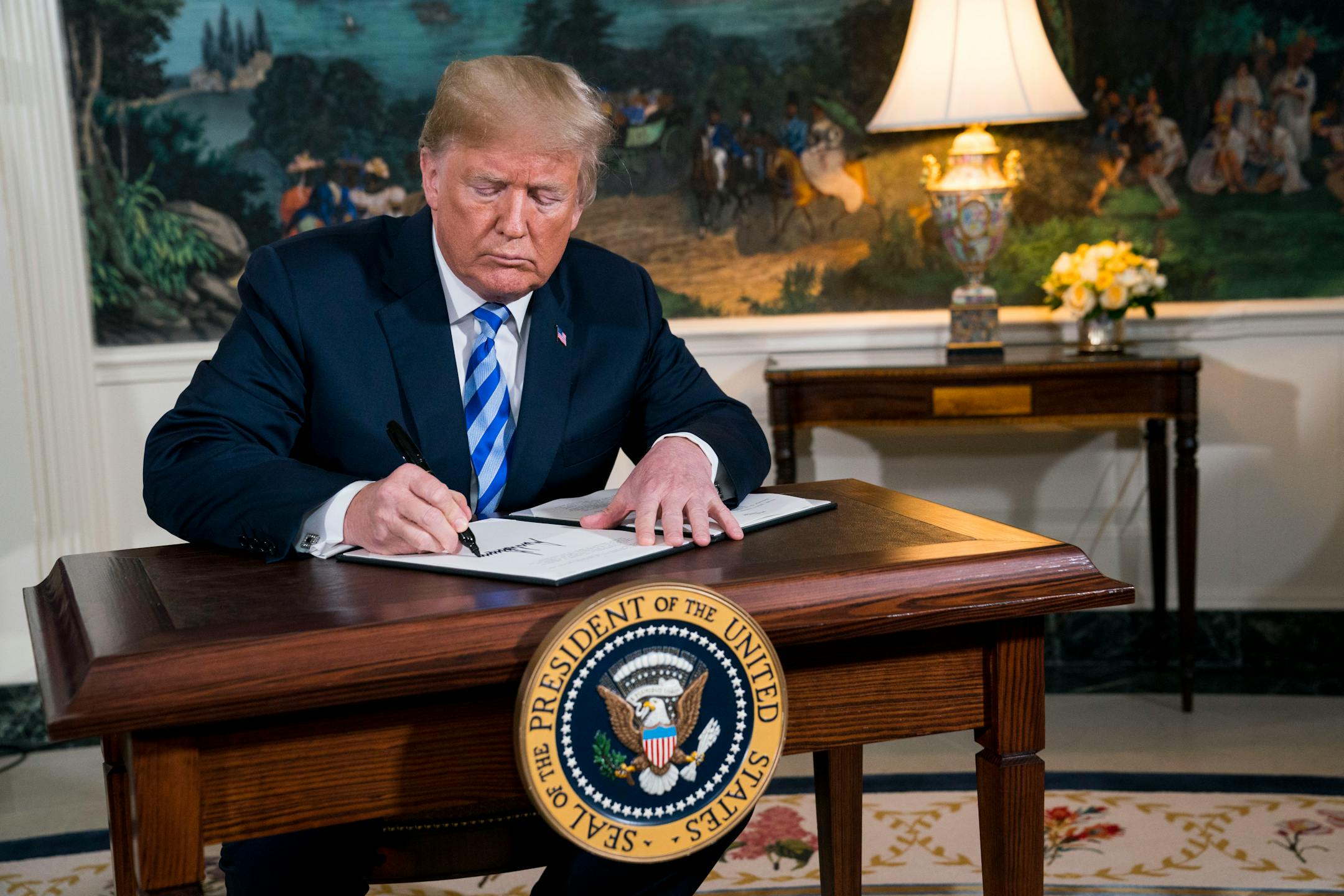
The judges have voted and the results are in: President Donald Trump's decision to tear up the Iran nuclear deal in 2018 — a decision urged on by his secretary of state, Mike Pompeo, and Israel's prime minister, Benjamin Netanyahu — was one of the dumbest, most poorly thought out and counterproductive U.S. national security decisions of the post-Cold War era.
But don't just take my word for it.
Moshe Ya'alon was the Israeli defense minister when the nuclear agreement was signed, and he strongly opposed it. But at a conference last week, he said, according to a summary by Israel's Haaretz newspaper, "as bad as that deal was, Trump's decision to withdraw from it — with Netanyahu's encouragement — was even worse." Ya'alon called it "the main mistake of the last decade" in Iran policy.
Two days later, Lt. General Gadi Eisenkot, Israel's top military commander when Trump withdrew from the deal, offered a similar sentiment, which Haaretz reported as "a net negative for Israel: It released Iran from all restrictions, and brought its nuclear program to a much more advanced position."
It sure has. The International Atomic Energy Agency recently reported that Iran has amassed a stock of enriched uranium hexafluoride that independent nuclear experts calculate is sufficient to produce weapons-grade uranium for a single nuclear bomb in as little as three weeks.
Thanks, Donald. You showed them!
Up until Trump walked out of the Iran deal — negotiated by President Barack Obama — even though international inspectors said Iran was still adhering to it — Iran's breakout time to produce enough fissile material for a nuclear weapon was one year, and Iran had agreed to maintain that buffer for 15 years. Now it's a matter of weeks. It would still take Iran a year and a half or two years to manufacture a deliverable warhead, U.S. officials believe. But that is cold comfort.
After a five-month hiatus, negotiations to restore compliance with the Joint Comprehensive Plan of Action, or JCPOA, as the nuclear deal is called, resumed in Vienna on Monday between Iran and China, France, Germany, Russia and Britain — with the U.S. participating from another room because it is no longer a party to the accord.


