

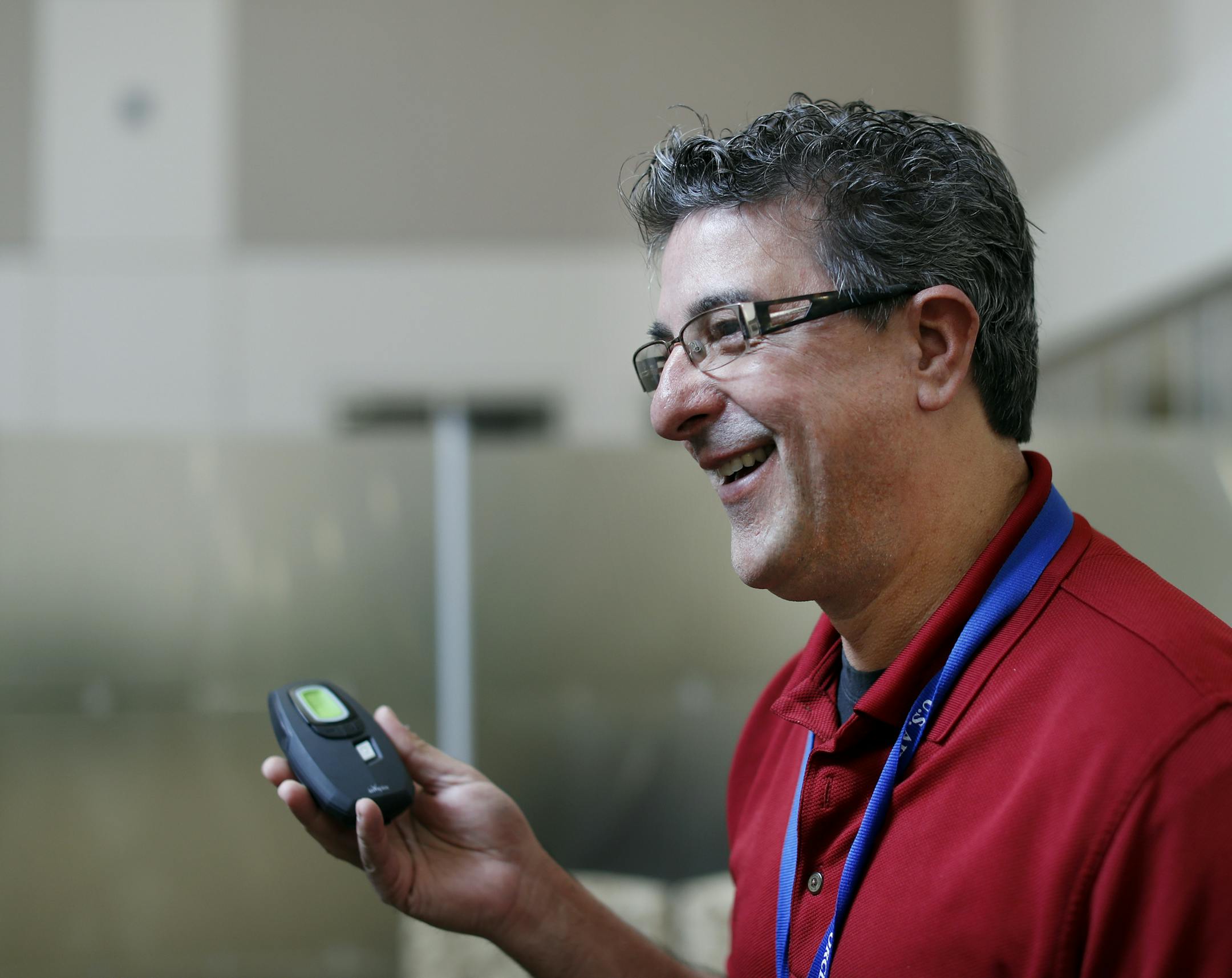
Daniel Tarro had a bad snore.
It kept his family up at night. It woke up the neighbors if the windows were open. It once disturbed a gymnasium full of sleeping rescue volunteers, forcing Tarro to move to a private area to sleep during the night.
"My daughter, at the age of 3, thought there was a lion in the house," said Tarro, 55, of Apple Valley, describing the high-decibel effects of his severe obstructive sleep apnea. At the time, neither Tarro nor his family fully appreciated the negative health consequences for his brain and heart from episodes of oxygen deprivation at night caused by the apnea.
Today, Tarro says his snore is almost gone. But he had to undergo surgery to get there, including implantation of a pacemaker-like device developed in Minnesota, plus two skinny wires that run under the skin to monitor his breathing and deliver a mild electric current at night. He also had to first try out the cheaper and less-invasive option of an external continuous positive airway pressure (CPAP) machine.
The medical device Tarro eventually had implanted is called the Inspire obstructive sleep apnea device, sold by Maple Grove-based Inspire Medical Systems. The company was founded nine years ago on technology spun out of Medtronic, which remains a key investor and also does Inspire's manufacturing.
"Medtronic has so many good ideas that they simply cannot fund every idea," said Inspire CEO Tim Herbert, who worked more than a decade at Medtronic before leaving to run Inspire Medical.
Tarro was the second patient at the Minneapolis Veterans Medical Center to be implanted with the device last year. But nationally, Inspire Medical hit a major milestone this month with the implant of its 1,000th patient. The company also announced the appointment of Carlson Holdings co-CEO Marilyn Carlson Nelson to its board of directors.
Inspire's implantable device for obstructive sleep apnea is similar to a cardiac pacemaker, except that it delivers current to the end of a motor nerve under the tongue called the hypoglossal nerve, rather than to the heart. The Inspire's voltage is regularly adjusted by the patient to fit his or her daily needs, and it is switched on with a handheld bedside remote that has large buttons so it can be usable at night.


