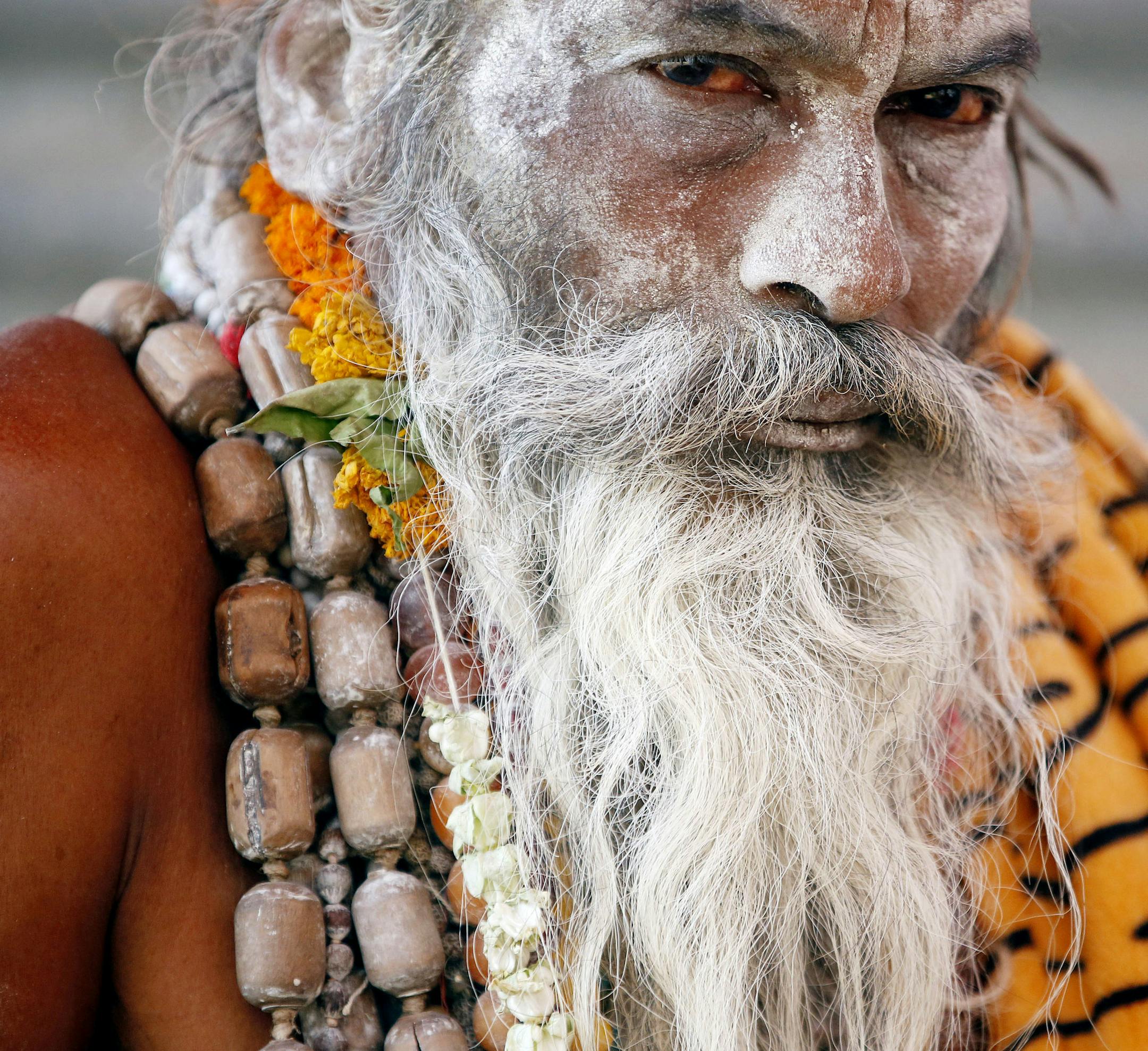
At the dawn of time Lord Vishnu made gods and demons join in churning the milky oceans to extract an elixir of eternal life. After cheating the demons of their share, Vishnu spilled four drops of the precious nectar. Where they fell sprang up sacred rivers whose waters wash away sins, now sites for mass Hindu pilgrimages called Kumbh Mela.
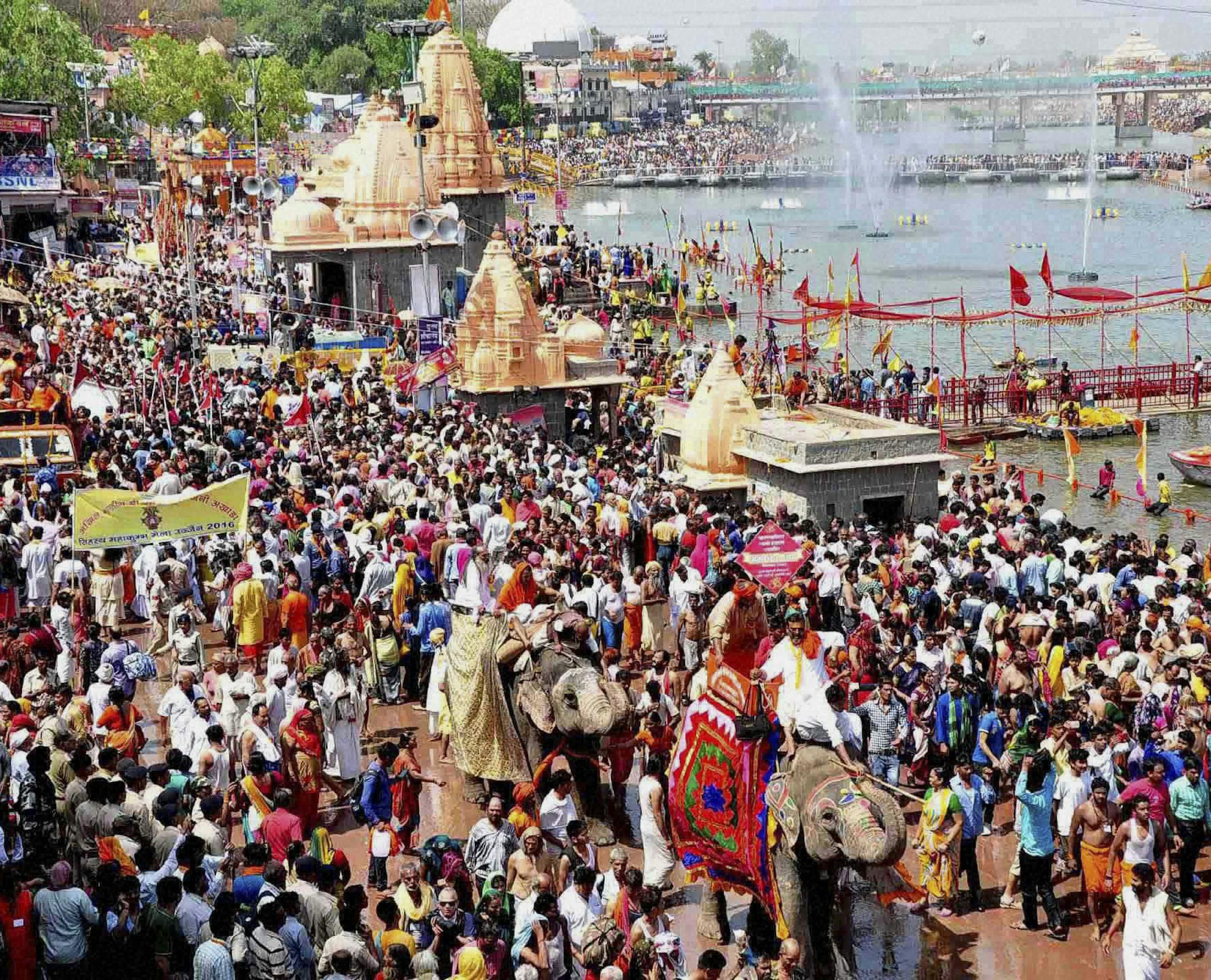
For a lunar month every 12 years it falls to Ujjain, a town in central India, to host the Kumbh Mela by the revered Shipra River. By the time the full moon reappears on May 21, tens of millions of bathers will have worshiped on Ujjain's teeming riverbanks.
What few are aware of is that the water is no longer the Shipra's. Urbanization, rising demand and two years of bad drought have shriveled the sacred river. Its natural state at this time of year, before the monsoon, would be a dismal sequence of puddles.
But the government of Madhya Pradesh state, determined to preserve the pilgrimage, has built a huge pipeline diverting into the Shipra the abundant waters of the Narmada river. Giant pumps are sucking some 5,000 liters a second from a canal fed by the Narmada, carrying it about 30 miles to pour into the Shipra's headwaters.
The pilgrims and merchants of Ujjain are happy. But down in the Narmada valley there is little cheer. Since March, the canal, which feeds farms in 13 hamlets, has been bone dry. The government insists the water will return once Ujjain's pilgrimage ends
Poor monsoons are not unusual, but the back-to-back shortfalls, linked to the El Niño effect, that India has experienced are very rare. Ten states, with a population of 330 million, have been badly hit, with the worst-affected areas in the center of the nation. India is suffering its gravest water shortage since independence, said Himanshu Thakkar, a water expert in Delhi, the capital.
Government officials speak of massive irrigation projects and have dusted off an ambitious water-diversion scheme for parched regions that is priced at $165 billion and involves 37 links between rivers. Most links would be via canals, some 15,000 kilometers of artificial waterways in all.
Hydrologists such as Thakkar are skeptical of big projects, open to cronyism, when simpler and environmentally sounder solutions are at hand. India relies not on rivers but on aquifers for two-thirds of its irrigation and more than three-quarters of its drinking water. With 30 million wells and pumps at work, groundwater levels have been dropping. Much water is being squandered.