

Opinion editor's note: Star Tribune Opinion publishes a mix of national and local commentaries online and in print each day. To contribute, click here.
•••
North Korea passed a law this month putting into effect Kim Jong Un's decision that in case he is incapacitated by foreign hands, the country will "automatically and immediately" launch a nuclear retaliation. This arrangement makes it sound as though the North Korean nuclear arsenal is not only designed to be used by one man but exists to keep that one man in power.
Is this arrangement an aberration of North Korea, or is it descriptive of the other eight nuclear states? As tensions persist — Russia's war in Ukraine, but also between India and Pakistan, the U.S. and China, the U.S. and North Korea — how strong are the nuclear nations' guardrails?
While some nuclear leaders (including a recent U.S. president) go to great lengths to keep themselves in office, it seems improbable that any of them would regard their own individual lives as something that should be paid for by 2 billion or 5 billion human lives — the numbers of deaths that recent research on nuclear winter shows will result from a small or large nuclear war.
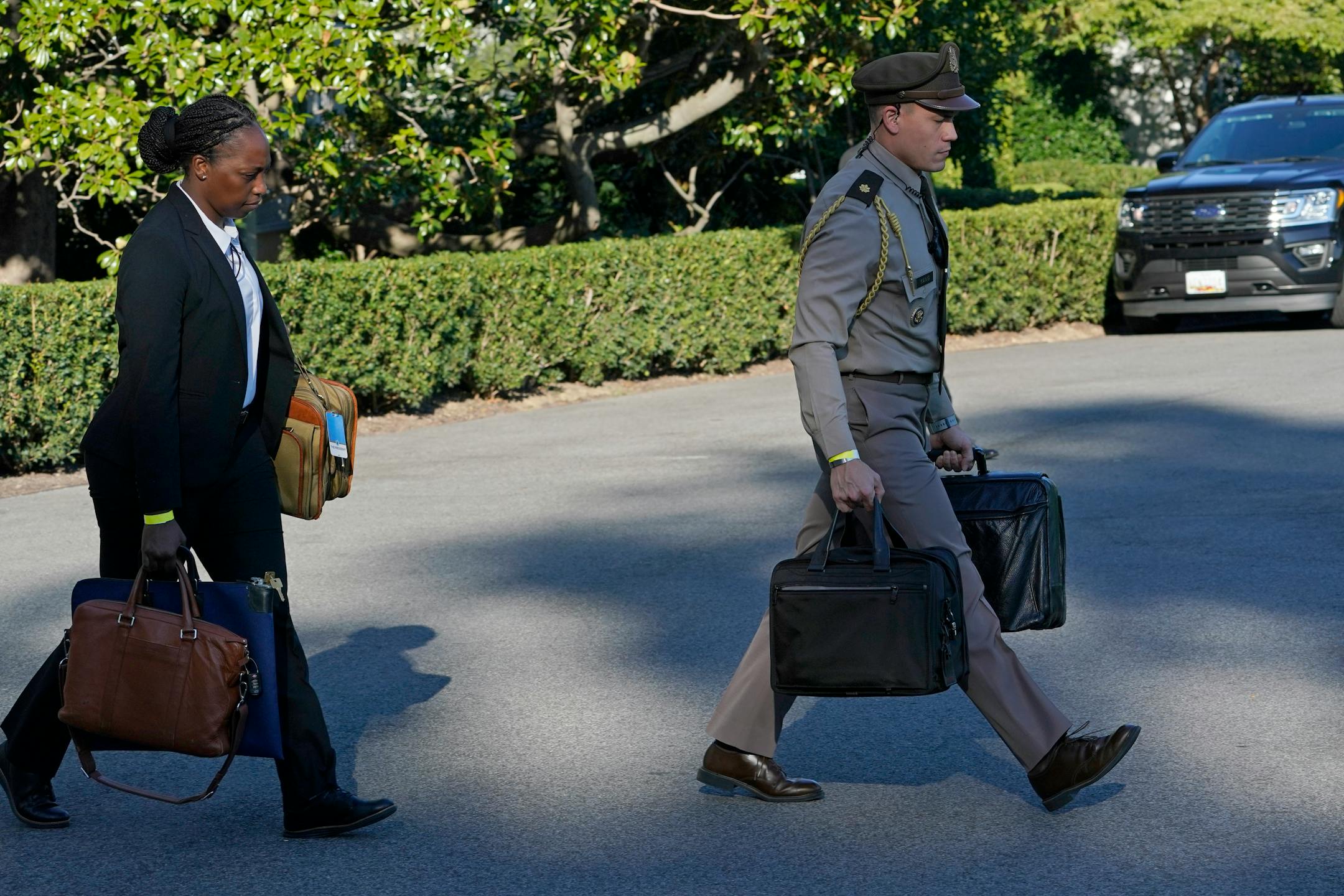
But what the North Korean law accurately foregrounds is the monarchic power that these weapons have brought about within the nine nuclear states. Each has an arrangement for letting a single individual, or a tiny number of individuals, initiate an earth-scorching launch. In the United States, the presidential order to launch entails no second voice — not from the Cabinet, Congress, the military nor the citizenry. The force that before 1945 could only be brought about by hundreds of thousands of soldiers all consenting to fight remains compressed into a single weapon designed to be delivered by a single individual.
It may appear that the U.S. has a safeguard that North Korea lacks. Whereas the Constitution of North Korea authorizes the country's leader to declare war, the American Constitution states that only Congress can issue a declaration of war. France and India have similar provisions. Russia's Constitution stipulates that while the president can act alone to defend the country within its own border, carrying out military action beyond the border requires authorization from the Council of the Federation, the counterpart of the U.S. Senate.
Yet at least for the U.S., the declaration of war limitation does not provide much of a check. Historical record shows presidents contemplating a nuclear launch at times when Congress had made no such declaration. Eisenhower considered using atomic weapons during the Taiwan Strait Crisis that began in 1954 and again in Berlin just a few years later. President John Kennedy, according to Robert McNamara, three times came within "a hair's breadth" of nuclear war. Lyndon Johnson considered using a nuclear weapon to prevent China from acquiring nuclear weapons. Nixon reported that he considered using a nuclear weapon four times.


