

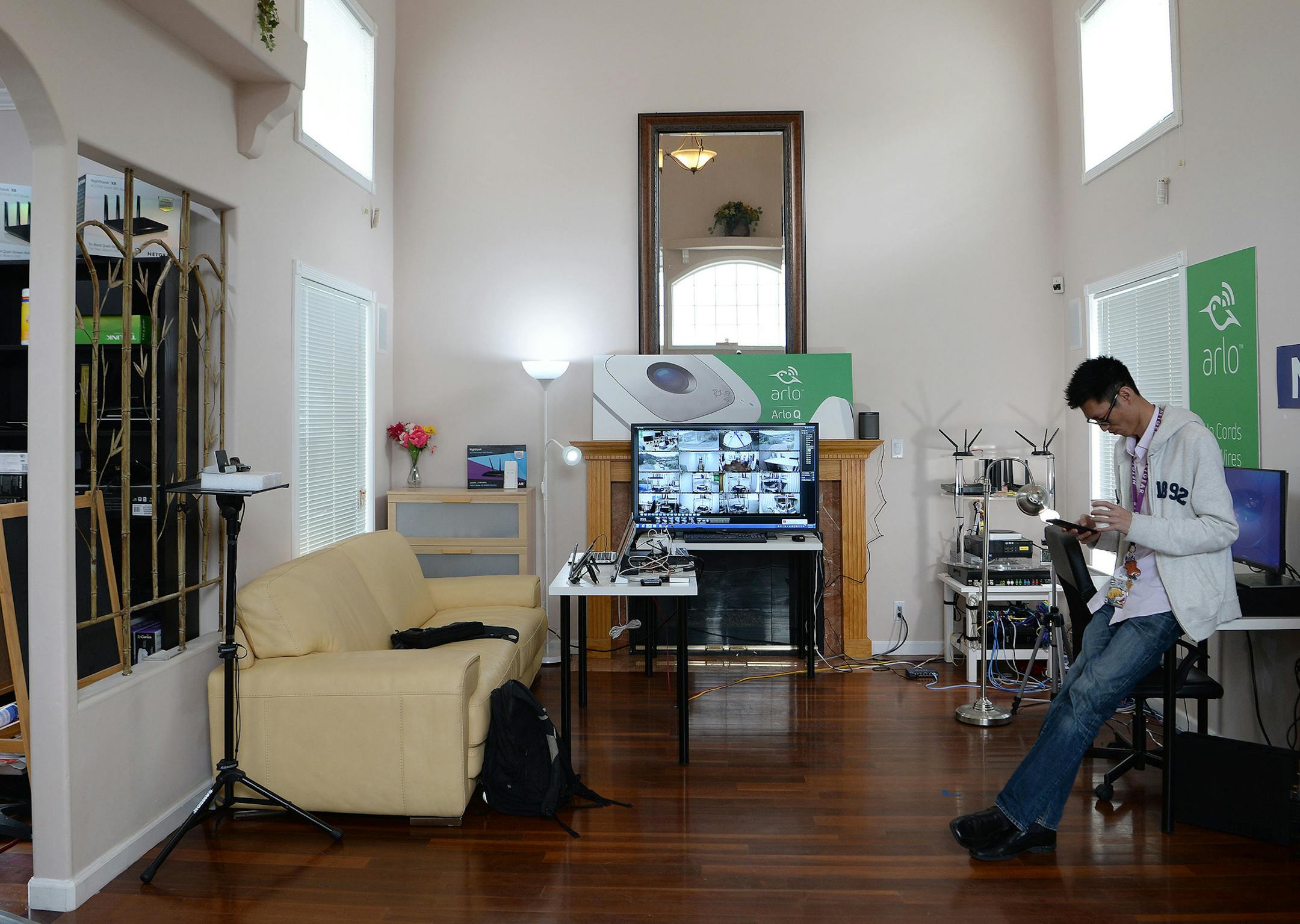
SAN JOSE, Calif. – In Silicon Valley, the house next door might not be full of techies, but it could be stuffed with tech products.
Up in the East San Jose hills, where suburban developments give way to isolated homesteads, Netgear rents a house where it tries out equipment to make sure it's ready for market. Nestled into a residential neighborhood in Menlo Park, start-up Plume rents a new two-story house to test its Wi-Fi system. On Communications Hill in San Jose, KB Home has a model house to show off the smart home products customers can get preinstalled. And start-up Abode uses three homes rented by its co-founders as its labs.
From San Jose to San Francisco, companies that are inventing the future are increasingly turning to houses to test and show off their products before they are rolled out to consumers nationwide.
"This is where the sausage gets made," said Plume CEO Fahri Diner. "This is literally our test house."
Take Netgear. The Wi-Fi router maker rents a 2,500-square-foot, two-story home in the hills east of San Jose's Alum Rock neighborhood. From the outside, the mauve-colored house looks unremarkable, except for the large plot of land it sits on.
But inside, along with furniture like couches, tables, chairs and beds, the home is full of routers, televisions, computers, tablets and smartphones. Those devices are used to test and measure the signals coming from Netgear's Wi-Fi devices. Pretty much all of Netgear's Wi-Fi products, except for its lowest-end devices, get tested at the house — sometimes multiple times — before they head to store shelves, said Mark Merrill, the company's chief technology officer.
The location of the company's San Jose house, which it first started renting more than four years ago, is no accident. Netgear was looking for a place that was close to its headquarters so its engineers could easily swap out equipment or make adjustments. But it wanted a location where it wouldn't have to worry about competing with signals from nearby houses.
"We wanted a place where we could do real-world testing without too much interference," Merrill said.


