

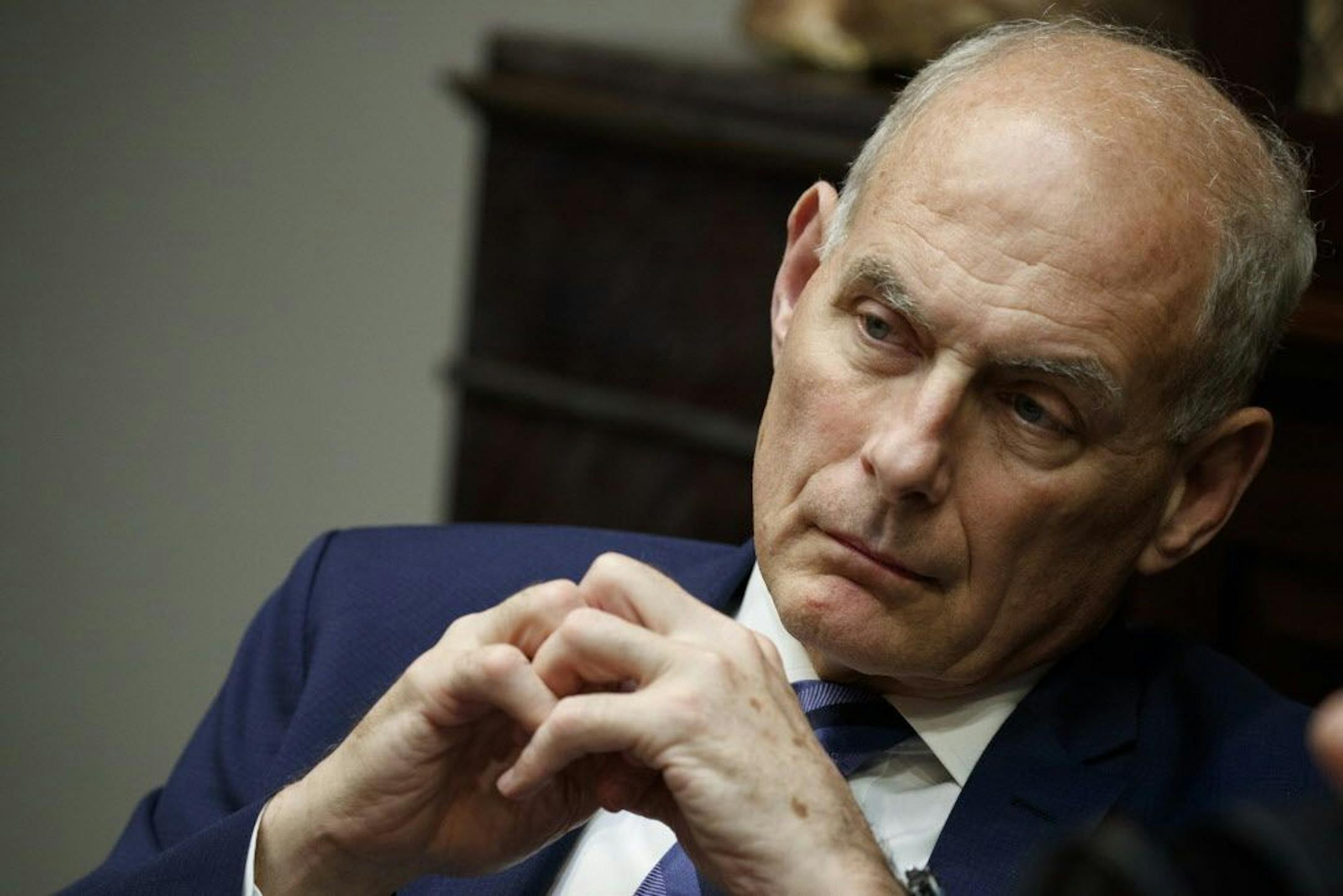
President Donald Trump said Saturday that his chief of staff, John Kelly, would step down by the end of the year.
Kelly's departure will add to records the Trump administration has already set for turnover at the most senior levels of government. According to the Brookings Institution, 34 percent of executive office staffers departed in the first year of the administration. (The president with the next-highest rate of year-one attrition among Trump's five predecessors was Reagan, at 17 percent.)
This revolving door is almost certain to hurt Trump. Political scientists are clear that White House staff turnover prevents presidents from achieving their goals.
In his 2008 book "The Politics of Presidential Appointments: Political Control and Bureaucratic Performance," the Vanderbilt University political scientist David E. Lewis pointed out that the average Senate-confirmed presidential political appointee stays in his or her post for two years, with even shorter tenures at lower levels; the average corporate chief executive is on the job for five to seven years.
"Increased turnover creates leadership vacuums, sends mixed signals about agency goals, and diminishes an agency's commitment to reform, resulting in generally poorer performance," Lewis said. "Appointees are often in office just long enough to establish new priorities and start new initiatives - but not long enough to see them through to completion."
For example, Trump nominated William Barr last week to be the next attorney general. The agency has already seen three acting heads in addition to Jeff Sessions who lasted less than two years - not long enough to develop and fully implement a new agenda. It remains to be seen what direction it will pursue under Barr, if he is confirmed.
Another way high turnover prevents presidents from getting things done is by creating what the Harvard University political scientist Hugh Heclo termed "a government of strangers." Heclo found that the short tenure of presidential appointees creates an absence of teamwork in government. Since people are always coming and going, staffers never build the relationships necessary to work together effectively to get things done.
In his 2005 book "Beyond a Government of Strangers: How Career Executives and Political Appointees Can Turn Conflict to Cooperation," the political scientist Robert Maranto reported that some civil servants now refer to presidential appointees as the "Christmas help." This suggests that career staff in government agencies may not even make the effort to get acquainted with appointees and share expertise and information if they're not expected to be around very long.


