

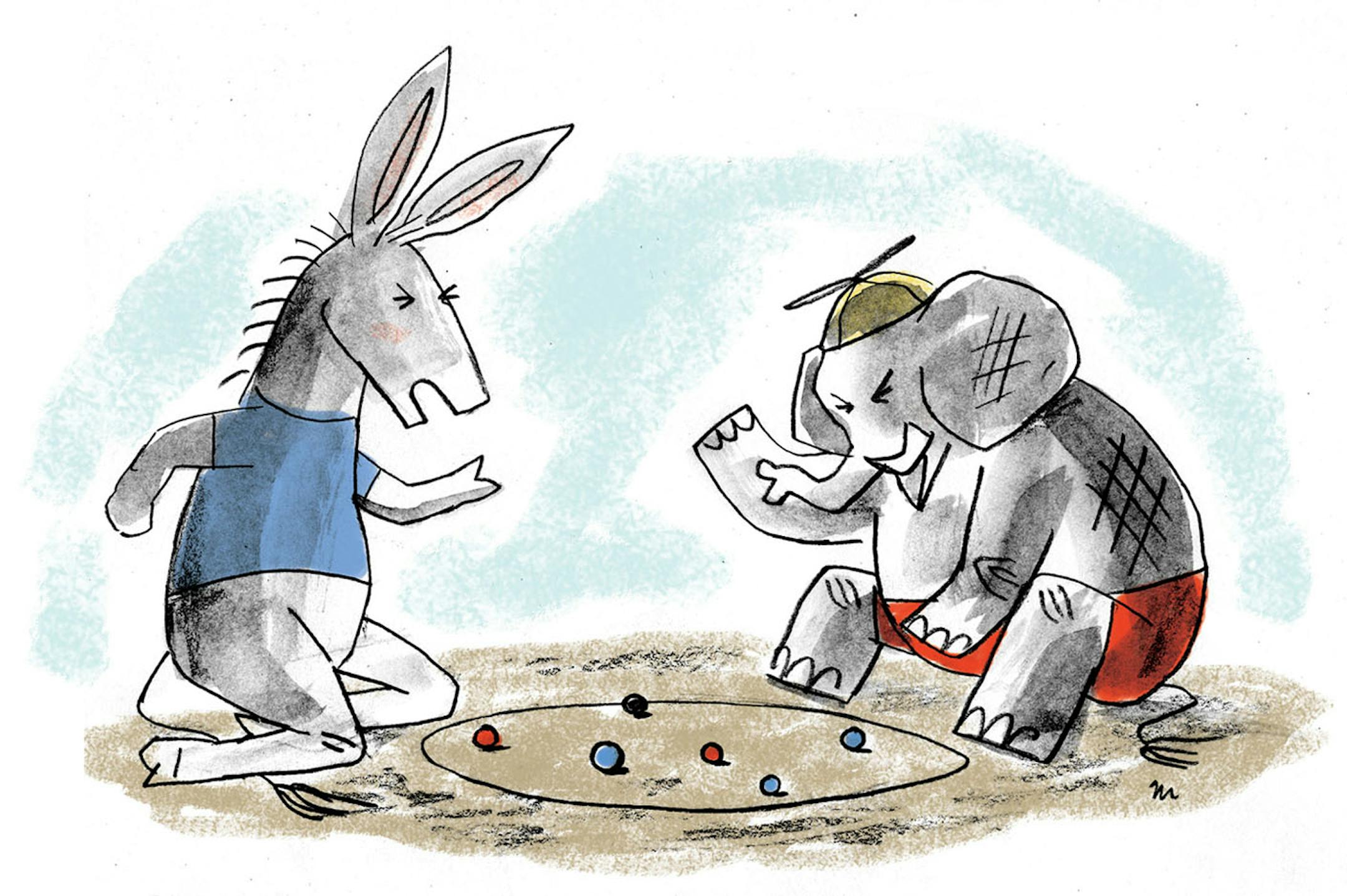
The revolution came to Minnesota in November 2010. For the first time in modern history, Republicans swept to majority control in both houses of the Legislature. And not just any Republicans. The energizing wave of newcomers was crowded with take-our-country-back, government-is-the-problem, live-free-or-die constitutional conservatives.
Meanwhile, the state elected as governor Mark (Tax-the-rich) Dayton, who's been flogging the 1 percent for its fair share since long before the idea inspired nationwide protests.
Thus it was that a colossal collision seemed imminent in St. Paul -- a clash between post-Great Recession America's two angry, insurrectionist factions, united only in demanding profound and immediate change.
None could predict what the state might look like when it was over.
Now, at the end of the two-year legislative session, we can finally peer into the settling dust from the epic battle and see who the big winners were in the transformative struggle: 1) a professional sports team owner (who gets a subsidized stadium); 2) construction trades unions (who get to build said sports palace, along with other projects funded in the second borrowing bill in two years); 3) the business community (which will get some tax cuts, if Dayton signs the bill lawmakers passed), and 4) the teachers union (which fought off, through Dayton's veto, a major push from school reformers for restrictions on teacher tenure).
Curious. Not exactly an unrecognizable political landscape, is it? It's more like business as usual -- and with the usual suspects. What's up with that?
We tend to view politics almost entirely as a struggle between ideologies, the left against the right. But just now, in America and beyond, there's another kind of conflict underway as well, pitting those who recognize a need for significant change in governments' priorities and finances against forces that tend always to preserve and protect the status quo.
Advocates for change are a herd of contrasts and contradictions -- extremists and moderates, progressives and conservatives, pragmatic incrementalists and utopian idealists. The more elemental and immutable forces that support business-as-usual are universal self-interest and what you might call the law of political gravity.


