

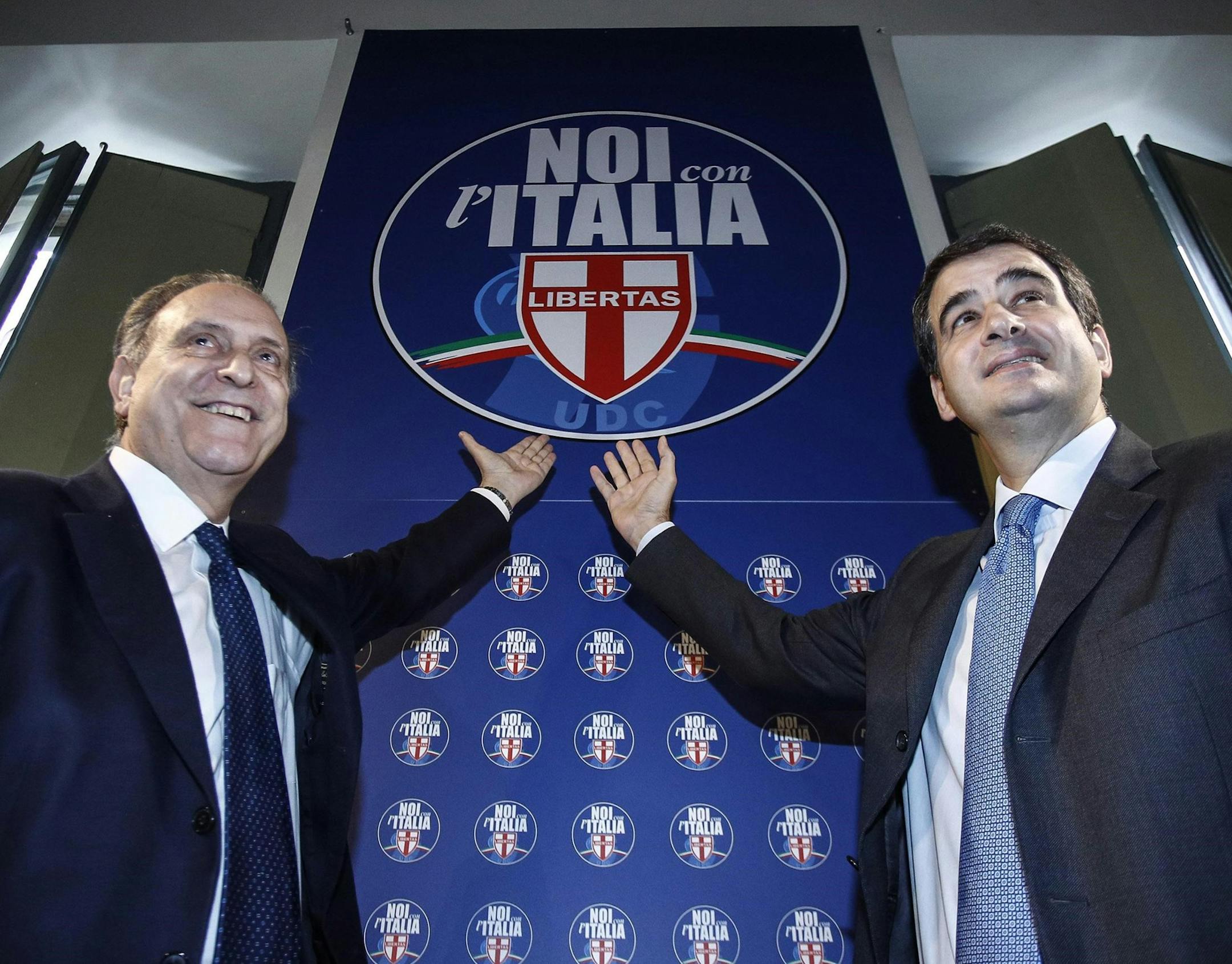
Raffaele Fitto is a man in a hurry.
The black limousine with darkened windows hurtling through the gathering darkness hits 100 mph as it rushes him to his next campaign stop.
With barely two weeks to go before Italy's general election, Fitto had just inaugurated his party's headquarters in Bari, the regional capital of his native Puglia, the "heel" of Italy's boot.
Yet the party he leads, which was founded only in December with the odd name of Noi con l'Italia (NcI, roughly: We're with Italy), could make a crucial difference to the outcome of the vote on Sunday.
The main pollsters agree that the only electoral alliance with a chance of winning an absolute majority in the next parliament is the one forged on the right by Silvio Berlusconi, a former prime minister.
Vowing to clamp down on illegal immigration and introduce a flat-rate income tax, Berlusconi and his allies have gained in the polls as the center-left Democratic Party (PD), led by another former prime minister, Matteo Renzi, has lost ground.
If none of the contenders wins an outright majority, a broad coalition, perhaps led by the incumbent prime minister, Paolo Gentiloni, an urbane and competent man who seems broadly acceptable to almost everyone, may be the only way to make Italy governable. But the right still has a chance.
The last polls published before a pre-election gag rule came into effect on Feb. 17 all implied a hung parliament. But under Italy's new electoral rules almost 40 percent of the seats will be decided on a first-past-the-post basis, the rest by proportional representation (PR).



