

The job of "returning happiness" to Thailand has put Prayuth Chan-ocha in a foul mood.
In January, the irascible leader of the junta that seized power in May 2014 said he had resolved to "talk less, be less emotional and quarrel less with reporters." Yet this month he was again apologizing, through a spokesman, for flashes of anger at two press events. The cause of his ire was impertinent questioning about a proposed new constitution. His temper may only get worse.
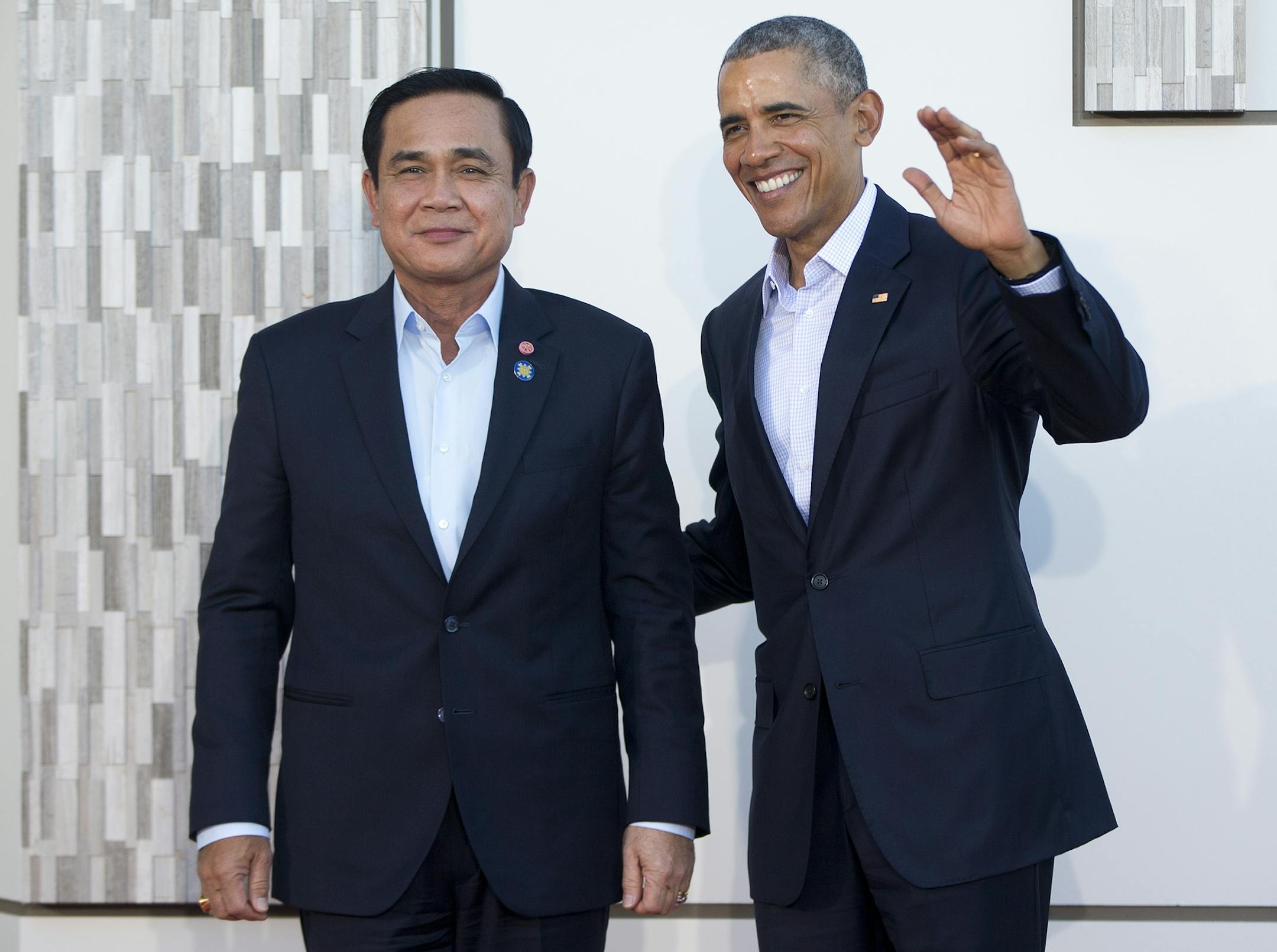
Prayuth, a former general, last week reassured President Obama at a summit for Southeast Asian leaders in California that he is preparing Thailand for fresh elections. But first the junta wants to pass a new constitution that would keep the hands of elected politicians firmly tied.
Prayuth's coup suspended the previous constitution, itself drawn up during another period of military rule after an earlier coup that also unseated a democratic government, in 2006. A draft for a new constitution that was presented last year proved too illiberal even for lackeys who sit in the army's rubber-stamp councils. The generals ordered a rewrite. Their latest blueprint looks nearly as bad.
True, it abandons much-derided plans for an army-led "crisis panel," empowered to topple elected governments at will. But otherwise it reflects the army's view that popular politics is a form of corruption, and that bickering politicians are the source rather than a symptom of Thailand's deep social divisions. (The biggest one is between a wealthy, royalist establishment in Bangkok, the capital, and poorer, less deferential classes in the north and northeast.)
The new draft would produce weak coalition governments, presumably in order to erode the dominance of Thailand's most successful party, Pheu Thai, versions of which the army has twice kicked from power. The prime minister need not be an MP, a loophole that could allow soldiers to keep bossing elected politicians around.
New power will also flow to watchdogs such as the electoral commission, anticorruption outfit and courts. On the face of it, that looks good. But these bodies have traditionally reflected the interests of Thailand's moneyed elites. It is progress that the draft makes the constitutional court the final arbiter in times of crisis — that role had previously fallen to King Bhumibol Adulyadej, now old and frail. But the change probably reflects fears among the Bangkok establishment that the next monarch, the crown prince, may go too easy on Pheu Thai and other perceived enemies.
All this has dismayed Thais of many stripes. Politicians note that Prayuth will retain his authority until the moment the next government is sworn in, perhaps allowing him to influence their election campaigns. They fret that more surprises may be stuffed into subsections that the drafters have yet to scribble (a process that may delay an election promised for mid-2017). Sensing revolt, the junta has started warning that critics of the draft will be hauled away for "attitude adjustment."


