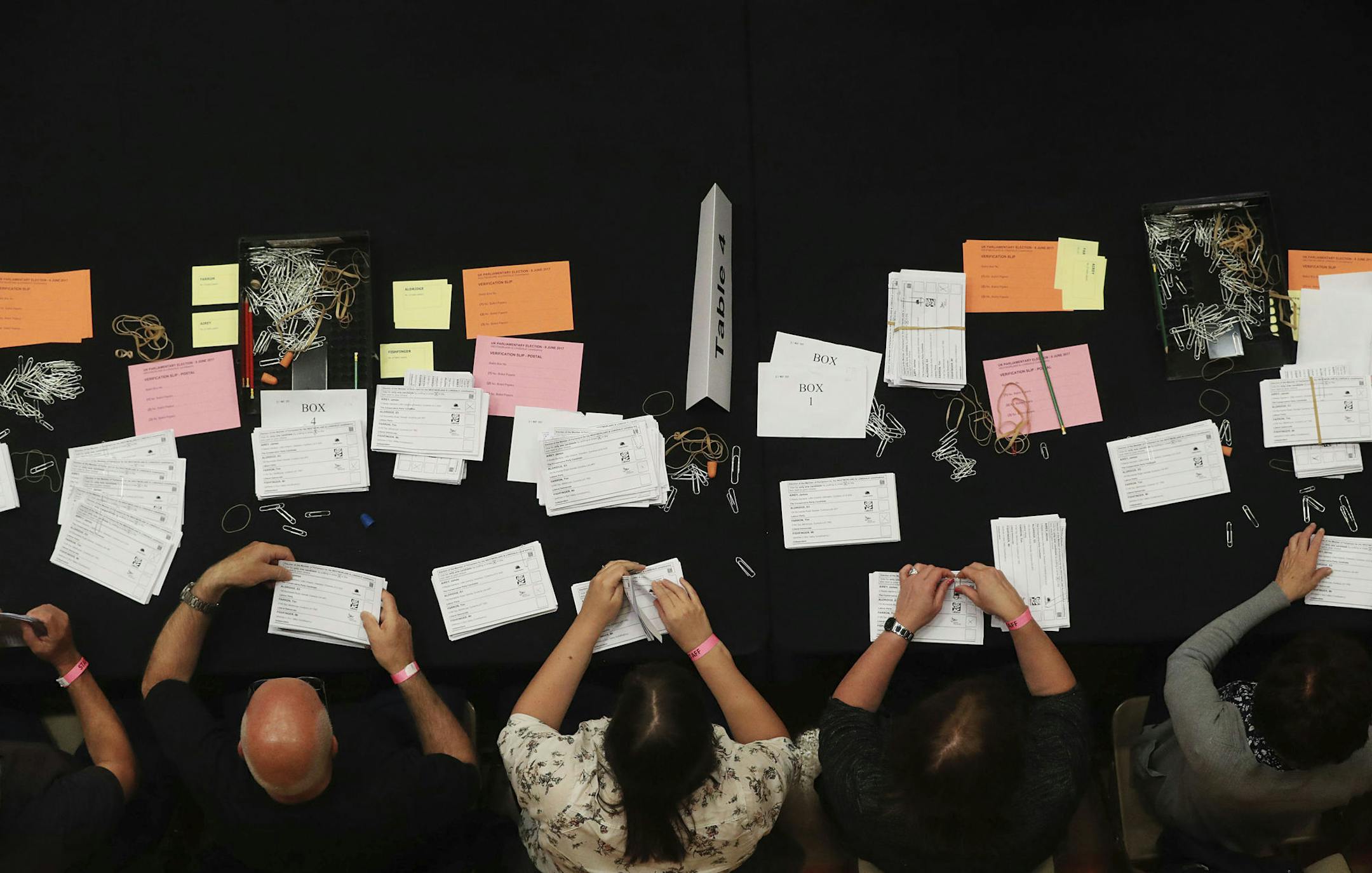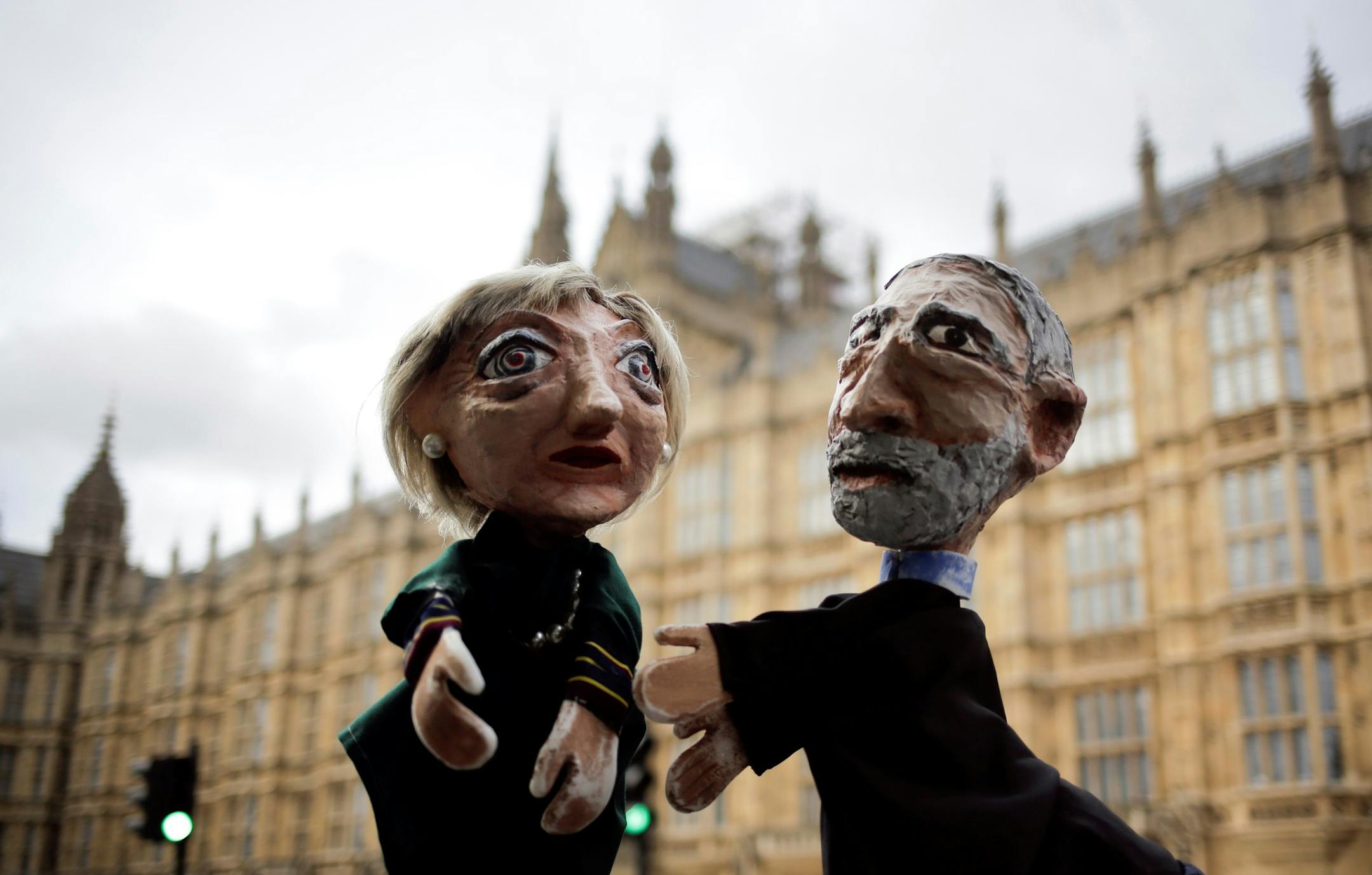
LONDON – It has been impossible to watch the general election without being haunted by a single question-come-exclamation: surely Britain can do better than this?
The best performer in the campaign, Jeremy Corbyn, the Labour leader, is a 68-year-old crypto-communist who has never run anything except his own mouth. Theresa May, the Tory leader, tried to make the election all about herself and then demonstrated that there wasn't much of a self to make it about. As for Tim Farron, the Liberal Democrats' leader, he looked more like a schoolboy playing the part of a politician in an end-of-term play than a potential prime minister.
The result was a surprise: the Conservative party lost its overall majority and May remains in power only after being propped up by Ulster's Democratic Union party.
Complaining about the quality of your leaders is an ancient tradition. Yet sometimes decline really is decline.
Both May and Corbyn wanted to extend the already considerable powers of the government, Corbyn massively so. And both promise to lead Britain out of the European Union, a fiendishly complicated operation.
Unfortunately, both demonstrated that they are the flawed captains of flawed teams. May broke the first rule of politics: don't kick your most faithful voters in the teeth for no reason. Corbyn has stood out in part because his team is so mediocre. Diane Abbott, his shadow home secretary, stepped down the day before the election citing ill health, after a succession of disastrous interviews.
In 1922 Winston Churchill dubbed Bonar Law's coalition government the "second eleven" because so many top players, including David Lloyd George, refused to serve in it.
Today both major parties are fielding their second elevens — Labour because of the rise of the far-left and the Tories because of Brexit. On the left, three-quarters of Labour MPs have concluded that Corbyn is not fit to run their party. On the right, Brexit has hollowed out the party. Several prominent Remainers (including David Cameron and George Osborne) have retired, while several leading Leavers (such as Boris Johnson and Michael Gove) are seriously weakened. The Conservative Party chose May because she hadn't expressed any strong opinions about the most important question of her time.