

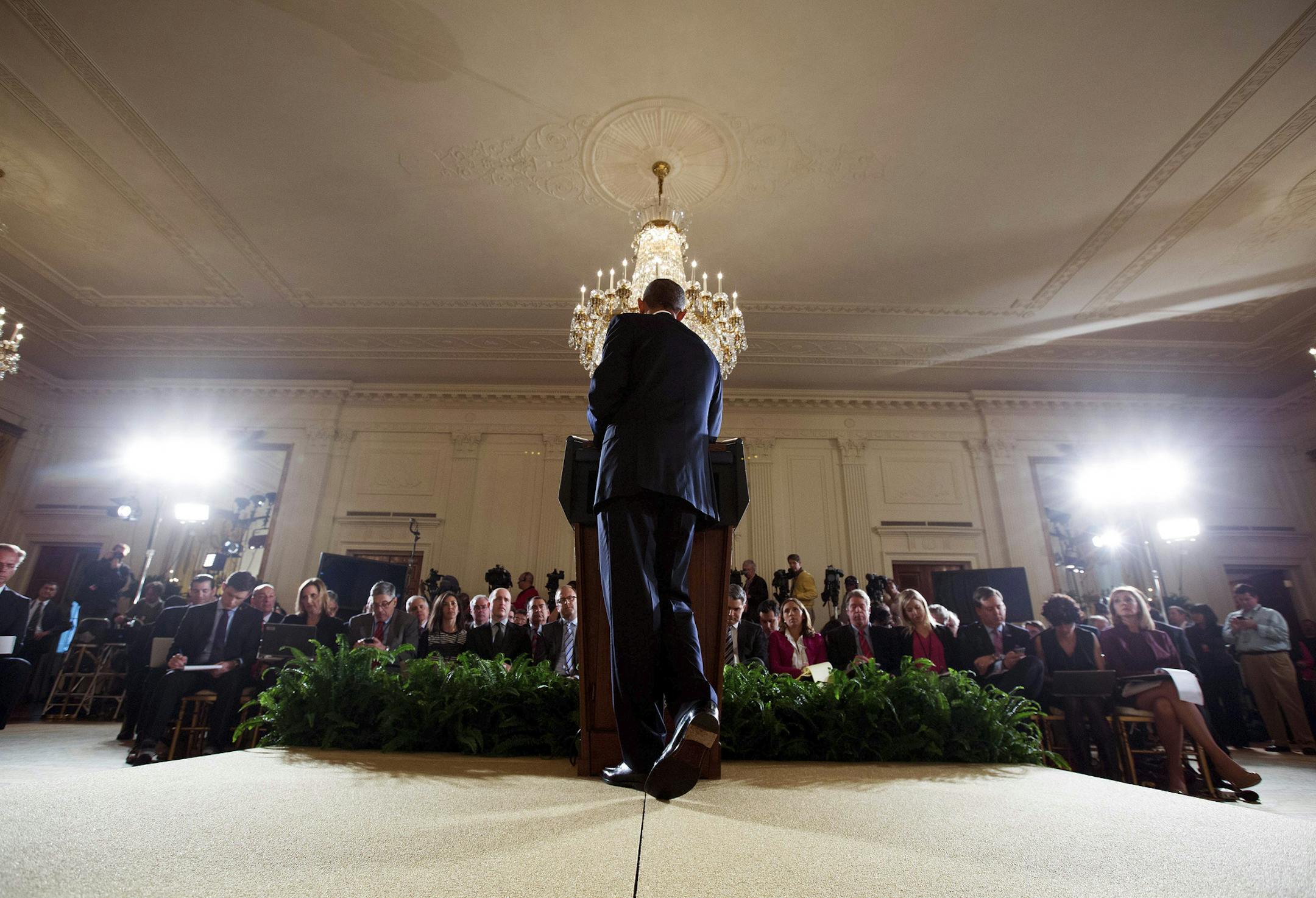
President Barack Obama used his post-election news conference Wednesday to make two promises. First, to cooperate more with Republicans, and, second, to use his executive authority to drive a political wedge into the new Republican majority before the end of the year, splintering it before it even takes office.
Obama didn't actually pledge to drive a big ol' wedge into the Republican Party. But that's effectively what he meant when he said that he'd act unilaterally to ease life for undocumented immigrants - potentially millions of them.
In his own news conference Wednesday, Senate Republican leader Mitch McConnell warned Obama not to move independently: "It's like waving a red flag in front of a bull," he said. What McConnell didn't mention is that he and House Speaker John Boehner would be right there in the bull ring alongside Obama, stylishly attired in flaming red.
The politics of immigration have changed dramatically since 2013, when the Senate passed a comprehensive immigration bill balancing a path to citizenship with the billions in border-security theater required to obtain 68 votes. For a brief moment, the voluble nativist wing of the Republican Party was speechless.
The quiet didn't last. Led by Republican Reps. Steve King of Iowa and a network of anti-immigration groups, the party's anti-immigrant wing reasserted itself, not only spooking Boehner into scuttling the Senate bill, but also passing legislation in the House to end Obama's executive action enabling young undocumented immigrants - aka "Dreamers" - to live and work legally in the United States.
The 2014 campaign season extended the rout by immigration opponents. Republican advertising used the border as an all-purpose metaphor for mayhem and disease. Democrats in conservative states ran scared, and Obama agreed to postpone action (which might have been a mistake).
Now Obama says he will extend a similar amnesty (a gentle word rendered toxic by anti-immigrant forces) to others, perhaps including undocumented family members of Dreamers. Presuming he follows through - and he can't afford not to - the move will produce outrage among Republicans and nervousness in Democratic ranks on Capitol Hill.
But it will also very likely split the aggressive anti-immigrant Republican wing from the insecure "Can't we just put this issue behind us?" caucus. The first group considers immigrants both an existential threat to American identity and a priceless opportunity for demagogy. The latter group, hoping to win a presidential election in 2016, will be balanced precariously between expressing anger at Obama and wondering exactly where the point of no return is for Hispanic voters. The party's presidential aspirants will mostly find their incentives aligned with immigration opponents.


