
Ill girl's family sues Cargill

A 10-year-old girl will probably need a kidney transplant or dialysis after illness allegedly from contaminated beef.

December 25, 2008 at 2:38AM
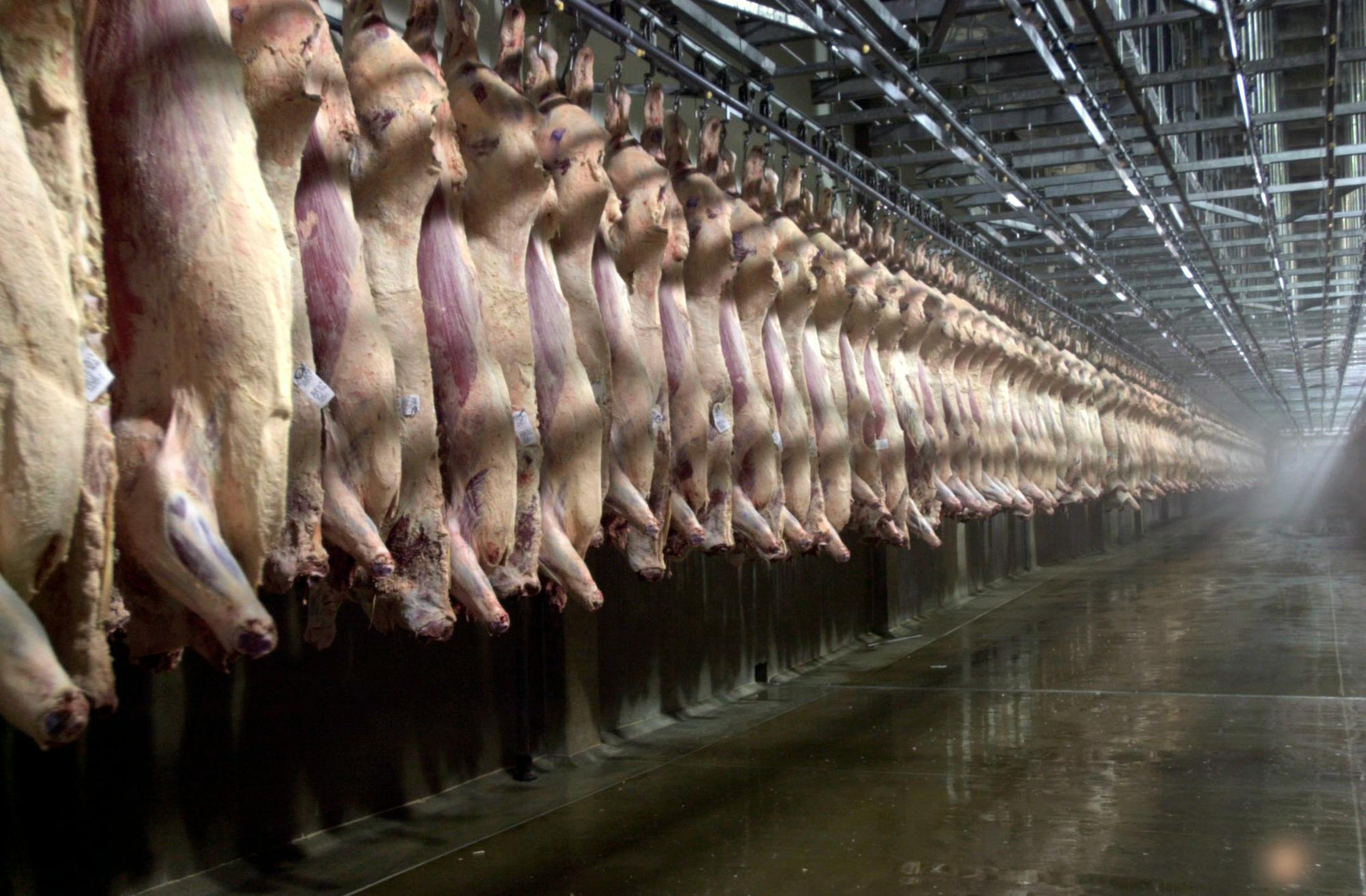
This file photo from June 7, 2000 shows beef sides hanging in a chilling room at the Excel slaughterhouse in Schuyler, Neb., Wednesday June 7, 2000. In the summer months, as many as one in every two cows processed at the Excel plant carry the deadly E. Coli 0157:H7 bacteria, but before the plant's meat reaches consumers, the cattle and their carcasses are put through a state-of-the-art system of scrubbing, washes, rinses and steam-pasteurization designed to remove most, if not all, of the bacter
Sides of beef hung in a chilling room in a Nebraska slaughterhouse in 2000. Cargill has settled eight lawsuits from people who claimed damage from E. coli in beef. (Associated Press - Ap/The Minnesota Star Tribune)

The parents of a 10-year-old girl from Mahtomedi, who became seriously ill after allegedly consuming E. coli-tainted beef patties, filed a multimillion dollar lawsuit Tuesday against Cargill Meat Solutions Corp.

In the suit, filed in U.S. District Court in Minneapolis, Art and Leah Hemmingson say their daughter, Ruth, was hospitalized for nearly a month last year with life-threatening complications associated with an E. coli infection. She will probably need a kidney transplant or dialysis to survive, they said.

The couple is seeking more than $4.3 million for past and future medical expenses, as well as unspecified damages for pain and suffering.

A spokeswoman for Minnetonka-based Cargill would not comment on the lawsuit. In October 2007, Cargill voluntarily recalled more than 840,000 pounds of ground beef patties after a number of Minnesota children who ate burgers made from the meat developed E. coli-related illnesses. The patties were distributed at Sam's Club stores nationwide.

Paul Downes, an attorney with Sieben, Grose, Von Holtum & Carey, which filed the lawsuit along with the Seattle law firm of Marler Clark, said the Hemmingsons bought a box of 18 frozen beef patties from a Sam's Club in White Bear Lake for a back-yard barbecue. The family ate just three of them. Downes said that after Ruth became sick, the Hemmingsons turned the meat over to the Minnesota Department of Health, which found it contaminated with E. coli.

On Sept. 16, 2007, three days after Ruth consumed the beef, she fell ill with stomach cramps, nausea and diarrhea, according to the lawsuit. Leah Hemmingson took Ruth to a pediatrician, who prescribed antibiotics after finding "nothing remarkable," the lawsuit says.

However, not long after the doctor's visit, Ruth's symptoms worsened dramatically, the lawsuit says. She suffered more bouts of diarrhea and eventually became badly dehydrated, prompting another doctor's visit Sept. 24. Blood tests indicated that Ruth was suffering from the onset of kidney failure, according to the lawsuit.

Ruth was admitted to Lakeville Hospital and then transferred to Children's Hospital of St. Paul, where repeat urinalysis showed protein and blood in her urine -- "sure signs of kidney injury," the lawsuit says. She was hospitalized from Sept. 25 through Oct. 22, during which she was put on dialysis to rid her blood of waste products that her kidneys no longer were able to process.

Ruth has returned to Mahtomedi, where she is home-schooled by her mother. Doctors have said that she is likely to develop kidney failure in the future, Downes said. So far, the family has incurred more than $300,000 in medical expenses, and future medical costs associated with likely complications from Ruth's kidney injury, including dialysis and a kidney transplant, could top $4 million.

"The parents have been told she would likely have problems, but they haven't been told when," Downes said. "They literally worry about if it's going to be next week, next year or 10 years from now."

Cargill has been named as a defendant before in relation to the contaminated ground beef recalled in October 2007. Marler Clark filed eight other lawsuits against Cargill involving people in Colorado, Minnesota, North Carolina and Tennessee who claim they suffered from E. coli-related illnesses after eating the beef. All of those lawsuits have been settled.

Chris Serres • 612-673-4308

about the writer

about the writer

Chris Serres

Reporter

Chris Serres is a staff writer for the Star Tribune who covers social services.

See Moreicon

More from Business

See More
card image
Fairview Health Services

The school is changing an elective course while still working with the Eden Prairie-based health care giant after students raised concerns.

This transmission electron microscope image shows SARS-CoV-2, the virus that causes COVID-19, isolated from a patient in the U.S., emerging from the surface of cells cultured in the lab. (NIAID/TNS) ORG XMIT: 1659810
card image