

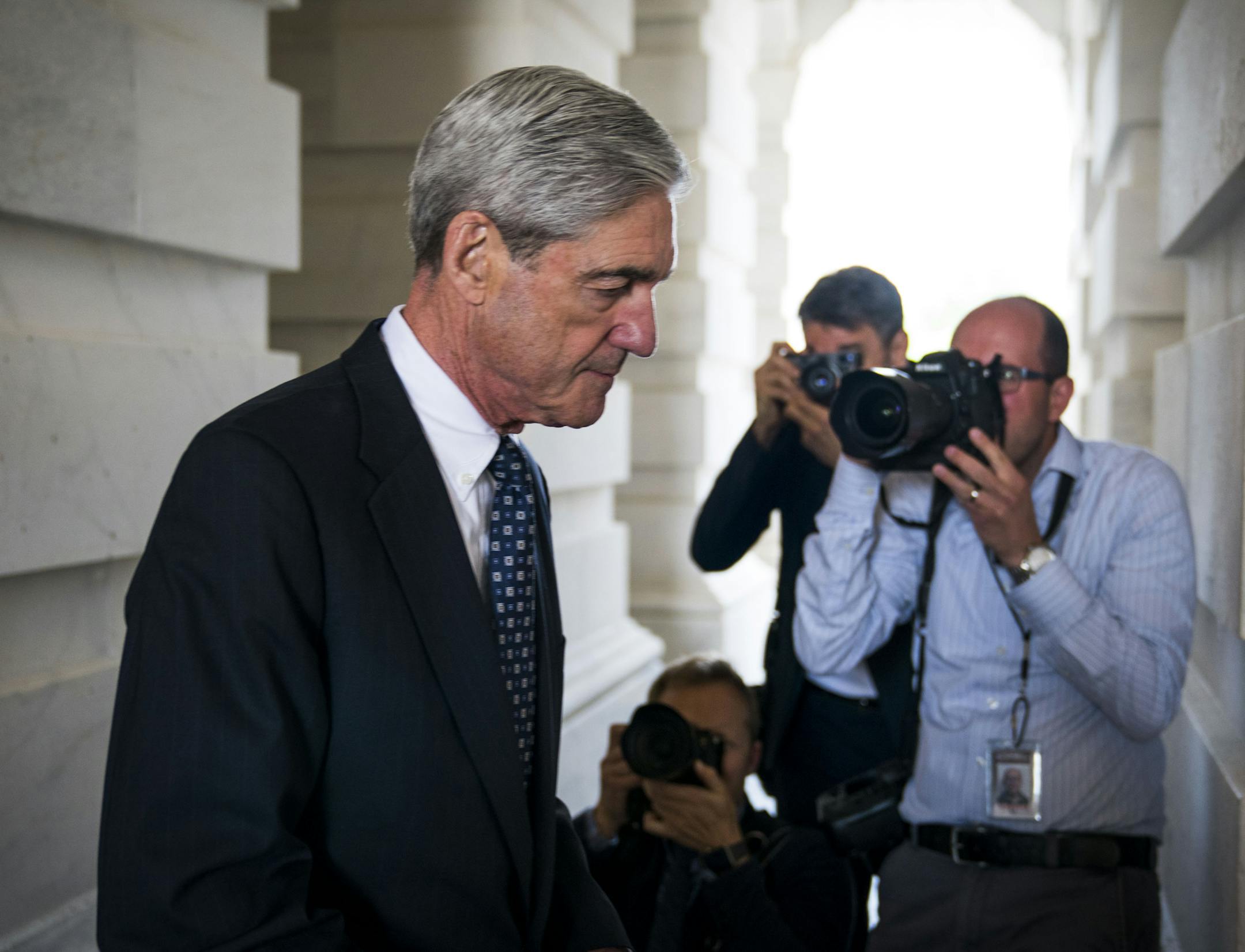
Sen. Mark Warner, D-Va., recently warned that a "constitutional crisis" would erupt if President Donald Trump fires special counsel Robert Mueller. Trump has not said that he will fire Mueller, but he has made clear his displeasure with Mueller's investigation. Trump's allies have been attacking Mueller's integrity for weeks. And Trump's earlier firing of FBI Director James Comey indicates a willingness to take such an extreme step.
But how extreme a step is it? Would a constitutional crisis really occur, and if it did, why would it matter?
The answers are not as obvious as most commentators, and some policymakers, seem to think.
"Constitutional crisis," like "Russian collusion," is not a legal term with an agreed meaning. What's clear is that the temptation to define a constitutional crisis as any case in which the meaning of the Constitution is disputed deserves to be avoided. Virtually every clause of the Constitution is disputed, but crises are rare because Americans have shown they accept that ultimately the meaning will be settled by major government institutions.
The one undisputed constitutional crisis in American history was the Civil War. When the national government refused to recognize secession by the Southern states, an impasse arose because there was no way the disagreement could be resolved through constitutional means. Because the South rejected the national government, no national institution — not the federal courts, not Congress — could resolve the dispute. War resulted, with more than 600,000 deaths.
There have been a number of lesser crises that had a constitutional dimension but were not really "constitutional crises" because they were resolved through constitutional methods. The presidential elections of 1800 (eventually won by Thomas Jefferson), 1824 (won by John Quincy Adams), 1876 (won by Rutherford B. Hayes) and 2000 (won by George W. Bush) resulted in impasses because of ambiguities about voting or voting procedures, but they were all resolved — by negotiation in the first three cases and by the Supreme Court in the fourth.
Two impeachments and one near-impeachment also have been cited as constitutional crises. Andrew Johnson was impeached — though acquitted by the Senate — after he tried to fire his secretary of war, Edwin Stanton, in violation of a statute passed by Congress to keep Stanton in office. Richard Nixon resigned before he was impeached, but he would very likely have been impeached for Watergate and related shenanigans. Bill Clinton was impeached for perjury (and acquitted) after carrying on an affair with a White House intern. In all three cases, a "political crisis" surely existed. Normal politics stopped while the impeachments were resolved. But in each case, the crisis was resolved through constitutional means, and most government institutions functioned normally.
Another frequently cited example is Franklin D. Roosevelt's court-packing plan. During the Great Depression, a right-wing Supreme Court thwarted some of Roosevelt's efforts to pull the government into the modern era so that it could address the economic calamity. After his landslide election in 1936, Roosevelt sought to increase the size of the Supreme Court so that he could appoint like-minded jurists to outvote hard-liners. Roosevelt's effort outraged people, Congress refused to go along and Roosevelt backed down. Later, the court reversed course and was eventually dominated by Roosevelt's own appointments. Roosevelt's presidency included other moments of high constitutional drama, but Roosevelt was able to accomplish what he needed to do while staying within the system.


