

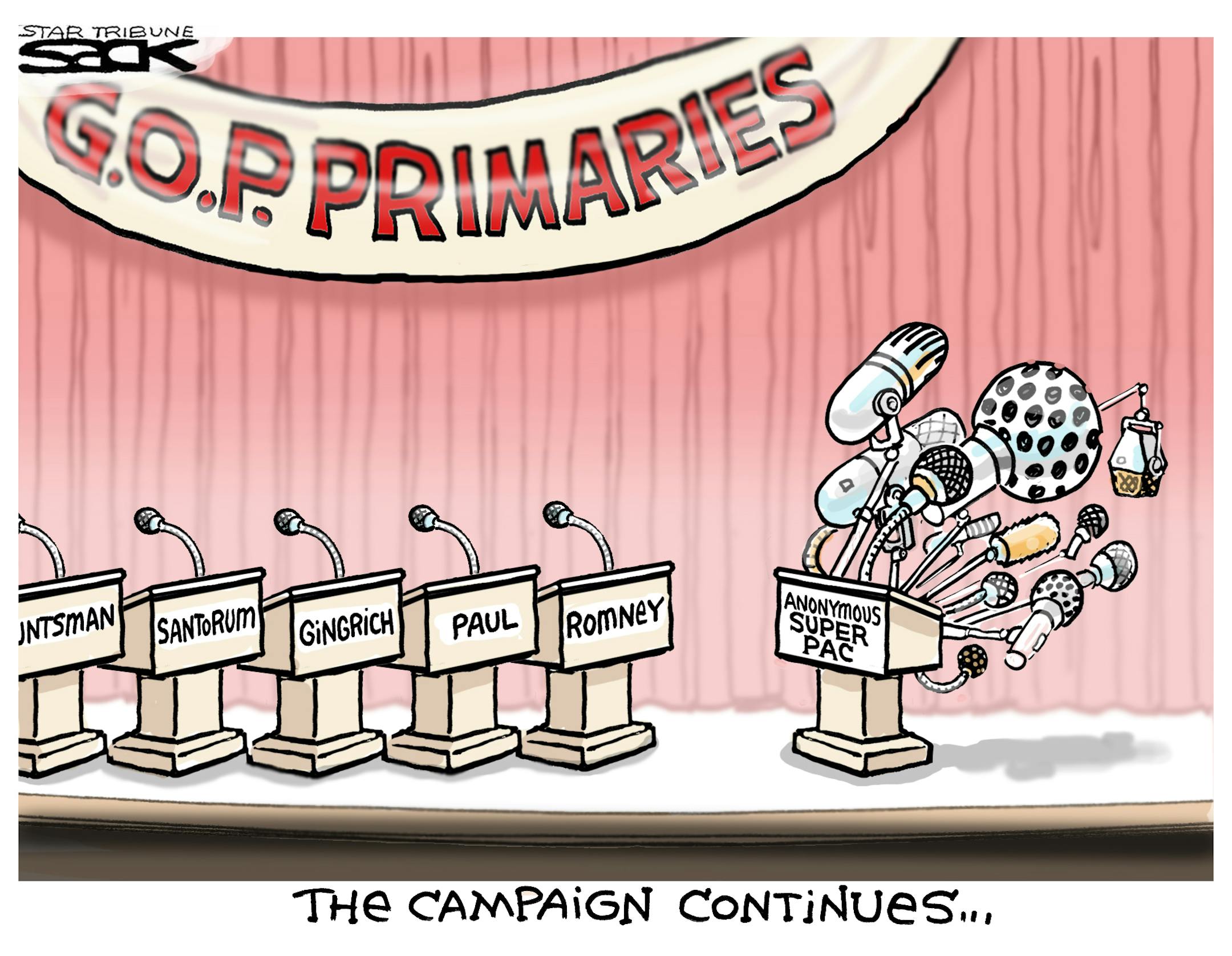
President Obama's recent endorsement of a Democratic "super PAC" -- Priorities USA -- to support his reelection campaign makes one thing clear: Money will dominate this year's election like no other in history. Already, Restore Our Future, the super PAC supporting Mitt Romney, has hauled in over $17 million from just 60 donors.
Big money has always played a role in politics, but the advent of super PACs means that America's presidential candidates have effectively outsourced their campaigns to the megarich. The wealthy turn over big bucks to super PACs, which in turn make whatever arguments they want, often much dirtier than anything a candidate would want to attach his or her name to.
I've been involved in Democratic politics for two decades, and I've observed outside groups' tightening grip on American elections and reformers' repeated efforts to loosen it -- efforts that I've always supported.
Nevertheless, I've decided that the best way forward may be to go in the opposite direction: Repeal what's left of the Bipartisan Campaign Reform Act, commonly known as McCain-Feingold, which severely limits the amount of money the parties can collect.
Doing so wouldn't get rid of the role of money in American politics. But by channeling it back into the parties, it would reintroduce accountability, the lack of which is what makes super PACs so pernicious.
First, a brief history: Before the passage of McCain-Feingold in 2002, donors could give unlimited amounts, but only to political parties. No-limit donations aren't ideal, but at least they were accountable: The parties knew who was giving, how much and where it was spent.
Moreover, donors provided direct input in crafting a candidate's message. Sometimes, donors got too involved, but at least they were working within the campaign, not around it.
McCain-Feingold limited contributions to national party committees; it also forbade independent political advertising by outside groups near a primary or general election.


