

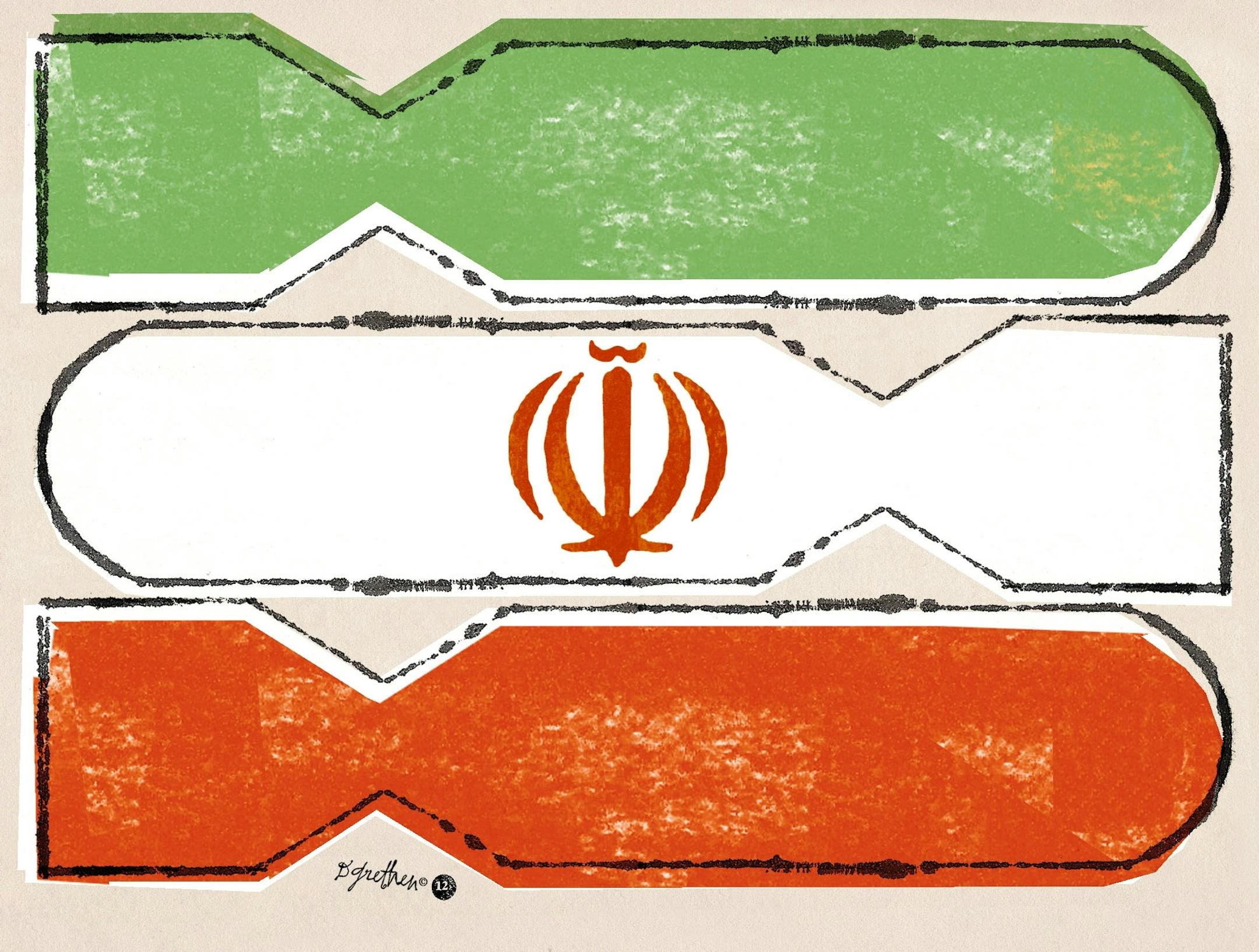
The most likely victims of a nuclear-armed Iran are not the United States or Israel, but the Gulf states -- countries that are engaged in intense competition with the regime in Tehran but lack the power to deter any threat or aggression with a nuclear-strike capability of their own.That, at least, is how it looks from Riyadh and other Gulf capitals. Saudi Arabia has kept a low public profile amid the heated international debate regarding the nature and ultimate objectives of the Iranian nuclear program, and the country isn't yet ready to back a military strike.
But that reticence hides deep and genuine concern, demonstrated by the speed with which Saudi Arabia and the United Arab Emirates pledged to fill any shortfall in global oil supplies that planned European Union sanctions on Iran's energy exports may cause.
A complete EU boycott of Iranian oil would result in the disappearance of about 2.5 million barrels per day from the international oil market, driving up prices sharply and damping the global economy as it struggles to escape a slump.
To start with, the Saudis strongly believe that if Iran is able to militarize its nuclear program while it remains a signatory to the 1968 Treaty on the Non-Proliferation of Nuclear Weapons, or NPT, this would render the treaty worthless. The likely Saudi response would be to seek a nuclear capability of its own.
Saudi and other Gulf country officials have made this point clear to Western governments, though not in public. They have told their Western counterparts that if Iran acquires a nuclear weapon, they would feel themselves under no legal or moral obligation to adhere to the treaty's principles.
In other words, they would be free to go down the nuclear path. From the Saudi point of view, the success or failure of the international community in restraining Iran's nuclear program will determine whether the global nonproliferation regime survives.
Nor do the Saudis distinguish between Iran acquiring nuclear capability and actually producing the bomb. In their view, an unassembled nuclear weapon on the shelf is no less dangerous and intimidating than a completed one in storage.
The dominant feeling in the Gulf region is that U.S. policy, wittingly or unwittingly, has gifted Iran with painless and costless strategic gains over the past decade.


