

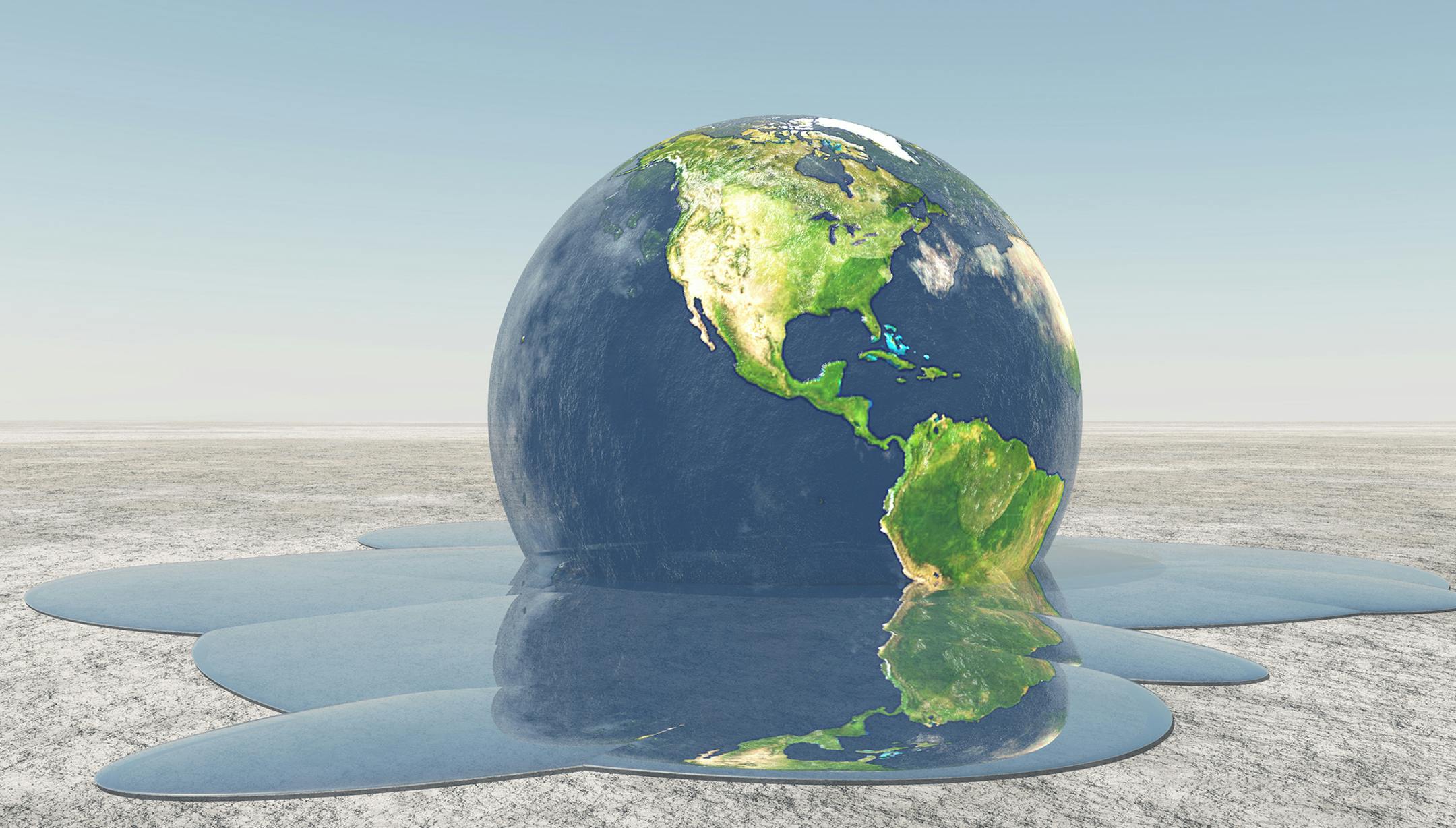
November's climate change news has been extraordinary. On Nov. 7, Syria announced it would join the 2015 Paris Climate Accord. The U.S. is now the only nation opposed to the pact.
On Nov. 13, the Global Carbon Project released its annual "Carbon Budget." It estimates that global CO2 emissions from fossil fuel and industry will rise in 2017 after staying relatively flat from 2014 to 2016.
In 1992, the Union of Concerned Scientists published its "World Scientists' Warning to Humanity," signed by 1,500 scientists. That warning stated, "Human beings and the natural world are on a collision course." The authors urged fundamental changes to avoid ruining the planet. The warning went unheeded.
This month news broke of "World Scientists' Warning to Humanity: A Second Notice," a journal article signed by more than 15,000 scientists from 184 countries. The 2017 warning describes numerous environmental crises. "Especially troubling is the current trajectory of potentially catastrophic climate change due to rising GHGs [greenhouse gases] from burning fossil fuels." Several human failings are destroying the biosphere, beginning with failing to "adequately limit population growth" and "reassess the role of an economy rooted in growth."
The warning states that with a "groundswell of organized grassroots efforts, dogged opposition can be overcome and political leaders compelled to do the right thing. It is also time to re-examine and change our individual behaviors, including limiting our own reproduction (ideally to replacement level at most) and drastically diminishing our per capita consumption of fossil fuels, meat, and other resources."
Climate scientists generally agree on an atmospheric CO2 target level of 350 parts per million (ppm) or less. The annual global average atmospheric CO2 level in 1992 was 356 ppm, but rose to 404 ppm by 2016. Countries with the largest 2016 CO2 emissions were 1) China, 2) the U.S. and 3) India. Of the three, America had the highest per capita emissions.
According to the 2013-2014 Assessment Report of the Intergovernmental Panel on Climate Change, fossil fuel emissions are the primary driver of rising global temperatures. Population growth and economic growth are driving these emissions. "The precise levels of climate change to trigger abrupt and irreversible change remain uncertain, but the risk associated with crossing such thresholds increases with rising temperature."
The U.S. government is doing little about this crisis. Republicans dismiss climate action because it will slow our economy. Democrats offer insufficient climate recommendations because they, too, favor capitalistic growth.


