

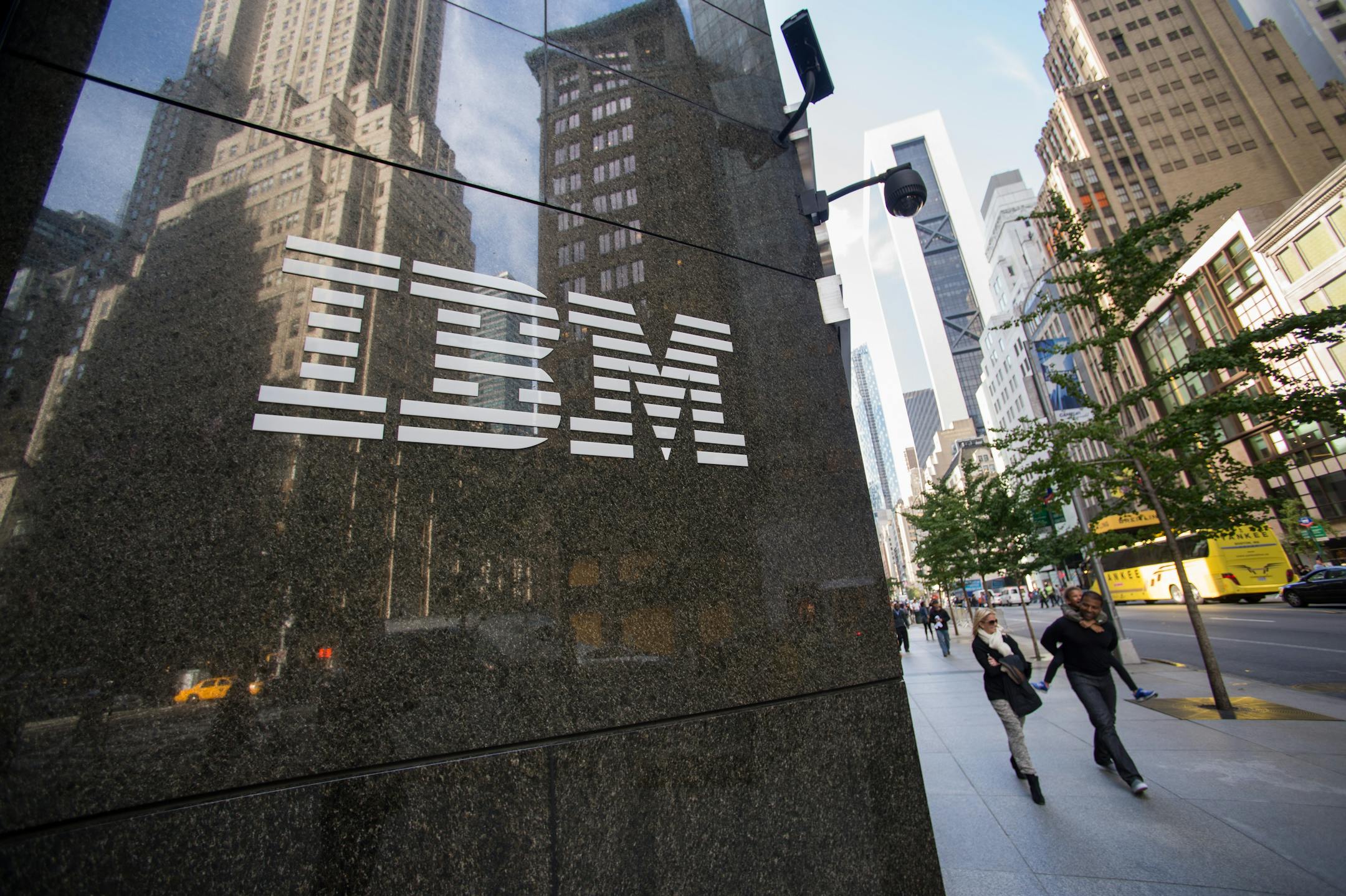
NEW YORK -- International Business Machines Corp reported a marked slowdown in business in September and abandoned its 2015 operating earnings target on Monday, as weak client spending and a slumping software sector weighed down quarterly revenue.
IBM shares fell nearly 7 percent to a three-year low, a blow for legendary investor Warren Buffett whose Berkshire Hathaway Inc is its top shareholder. The decline shaved more than $13 billion off of IBM's market cap, which stood at $182 billion at the stock market close on Friday.
"We are disappointed in our performance," said Ginni Rometty, IBM chairman, president and chief executive officer. "We saw a marked slowdown in September in client buying behavior, and our results also point to the unprecedented pace of change in our industry."
IBM, the world's largest technology services company, is struggling to keep up with shifts in the industry as hardware becomes increasingly commoditized. The company, once best known for mainframe computers, has been pivoting to higher-margin businesses such as security software and cloud services, but growth in those areas has failed to offset weakness elsewhere.
In a move to rid itself of one underperforming business, IBM also said on Monday it will hive off its loss-making semiconductor unit to contract chipmaker Globalfoundries Inc. In a sign of the unit's weakness, IBM is paying Globalfoundries $1.5 billion to take the unit over.
"Some of these fundamental shifts in the industry are happening faster than we planned," Rometty said on a call with analysts. "We are continuing to remix to higher value."
IBM is hardly the only technology company having a hard time keeping up with the shift to Internet-based software and storage systems. German software maker SAP SA cut its 2014 operating profit forecast on Monday, citing a faster-than-expected move to cloud-based software . Oracle Corp has grappled with similar issues.
IBM will divest low-performing businesses that will contribute almost $7 billion in revenue this year, and plans to continue getting out of those sectors, Rometty said.


