

Opinion editor's note: Star Tribune Opinion publishes a mix of national and local commentaries online and in print each day. To contribute, click here.
•••
Susan Faludi suggested we show up to the "Barbie" movie in a pink Corvette, but unfortunately, the only car available was a pickup truck. So that was how one of the world's leading feminists and I showed up to her local mall: in a 2002 Black Toyota Tacoma, with tickets to Auditorium 2 for "Barbie."
I'd asked Faludi, the Pulitzer-winning journalist and author — whose 1991 book, "Backlash," became an instant classic — to see this summer's most joyful and lucrative blockbuster with me because I was hoping she might help me make sense of its morass of hot pink contradictions.
There are few toys quite so confounding as Barbie. Even her origin story: She was based on a sex doll for men, but somehow marketed to mothers for their daughters. Barbie has been a protest slogan ("I am not your Barbie"), a bimbo (remember "Math class is tough" Barbie?), an eating disorder accelerant. In one particularly clever protest against the doll, she had her voice box swapped with G.I. Joe's, so suddenly she said, "Vengeance is mine!" and he said, "The beach is the place for summer." But Barbie has also been a lawyer, a pilot, an astronaut and the president. She has never married, lives alone and does not have children.
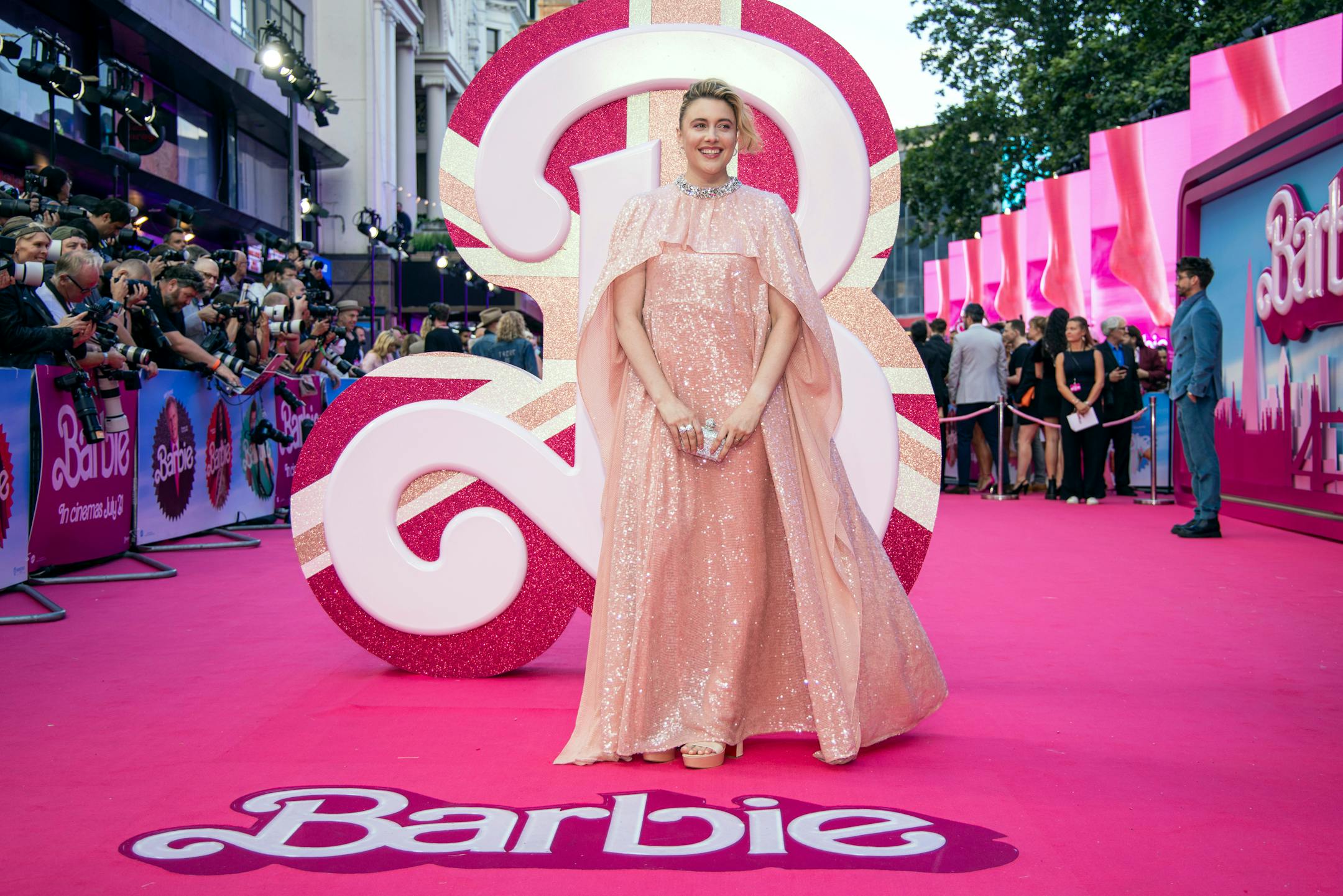
The movie seemed as full of contradictions as the doll. It was promoted through a marketing campaign that had more licensing deals than Barbie has outfits: There were Barbie clothes and Barbie makeup and ice cream and vacation packages and a takeover of the Google home page, which is currently filling my screen with pink explosions every time I try to fact-check this essay. But it also had a director — Greta Gerwig — with indie street cred, and early reviews focused on the film's subversiveness. Gerwig, it seemed, had managed to make Barbie satisfyingly self-aware, likable and mockable; she called out the hypocrisy of the manufacturer — Mattel — while getting its blessing on the project. And then, somehow, she — and the company — marketed it all back to us.
"This sounds like a kick!" Faludi said, when I first suggested we might watch the movie together. She didn't want to be a feminist wet blanket on the whole thing, but she was prepared to deliver a sober report, should it be required. We settled into our seats. "You know, asking a feminist to comment on a Barbie movie is like asking the Wicked Witch of the West to critique Oz," she said with a laugh.
I was interested in Faludi's perspective because her interests seemed to track with the complexity at the heart of the "Barbie" movie. Last year, in the wake of the Supreme Court decision to overturn Roe v. Wade, she wrote an essay bemoaning how feminists had made a Faustian bargain with popular culture. While we'd been wearing "Smash the patriarchy" T-shirts and leaning in at work while singing "Who run the world? (Girls)," Donald Trump had been packing the Supreme Court and gutting the Equal Employment Opportunity Commission. Feminism had become cool, fun — and in the process had taken its eyes off the ball.


