

Like most Americans, I want to do what's best for our country. Yet lately, I find myself with few appealing choices about how to do that. As a social liberal and fiscal conservative, it's not clear that I have a place in this political environment.
Although I'm still a registered Republican, I no longer support or identify with the party. Its current leader has failed both his party and our country, as made clear, just to start, by the more than 222,000 deaths from COVID-19 — a disease that our top scientists agree didn't have to cause so much human misery and economic pain.
Yet I'm certainly not a Democrat, as that party leans toward government overreach that puts individual liberties at risk.
Still, it's the Democrats these days whose promises at least exhibit a commitment to humane values, social equality and individual liberty that mark this country's greatest aspirations.
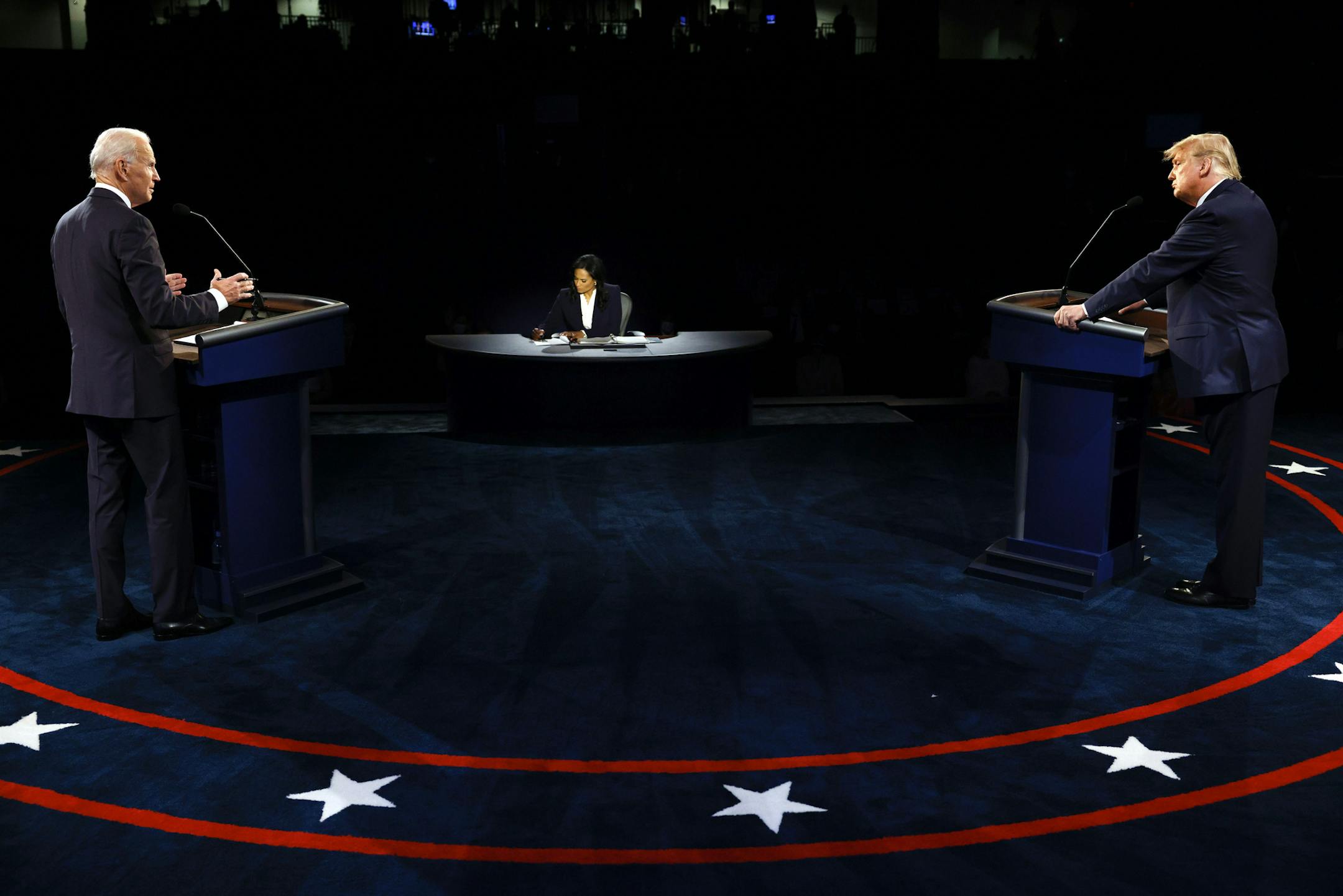
For some who share my values and hopes, the Libertarian Party is the answer. However, voting Libertarian in this election risks keeping the current administration in power, in no small part because this country's two-party system denies other players a seat at the table. The Commission on Presidential Debates has created unreasonably narrow criteria to qualify for participation, requiring candidates to reach 15% support across five national polls to join. These arbitrary constraints just exacerbate partisan divisions, further limiting what's possible for the American people.
The result is that the American people are dangerously locked in partisan corners. According to the Pew Research Center, 55% of Republicans say Democrats are "more immoral" when compared with other Americans; 47% of Democrats say the same about Republicans. The two major parties view one another in an even more unfavorable light now than in 2016, which already reflected unprecedented mutual disdain.
This untenable situation is partly the fault of the two-party system, which limits the choices Americans have and artificially shoehorns their anger — over a range of American failures — into targeting one party or the other. Now is the time to start thinking about how we can move beyond the two-party system's major limitations, but focus first on removing the chasm from the White House.
I am far from alone in my political outlook, as some estimates put the number of Libertarians at 10 to 20% of the U.S. population (even if fewer are expected to vote third-party this year than in the past). These folks deserve a political home, and the country deserves a far more expansive, less constricted conversation about the policies and values that ought to shape our country's future.


