

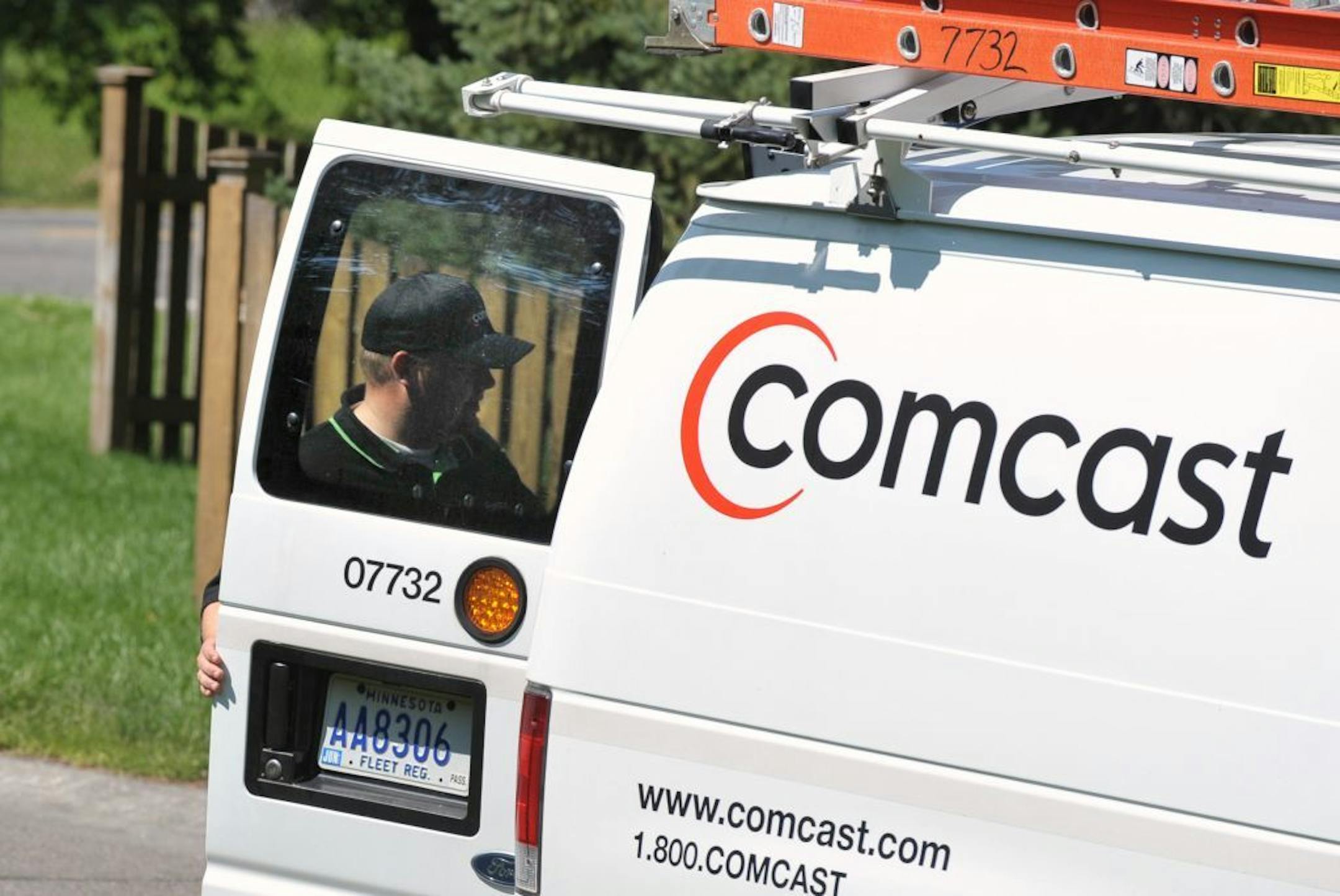
While the telephone industry is busy debating the proposed AT&T acquisition of T-Mobile, cable TV company Comcast Corp. is quietly going after the industry's small-business telephone customers.
Faced with slowing growth in its consumer business -- providing homes with TV, Internet and phone service -- Comcast is looking for growth in the highly profitable business market, analysts say.
The company already has business customers in other parts of the country. In June, it launched a Twin Cities initiative using technology called "primary rate interface trunk replacement" that makes it fairly easy to switch existing business phones over to the Comcast network.
So far that means going after small businesses with fewer than 20 employees, widely regarded as the low-hanging fruit of the corporate telephone market. Most small businesses have modest telecommunications needs, allowing Comcast to serve them almost as an extension of its consumer business, although with many more telephone lines, analysts say.
"All the cable companies are seeing their consumer markets mature, so they have to reach into the small- and medium-sized business market to continue to grow," said Dan Hays, a telecom consultant at PRTM Management Consultants in Waltham, Mass. "However, that means completely reengineering their sales and support to meet business customer needs."
Still, he said, "it is a huge threat" to existing telephone companies.
Comcast, the nation's largest cable TV provider, says it's serious about the small-business market. Last year about half of its $37.9 billion in revenue came from its cable business, compared to 10 percent from telephone service. Internet accounted for 23 percent.
"We're already the fourth-largest residential voice provider in the country," said Kevin O'Toole, Philadelphia-based Comcast's senior vice president of business product management and strategy. "But business is a fantastic opportunity."



