

More than in most nations, politics in America pivots on individuals. Institutions have been built to guide policy prescriptions, but ultimately the people decide. For the most part it's worked. But we've entered an era when the tools of these institutions — scholarly consensus, data-driven analysis, objective journalism — are being underhandedly undermined, according to Kathleen Hall Jamieson, director of the Annenberg Public Policy Center at the University of Pennsylvania.
Jamieson, a civil, civic-minded academic, is the author of 16 books and founder of FactCheck.org, a website that has become an institution in its own right. A Minnesota native, Jamieson was back home Wednesday at the Center for the Study of Politics and Governance at the Humphrey School of Public Affairs to address "The Attack on Fact: American Politics and the Loss of Accountability."
It was, she said, smiling, "one depressing lecture." And indeed, the stark, startling examples of politicians and campaign ads attacking "custodians of the knowable" gave testament to the damage attacking facts can do to our democracy. But Jamieson said it goes beyond politicians and policies. It's fundamentally about us.
"I worry more about campaigning becoming disconnected from governance than about electing bad people. If the electorate comes to see that elections don't translate into governance, why should we vote?"
This disconnect was displayed during the gun-control debate. In the immediate aftermath of Sandy Hook, many seemed to expect and accept a renewed ban on assault weapons and other measures. But as weeks passed, those ideas flailed, then failed. Background checks seemed to be a backstop. The concept had approval rates of more than 90 percent — "an astonishing number," a higher percentage than approved of killing Osama bin Laden, Jamieson said. But even background checks couldn't pass in the U.S. Senate.
"The gun-rights organizations didn't use a lot of money in order to advertise," she said. "They just had to show you that they could create an ad that was evocative," while reminding senators that they had deep pockets. Jamieson said it's a symptom of "the post-Citizens United world: Deceptive advertising backed either by large amounts of money, or the threats of large amounts of money, makes it more likely that policymakers, legislators, will fear retribution at the ballot box if they don't act in the way that's consistent with the interests of those spending large amounts of money."
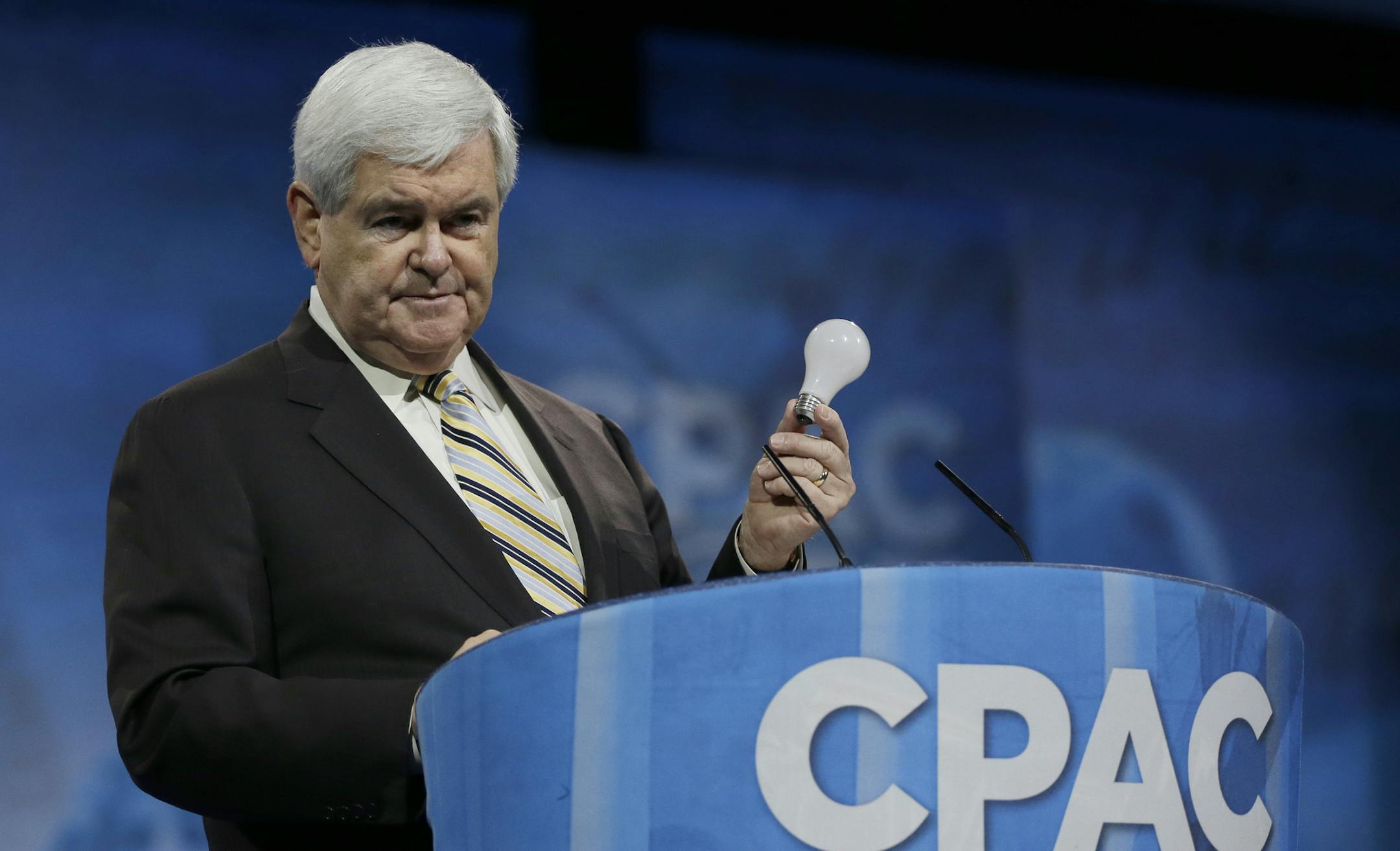
Of course, most of us expect campaign ads to distort or deceive. Even more insidious is attacking government agencies counted on to measure policies. Jamieson showed Newt Gingrich — the irrepressible, irresponsible former speaker of the House — referring to the Congressional Budget Office as a "reactionary socialist institution."
"When you undermine the institutions that are 'custodians of the knowable,' you can increasingly get inaccurate representations that affect policy agendas, the legislative process," Jamieson said, adding that this can "thwart the public will."


