

The Washington Post
While the rest of you get sucked into "The Christmas Prince" sequel or debating whether one can enjoy "Love, Actually" in a post- MeToo era, a small subset of the rest of us must now retreat to a snow-starved Vermont inn and discuss a more ancient cinematic matter:
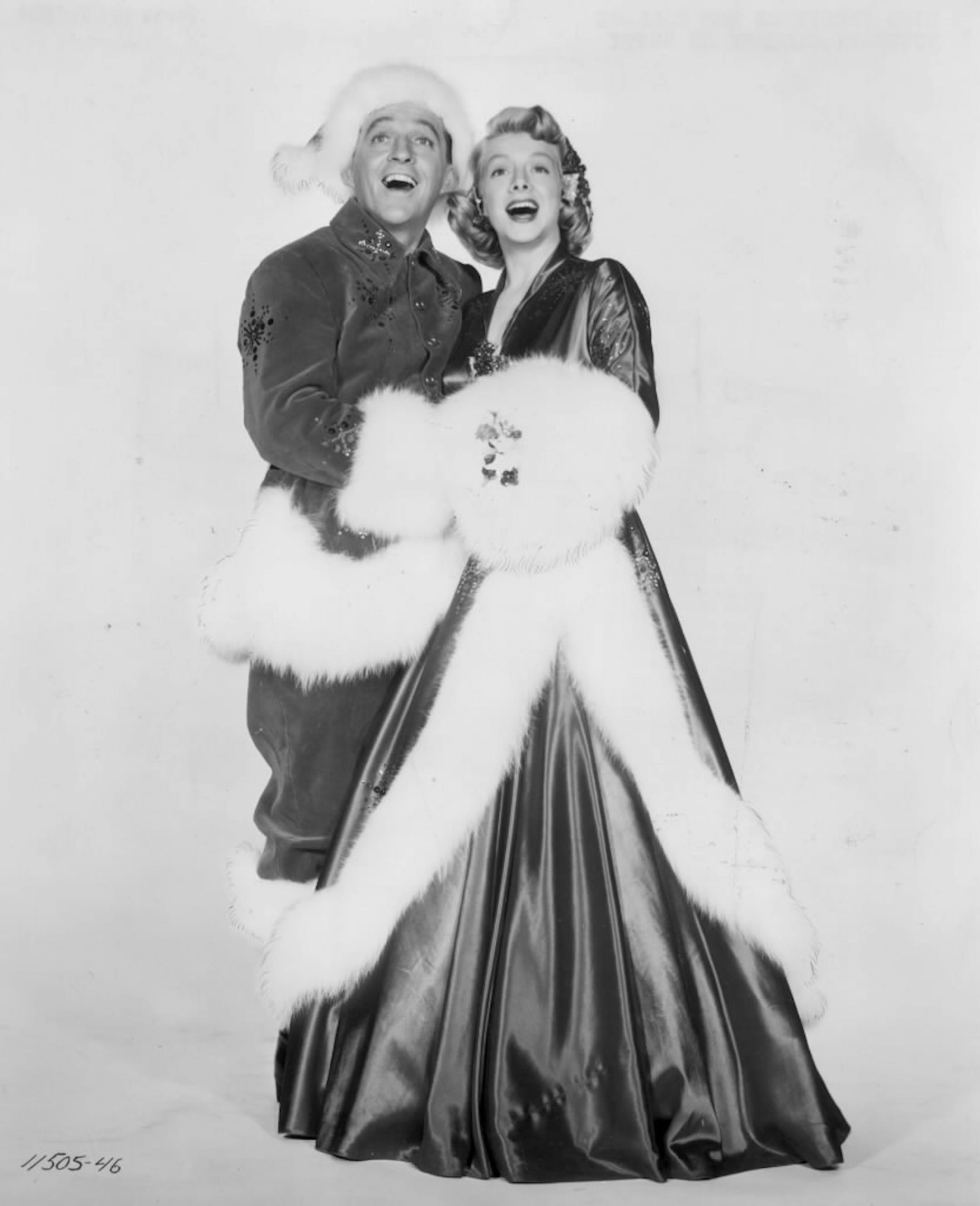
"White Christmas," the 1954 battle ax of holiday classics, which already reigns over basic cable this time of year, is returning to the big screen - part of a nationwide Turner Classic Movies promotion on Dec. 9 and 12.
Frankly, it's a bit of a weird movie to have achieved such stature in the Christmas pantheon. There are no cute child stars and no Santa Claus - but there is a modern dance sequence in which Danny Kaye runs around with a bunch of barefoot women in gray tunics. There's also Bing Crosby improvising a monologue about liverwurst sandwiches, some bombs falling on World War II Europe, and composer Irving Berlin painting himself into lyrical corners resolved by rhyming "finger" with "humdinger."
"I saw you put (the tickets) in your pocket!" Crosby accuses Kaye after they've cross-dressed their way out of a jam and then escaped on a train. "I must have left them in my girdle," Kaye replies. The movie really only meanders into Christmas territory in the last scene. Most of the plot focuses on Crosby and Kaye as Army buddies turned entertainers trying to save a struggling ski lodge owned by their former general.
For the "White Christmas" obsessives among us, the internet has opened rabbit holes: We can report that co-star Vera-Ellen does, in fact, wear turtlenecks in every single scene - the fan theory is that an eating disorder prematurely wrinkled her neck. But we'll also report that a year after "White Christmas," she was photographed at a different movie premiere and her exposed neck looked smooth - so, who knows?
What is the greater meaning of "White Christmas"? Is it even worth dissecting, or should we admit that it's best appreciated as gift-wrapping background noise?
Suffice it to say, if you've read this far, you might be open to exploring.


